


Key roles of glial cells in the encephalopathy of prematurity
- PMID: 37909340
- PMCID: PMC10952406
- DOI: 10.1002/glia.24474
Key roles of glial cells in the encephalopathy of prematurity
Abstract
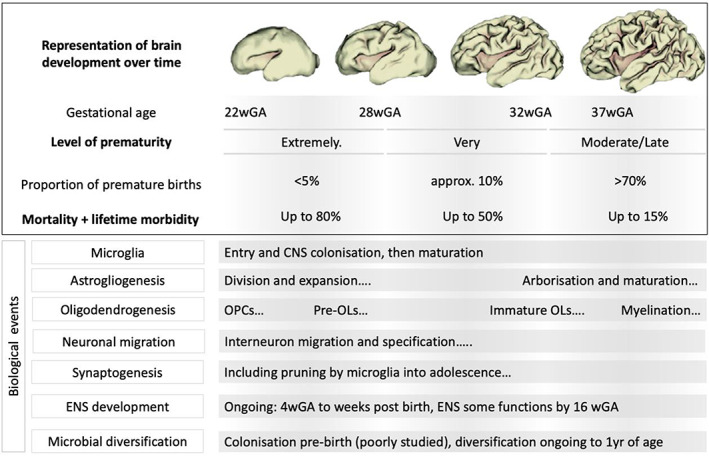
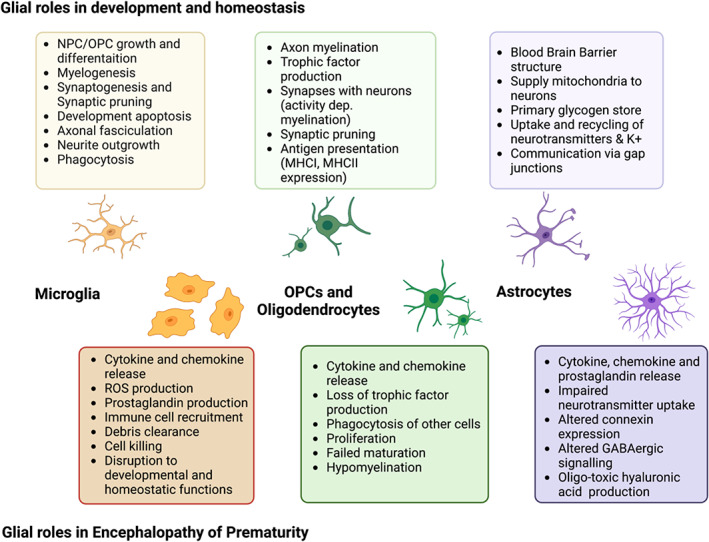
Across the globe, approximately one in 10 babies are born preterm, that is, before 37 weeks of a typical 40 weeks of gestation. Up to 50% of preterm born infants develop brain injury, encephalopathy of prematurity (EoP), that substantially increases their risk for developing lifelong defects in motor skills and domains of learning, memory, emotional regulation, and cognition. We are still severely limited in our abilities to prevent or predict preterm birth. No longer just the "support cells," we now clearly understand that during development glia are key for building a healthy brain. Glial dysfunction is a hallmark of EoP, notably, microgliosis, astrogliosis, and oligodendrocyte injury. Our knowledge of glial biology during development is exponentially expanding but hasn't developed sufficiently for development of effective neuroregenerative therapies. This review summarizes the current state of knowledge for the roles of glia in infants with EoP and its animal models, and a description of known glial-cell interactions in the context of EoP, such as the roles for border-associated macrophages. The field of perinatal medicine is relatively small but has worked passionately to improve our understanding of the etiology of EoP coupled with detailed mechanistic studies of pre-clinical and human cohorts. A primary finding from this review is that expanding our collaborations with computational biologists, working together to understand the complexity of glial subtypes, glial maturation, and the impacts of EoP in the short and long term will be key to the design of therapies that improve outcomes.
Keywords: astrocytes; cytokine and chemokine receptors; development; growth factor; mechanisms of glia cell injury; microglial cells; oligodendrocytes.
© 2023 The Authors. GLIA published by Wiley Periodicals LLC.
Conflict of interest statement
The authors declare no conflicts of interest.
Figures
References
Publication types
MeSH terms
Grants and funding
LinkOut - more resources
Full Text Sources
