


A nutritional supplement taken during preconception and pregnancy influences human milk macronutrients in women with overweight/obesity and gestational diabetes mellitus
- PMID: 37915619
- PMCID: PMC10616264
- DOI: 10.3389/fnut.2023.1282376
A nutritional supplement taken during preconception and pregnancy influences human milk macronutrients in women with overweight/obesity and gestational diabetes mellitus
Abstract
Rational: Maternal overweight/obesity and gestational diabetes mellitus (GDM) are associated with an increased risk of their offspring developing overweight/obesity or type 2 diabetes later in life. However, the impacts of maternal overweight/obesity and dysglycemia on human milk (HM) macronutrient composition are not well understood.
Objective: Through a double-blind randomised controlled trial, we investigated the effects of maternal supplementation from preconception throughout pregnancy until birth on HM macronutrient concentrations, in association with maternal and infant factors including maternal pre-pregnancy body mass index (BMI) and GDM status. In addition, we aimed to characterise longitudinal changes in HM macronutrients.
Methods: The control supplement contained calcium, iodine, iron, β-carotene, and folic acid. The intervention supplement additionally contained zinc, vitamins B2, B6, B12, and D3, probiotics, and myo-inositol. HM samples were collected across seven time points from 1 week to 12 months from Singapore and/or New Zealand. HM macronutrient concentrations were measured using a MIRIS Human Milk Analyser. Potential differences in HM macronutrient concentrations were assessed using linear mixed models with a repeated measures design.
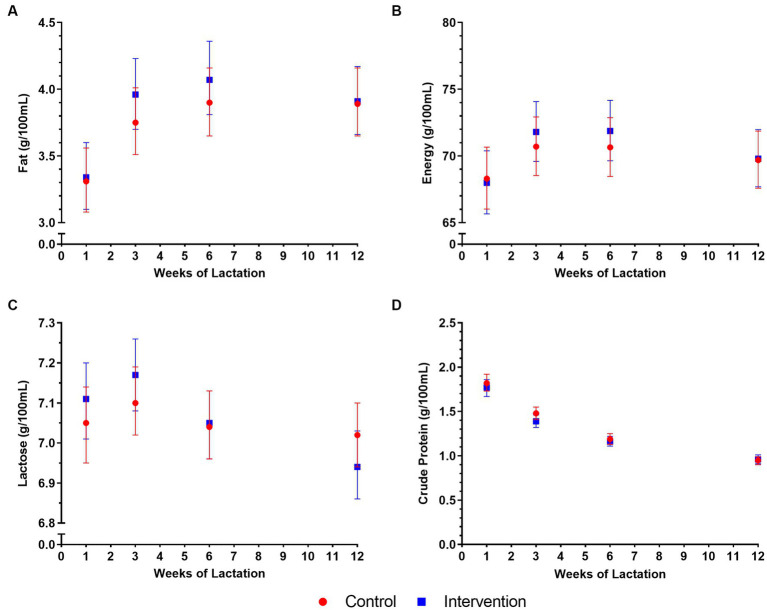
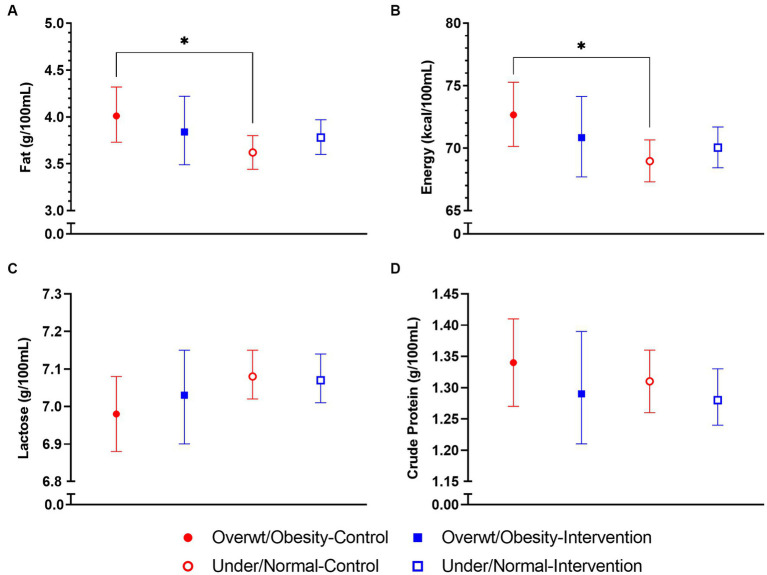
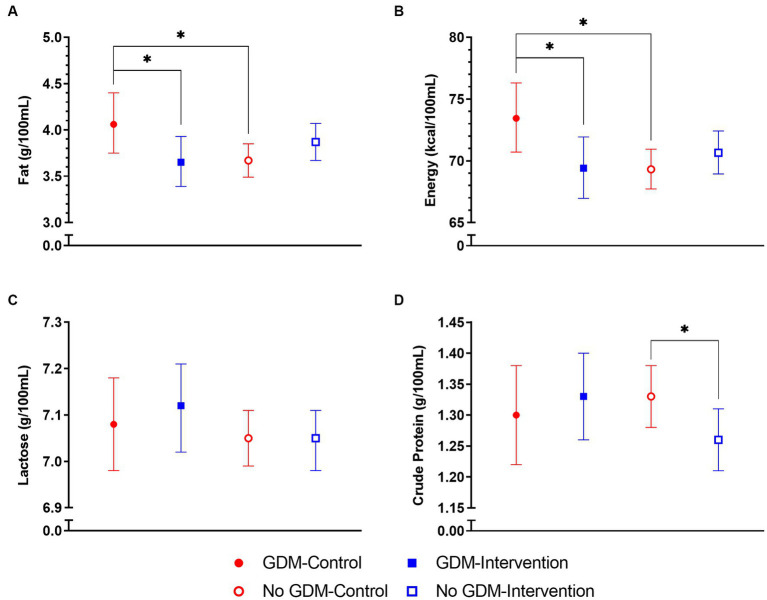
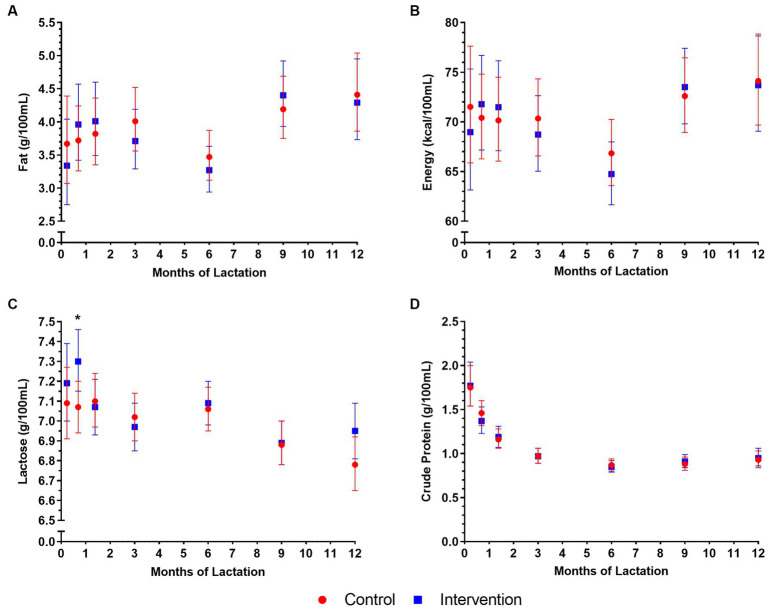
Results: Overall, HM macronutrient concentrations were similar between control and intervention groups. Among the control group, overweight/obesity and GDM were associated with higher HM fat and energy concentrations over the first 3 months. Such associations were not observed among the intervention group. Of note, mothers with GDM in the intervention group had lower HM fat by 10% (p = 0.049) and energy by 6% (p = 0.029) than mothers with GDM in the control group. Longitudinal changes in HM macronutrient concentrations over 12 months of lactation in New Zealand showed that HM fat and energy decreased in the first 6 months then increased until 12 months. HM lactose gradually decreased from 1 week to 12 months while crude protein decreased from 1 week to 6 months then remained relatively constant until 12 months of lactation.
Conclusion: Maternal overweight/obesity or GDM were associated with increased HM fat and energy levels. We speculate the intervention taken during preconception and pregnancy altered the impact of maternal BMI or GDM status on HM macronutrient composition. Further studies are required to identify the mechanisms underlying altered HM macronutrient concentration in the intervention group and to determine any long-term effects on offspring health.
Clinical trial registration: ClinicalTrials.gov, NCT02509988, Universal Trial Number U1111-1171-8056. Registered on 16 July 2015. This is an academic-led study by the EpiGen Global Research Consortium.
Keywords: gestational diabetes mellitus; human milk; macronutrients; maternal BMI; maternal nutrition.
Copyright © 2023 Han, Derraik, Vickers, Devaraj, Huang, Pang, Godfrey, Chan, Thakkar, Cutfield and NiPPeR Study Group.
Conflict of interest statement
KMG, S-YC, and WSC are part of an academic consortium that has received grants from Société des Produits Nestlé S.A. relating to the submitted work, and from Abbott Nutrition, Danone, and BenevolentAI Bio Ltd. outside the submitted work. SMH, JGBD, MHV, SD, FH, KMG, S-YC, SKT, and WSC are co-inventors on patent filings by Société des Produits Nestlé S.A. relating to the NiPPeR intervention or its components. FH, SD, and SKT are employees of Société des Produits Nestlé S.A. The remaining author declares that the research was conducted in the absence of any commercial or financial relationships that could be construed as a potential conflict of interest. The reviewer SP declared a past co-authorship with the authors JGBD, MHV, KMG, WSC, and S-YC to the handling editor.
Figures
References
-
- World Health Organization (2003). Global strategy for infant and young child feeding. World Health Organization.
Associated data
Grants and funding
LinkOut - more resources
Full Text Sources
Medical
