Multicenter Study
. 2023 Dec 1;152(6):e2023063129.
doi: 10.1542/peds.2023-063129.

Pediatric Firearm Injury Emergency Department Visits From 2017 to 2022: A Multicenter Study

Affiliations
Multicenter Study

Pediatric Firearm Injury Emergency Department Visits From 2017 to 2022: A Multicenter Study

Jennifer A Hoffmann et al. Pediatrics. .

Abstract

Background and objective: Pediatric firearm injuries increased during the coronavirus disease 2019 pandemic, but recent trends in firearm injury emergency department (ED) visits are not well described. We aimed to assess how pediatric firearm injury ED visits during the pandemic differed from expected prepandemic trends.

Methods: We retrospectively studied firearm injury ED visits by children <18 years old at 9 US hospitals participating in the Pediatric Emergency Care Applied Research Network Registry before (January 2017 to February 2020) and during (March 2020 to November 2022) the pandemic. Multivariable Poisson regression models estimated expected visit rates from prepandemic data. We calculated rate ratios (RRs) of observed to expected visits per 30 days, overall, and by sociodemographic characteristics.

Results: We identified 1904 firearm injury ED visits (52.3% 15-17 years old, 80.0% male, 63.5% non-Hispanic Black), with 694 prepandemic visits and 1210 visits during the pandemic. Death in the ED/hospital increased from 3.1% prepandemic to 6.1% during the pandemic (P = .007). Firearm injury visits per 30 days increased from 18.0 prepandemic to 36.1 during the pandemic (RR 2.09, 95% CI 1.63-2.91). Increases beyond expected rates were seen for 10- to 14-year-olds (RR 2.61, 95% CI 1.69-5.71), females (RR 2.46, 95% CI 1.55-6.00), males (RR 2.00, 95% CI 1.53-2.86), Hispanic children (RR 2.30, 95% CI 1.30-9.91), and Black non-Hispanic children (RR 1.88, 95% CI 1.34-3.10).

Conclusions: Firearm injury ED visits for children increased beyond expected prepandemic trends, with greater increases among certain population subgroups. These findings may inform firearm injury prevention efforts.


Conflict of interest statement

Conflict of Interest Disclosures (includes financial disclosures): The authors have no conflicts of interest relevant to this article to disclose.

Figures

Figure 1.
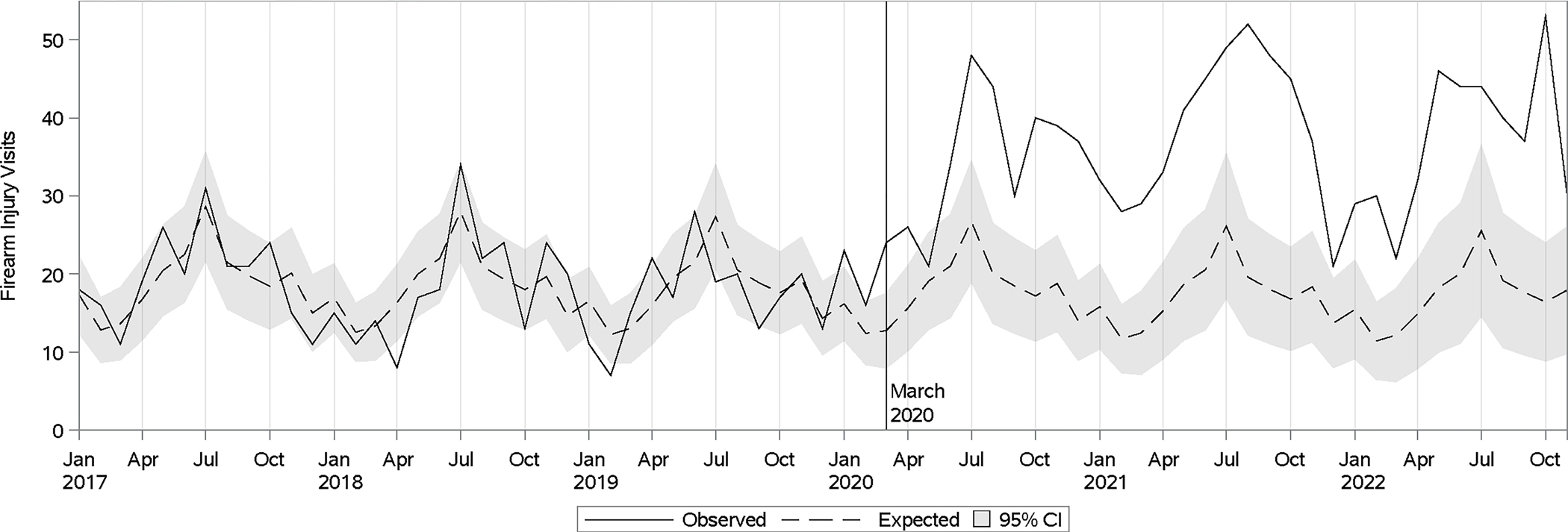
Figure 1.. Observed versus Expected Pediatric Firearm Injury Emergency Department Visits, January 2017-November 2022
Expected emergency department (ED) visits generated by the model during the pre-pandemic period are displayed to demonstrate model fit. During the pandemic period, firearm injury ED visits per 30 days increased significantly above expected visit rates from July 2020 through November 2022.
Figure 2.
Figure 2.. Observed versus Expected Pediatric Firearm Injury Emergency Department Visits by Sociodemographic Characteristics
Separate models were constructed for each of the following sociodemographic characteristics: age, sex, and race and ethnicity. To account for seasonal, geographic, and temporal trends, models adjusted for month, site, the number of months since January 2017, and the sociodemographic characteristic of interest and its interaction with a temporal trend.
Figure 3.
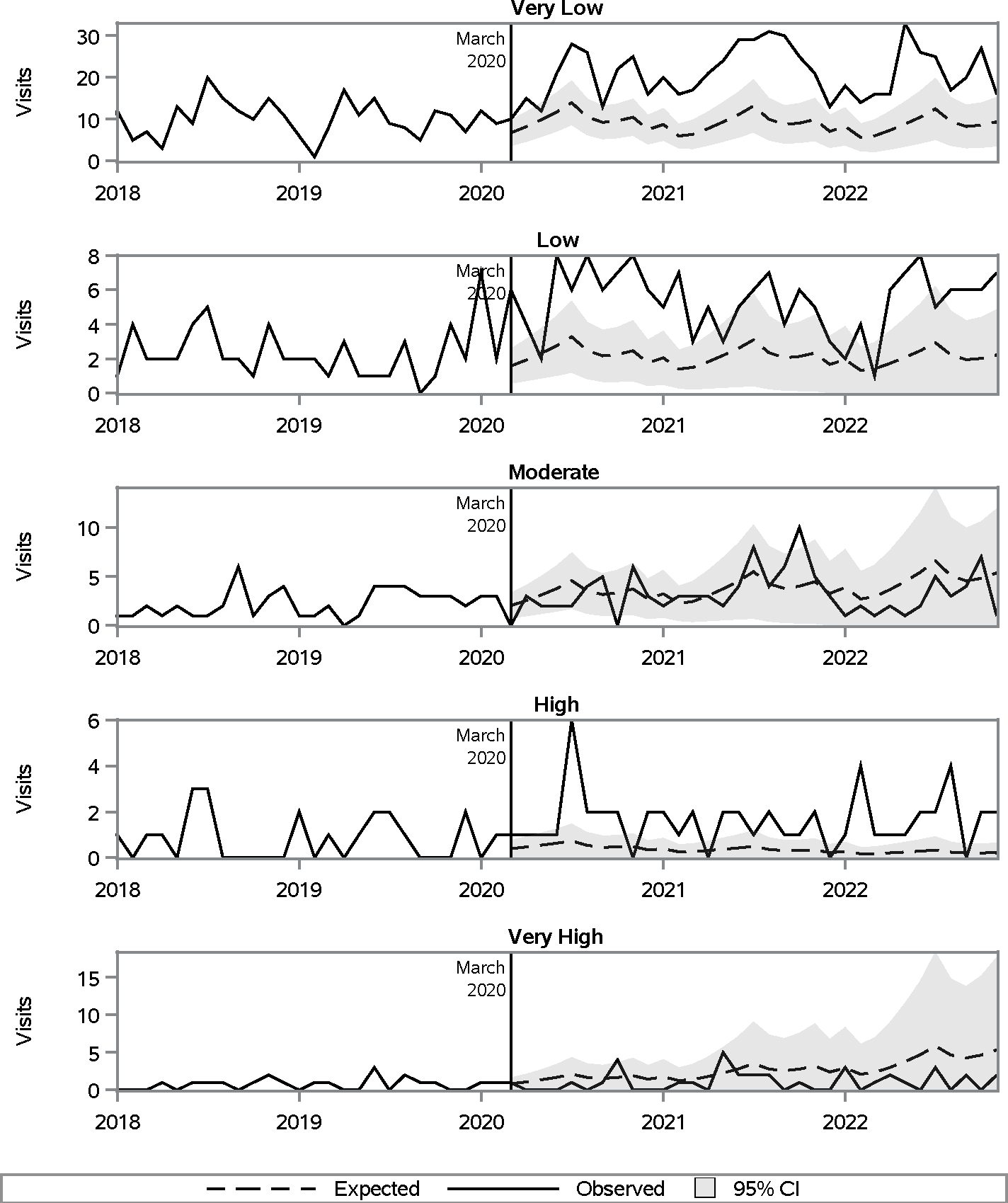
Figure 3.. Observed versus Expected Pediatric Firearm Injury Emergency Department Visits by Child Opportunity Index
To account for seasonal, geographic, and temporal trends, the model adjusted for month, site, the number of months since January 2017, and the interaction of Child Opportunity Index with a temporal trend.

References

    1. Lee LK, Douglas K, Hemenway D. Crossing Lines — A Change in the Leading Cause of Death among U.S. Children. N Engl J Med. 2022;386(16):1485–1487. doi:10.1056/NEJMP2200169/SUPPL_FILE/NEJMP2200169_DISCLOSURES.PDF - DOI - PubMed
    1. Goldstick JE, Cunningham RM, Carter PM. Current Causes of Death in Children and Adolescents in the United States. N Engl J Med. 2022;386(20):1955. doi:10.1056/NEJMC2201761 - DOI - PMC - PubMed
    1. Fowler KA, Dahlberg LL, Haileyesus T, Gutierrez C, Bacon S. Childhood firearm injuries in the United States. Pediatrics. 2017;140(1). doi:10.1542/peds.2016-3486 - DOI - PMC - PubMed
    1. Miller M, Zhang W, Azrael D. Firearm Purchasing During the COVID-19 Pandemic: Results From the 2021 National Firearms Survey. 10.7326/M21-3423. 2021;175(2):219–225. doi:10.7326/M21-3423 - DOI - DOI - PMC - PubMed
    1. Peña PA, Jena A. Child Deaths by Gun Violence in the US During the COVID-19 Pandemic. JAMA Netw Open. 2022;5(8):e2225339–e2225339. doi:10.1001/JAMANETWORKOPEN.2022.25339 - DOI - PMC - PubMed

Publication types