


Reimagining infrastructure for a biodiverse future
- PMID: 37931104
- PMCID: PMC10655554
- DOI: 10.1073/pnas.2214334120
Reimagining infrastructure for a biodiverse future
Abstract
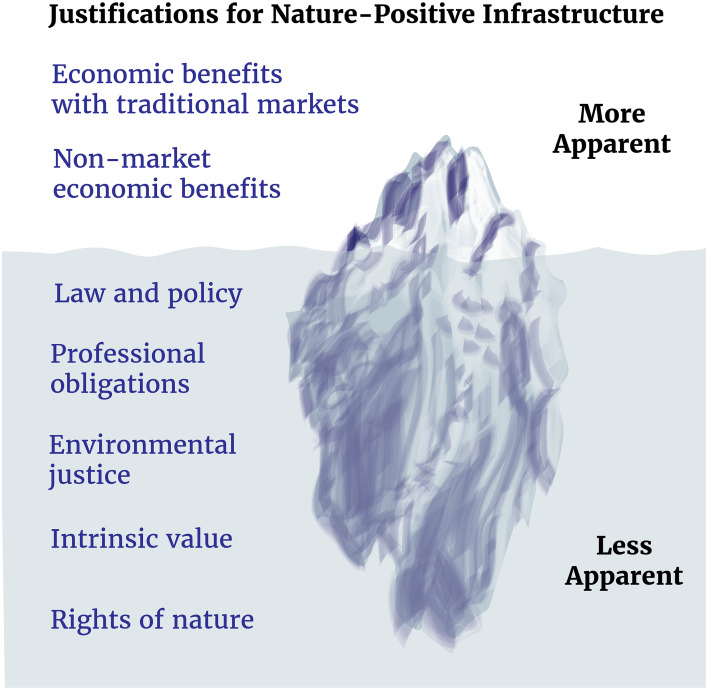
Civil infrastructure will be essential to face the interlinked existential threats of climate change and rising resource demands while ensuring a livable Anthropocene for all. However, conventional infrastructure planning largely neglects the contributions and maintenance of Earth's ecological life support systems, which provide irreplaceable services supporting human well-being. The stability and performance of these services depend on biodiversity, but conventional infrastructure practices, narrowly focused on controlling natural capital, have inadvertently degraded biodiversity while perpetuating social inequities. Here, we envision a new infrastructure paradigm wherein biodiversity and ecosystem services are a central objective of civil engineering. In particular, we reimagine infrastructure practice such that 1) ecosystem integrity and species conservation are explicit objectives from the outset of project planning; 2) infrastructure practices integrate biodiversity into diverse project portfolios along a spectrum from conventional to nature-based solutions and natural habitats; 3) ecosystem functions reinforce and enhance the performance and lifespan of infrastructure assets; and 4) civil engineering promotes environmental justice by counteracting legacies of social inequity in infrastructure development and nature conservation. This vision calls for a fundamental rethinking of the standards, practices, and mission of infrastructure development agencies and a broadening of scope for conservation science. We critically examine the legal and professional precedents for this paradigm shift, as well as the moral and economic imperatives for manifesting equitable infrastructure planning that mainstreams biodiversity and nature's benefits to people. Finally, we set an applied research agenda for supporting this vision and highlight financial, professional, and policy pathways for achieving it.
Keywords: climate change; conservation; future cities; nature-based solutions; sustainable development.
Conflict of interest statement
The authors declare no competing interest.
Figures


References
-
- Kremen C., Merenlender A. M., Landscapes that work for biodiversity and people. Science 362, eaau6020 (2018). - PubMed
-
- McPhearson T., et al. , Radical changes are needed for transformations to a good Anthropocene. npj Urban Sustain. 1, 1–13 (2021).
-
- Bennett E. M., Reyers B., “Navigating the dynamics of people-planet relationships: A social-ecological systems perspective“ (UN University Centre for Policy Research and UN Environment Programme, 2022).
-
- Baldwin-Cantello W., et al. , The Triple Challenge: Synergies, trade-offs and integrated responses for climate, biodiversity, and human wellbeing goals. Climate Policy 23, 782–799 (2023).
-
- Bluwstein J., et al. , Commentary: Underestimating the challenges of avoiding a ghastly future. Front. Conserv. Sci. 2, 615419 (2021).
Publication types
MeSH terms
LinkOut - more resources
Full Text Sources
