


Adoptive cell therapy for cancer treatment
- PMID: 37933232
- PMCID: PMC10624386
- DOI: 10.1002/EXP.20210058
Adoptive cell therapy for cancer treatment
Abstract
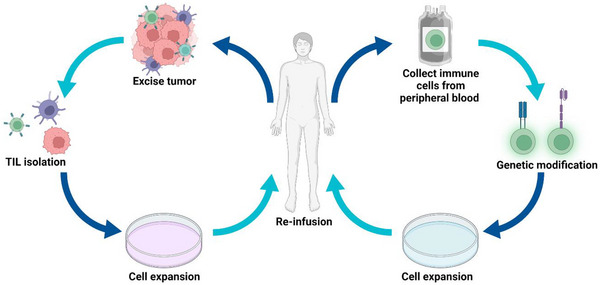
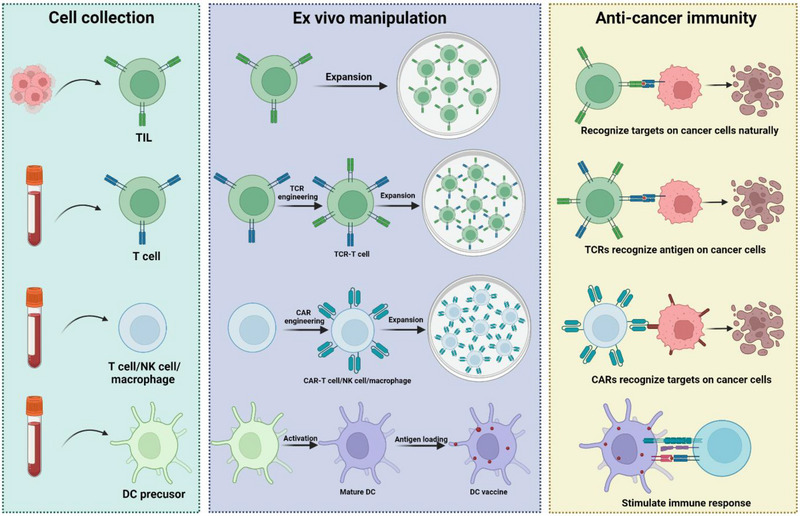
Adoptive cell therapy (ACT) is a rapidly growing anti-cancer strategy that has shown promise in treating various cancer types. The concept of ACT involves activating patients' own immune cells ex vivo and then transferring them back to the patients to recognize and eliminate cancer cells. Currently, the commonly used ACT includes tumor-infiltrating lymphocytes (TILs), genetically engineered immune cells, and dendritic cells (DCs) vaccines. With the advancement of cell culture and genetic engineering techniques, ACT has been used in clinics to treat malignant hematological diseases and many new ACT-based regimens are in different stages of clinical trials. Here, representative ACT approaches are introduced and the opportunities and challenges for clinical translation of ACT are discussed.
Keywords: T‐cell receptors; adoptive cell therapy; cancer immunotherapy; chimeric antigen receptors; dendritic cells; macrophages; natural killer cells; tumor‐infiltrating lymphocytes.
© 2023 The Authors. Exploration published by Henan University and John Wiley & Sons Australia, Ltd.
Conflict of interest statement
Yizhou Dong is a scientific advisory board member of Oncorus Inc, Arbor Biotechnologies, and FL85. Other authors declare no conflicts of interest.
Figures
References
-
- June C. H., O'Connor R. S., Kawalekar O. U., Ghassemi S., Milone M. C., Science 2018, 359, 1361. - PubMed
Grants and funding
LinkOut - more resources
Full Text Sources