


Ranking age-specific modifiable risk factors for cardiovascular disease and mortality: evidence from a population-based longitudinal study
- PMID: 37936651
- PMCID: PMC10626167
- DOI: 10.1016/j.eclinm.2023.102230
Ranking age-specific modifiable risk factors for cardiovascular disease and mortality: evidence from a population-based longitudinal study
Abstract
Background: Cardiovascular disease (CVD) remains a paramount contemporary health challenge. This study examined age-specific effects of 14 risk factors on CVD and mortality in different age groups.
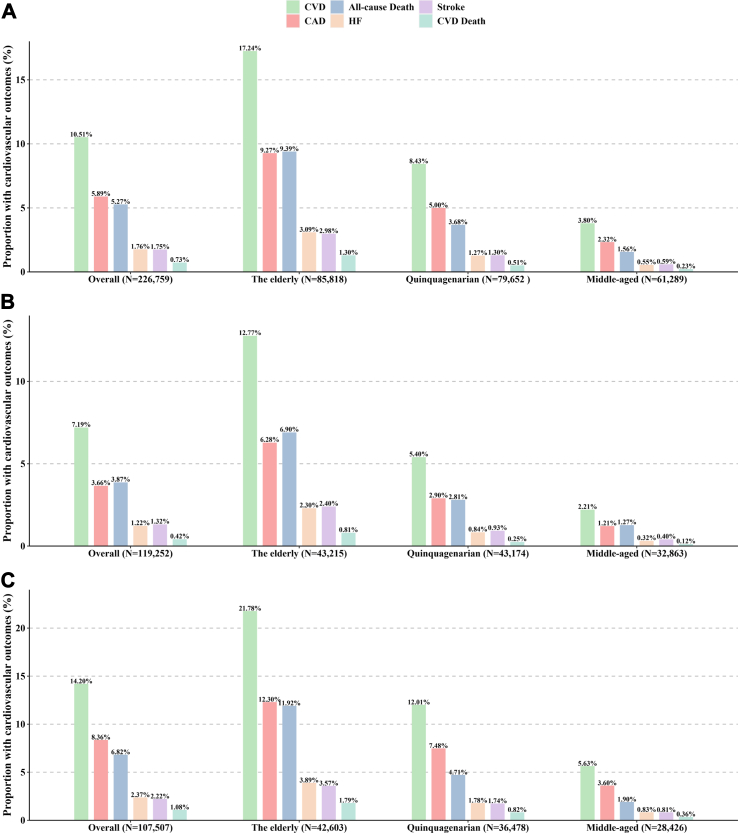
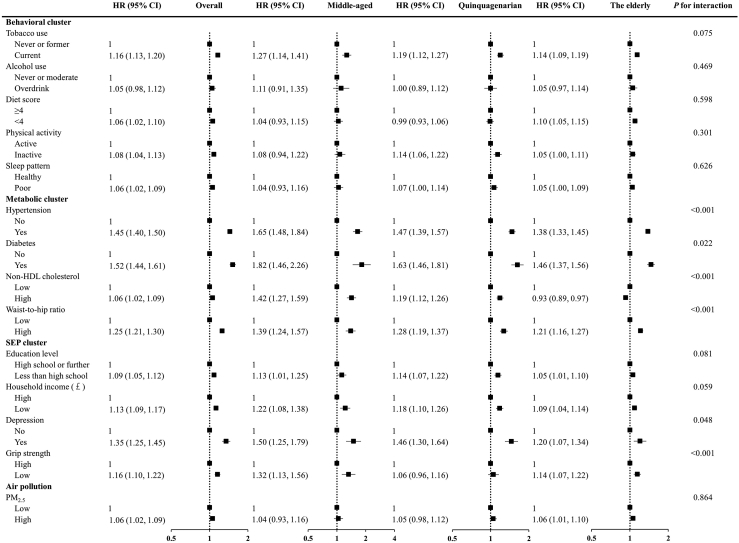
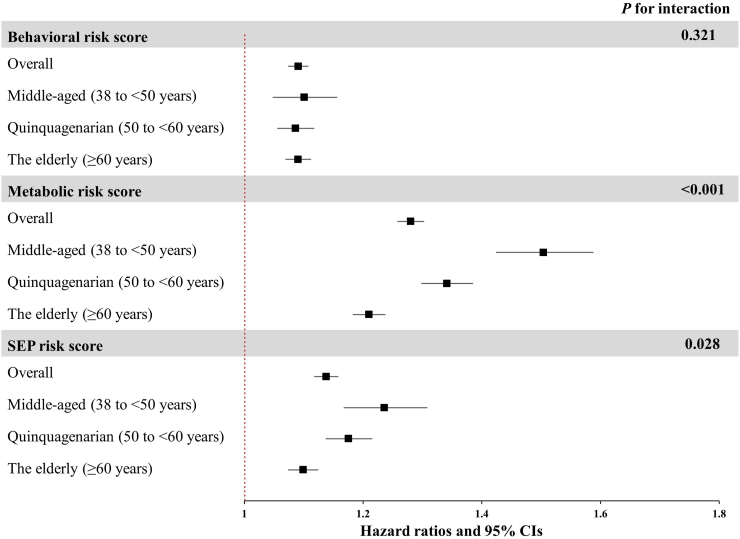
Methods: We analyzed data from 226,759 CVD-free participants aged 40 years and older in the UK Biobank during the period from baseline time (2006-2010) to September 30, 2021. The primary CVD outcome was a composite of incident coronary artery disease, heart failure, and stroke. We calculated age-specific hazard ratios (HRs) and population-attributable fractions (PAF) for CVD and mortality associated with 14 potentially modifiable risk factors.
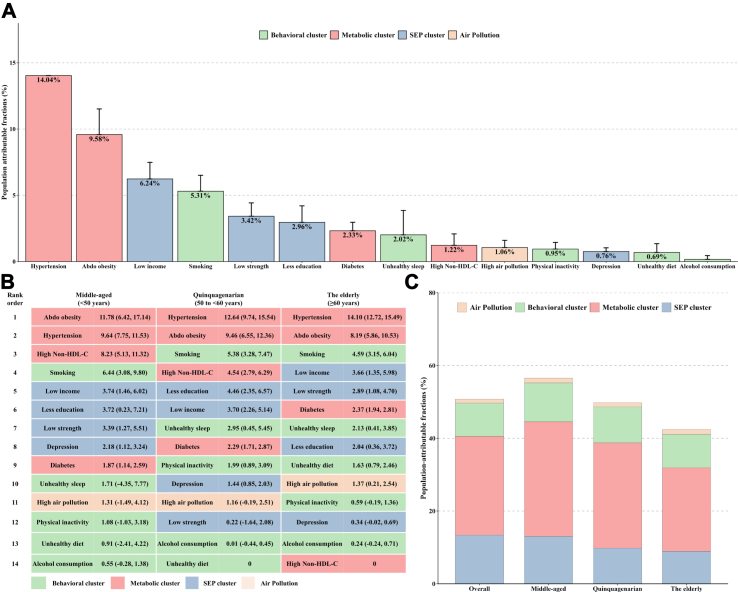
Findings: During 12.17-year follow-up, 23,838 incident CVD cases and 11,949 deaths occurred. Age-specific disparities were observed in the risk factors contributing to CVD, and the overall PAF declined with age (PAF of 56.53% in middle-age; 49.78% in quinquagenarian; 42.45% in the elderly). Metabolic factors had the highest PAF in each age group, with hypertension (14.04% of the PAF) and abdominal obesity (9.58% of the PAF) being prominent. Behavioral factors had the highest PAF in the middle-aged group (10.68% of the PAF), and smoking was the leading behavioral factor in all age groups. In socioeconomic and psychosocial risk clusters, low income contributed most among middle-aged (3.74% of the PAF) and elderly groups (3.66% of the PAF), while less education accounted more PAF for quinquagenarian group (4.46% of the PAF). Similar age-specific patterns were observed for cardiovascular subtypes and mortality.
Interpretation: A large fraction of CVD cases and deaths were associated with modifiable risk factors in all age groups. Targeted efforts should focus on the most impactful risk factors, as well as age-specific modifiable risk factors. These findings may inform the development of more precise medical strategies to prevent and manage CVD and related mortality.
Funding: The work was supported by the Bill & Melinda Gates Foundation (grant number: INV-016826 to Hualiang Lin) and the National Natural Science Foundation of China (grant number: 82373534 to Hualiang Lin).
Keywords: Age; Cardiovascular disease; Epidemiology; Modifiable factor; Prospective study.
© 2023 The Author(s).
Conflict of interest statement
The authors have no conflict of interest to declare.
Figures
References
-
- Cheema K.M., Dicks E., Pearson J., Samani N.J. Long-term trends in the epidemiology of cardiovascular diseases in the UK: insights from the British Heart Foundation statistical compendium. Cardiovasc Res. 2022;118(10):2267–2280. - PubMed
-
- Townsend N., Kazakiewicz D., Lucy Wright F., et al. Epidemiology of cardiovascular disease in Europe. Nat Rev Cardiol. 2022;19(2):133–143. - PubMed
LinkOut - more resources
Full Text Sources
