


Effects of Aircraft Noise on Sleep: Federal Aviation Administration National Sleep Study Protocol
- PMID: 37947580
- PMCID: PMC10650692
- DOI: 10.3390/ijerph20217024
Effects of Aircraft Noise on Sleep: Federal Aviation Administration National Sleep Study Protocol
Abstract
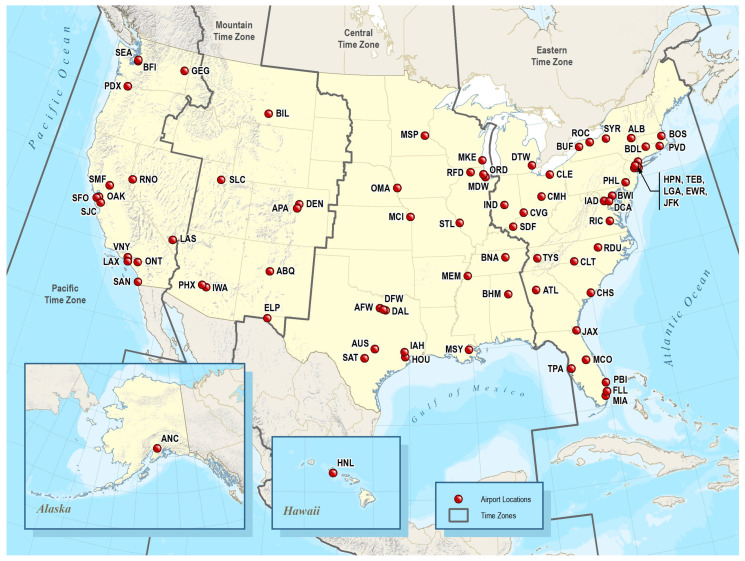
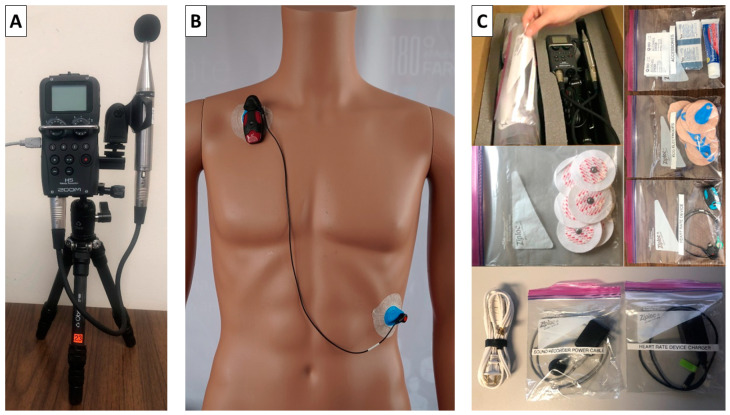
Aircraft noise can disrupt sleep and impair recuperation. The last U.S. investigation into the effects of aircraft noise on sleep dates back more than 20 years. Since then, traffic patterns and the noise levels produced by single aircraft have changed substantially. It is therefore important to acquire current data on sleep disturbance relative to varying degrees of aircraft noise exposure in the U.S. that can be used to check and potentially update the existing noise policy. This manuscript describes the design, procedures, and analytical approaches of the FAA's National Sleep Study. Seventy-seven U.S. airports with relevant nighttime air traffic from 39 states are included in the sampling frame. Based on simulation-based power calculations, the field study aims to recruit 400 participants from four noise strata and record an electrocardiogram (ECG), body movement, and sound pressure levels in the bedroom for five consecutive nights. The primary outcome of the study is an exposure-response function between the instantaneous, maximum A-weighted sound pressure levels (dBA) of individual aircraft measured in the bedroom and awakening probability inferred from changes in heart rate and body movement. Self-reported sleep disturbance due to aircraft noise is the secondary outcome that will be associated with long-term average noise exposure metrics such as the Day-Night Average Sound Level (DNL) and the Nighttime Equivalent Sound Level (Lnight). The effect of aircraft noise on several other physiological and self-report outcomes will also be investigated. This study will provide key insights into the effects of aircraft noise on objectively and subjectively assessed sleep disturbance.
Keywords: aircraft; awakening; body movement; electrocardiogram; exposure–response; noise; sleep; sleep disturbance.
Conflict of interest statement
J.J.C. is employed by Harris Miller Miller & Hanson Inc. (HMMH), Anaheim, CA, USA. T.G., E.J., J.K. and J.O. are employed by Westat, Rockville, MD, USA. Pamela Shaw is a named inventor on patent PCT/US2016/050112 for the prediction of Cytokine release syndrome, which is owned by the University of Pennsylvania and licensed by Novartis. The remaining authors declare that the research was conducted in the absence of any commercial or financial relationships that could be construed as a potential conflict of interest. The funders had no role in the design of the study; in the collection, analyses, or interpretation of data; in the writing of the manuscript, and in the decision to publish the results. FAA project managers supported the research team in fulfilling regulatory requirements and providing air traffic data.
Figures
References
-
- Watson N.F., Badr M.S., Belenky G., Bliwise D.L., Buxton O.M., Buysse D., Dinges D.F., Gangwisch J., Grandner M.A., Kushida C., et al. Recommended amount of sleep for a healthy adult: A joint consensus statement of the american academy of sleep medicine and sleep research society. Sleep. 2015;38:843–844. doi: 10.5665/sleep.4716. - DOI - PMC - PubMed
-
- Fritschi L., Brown A.L., Kim R., Schwela D.H., Kephalopoulos S. Burden of Disease from Environmental Noise. World Health Organization (WHO); Bonn, Germany: 2011.
-
- Kempen E.V., Casas M., Pershagen G., Foraster M. Who environmental noise guidelines for the european region: A systematic review on environmental noise and cardiovascular and metabolic effects: A summary. Int. J. Environ. Res. Public Health. 2018;15:379. doi: 10.3390/ijerph15020379. - DOI - PMC - PubMed
Publication types
MeSH terms
LinkOut - more resources
Full Text Sources
Medical
Miscellaneous
