


Sex and age differences in social and cognitive function in offspring exposed to late gestational hypoxia
- PMID: 37951901
- PMCID: PMC10640736
- DOI: 10.1186/s13293-023-00557-0
Sex and age differences in social and cognitive function in offspring exposed to late gestational hypoxia
Abstract
Background: Gestational sleep apnea is a hypoxic sleep disorder that affects 8-26% of pregnancies and increases the risk for central nervous system dysfunction in offspring. Specifically, there are sex differences in the sensitivity of the fetal hippocampus to hypoxic insults, and hippocampal impairments are associated with social dysfunction, repetitive behaviors, anxiety, and cognitive impairment. Yet, it is unclear whether gestational sleep apnea impacts these hippocampal-associated functions and if sex and age modify these effects. To examine the relationship between gestational sleep apnea and hippocampal-associated behaviors, we used chronic intermittent hypoxia (CIH) to model late gestational sleep apnea in pregnant rats. We hypothesized that late gestational CIH would produce sex- and age-specific social, anxiety-like, repetitive, and cognitive impairments in offspring.
Methods: Timed pregnant Long-Evans rats were exposed to CIH or room air normoxia from GD 15-19. Behavioral testing of offspring occurred during either puberty or young adulthood. To examine gestational hypoxia-induced behavioral phenotypes, we quantified hippocampal-associated behaviors (social function, repetitive behaviors, anxiety-like behaviors, and spatial memory and learning), hippocampal neuronal activity (glutamatergic NMDA receptors, dopamine transporter, monoamine oxidase-A, early growth response protein 1, and doublecortin), and circulating hormones in offspring.
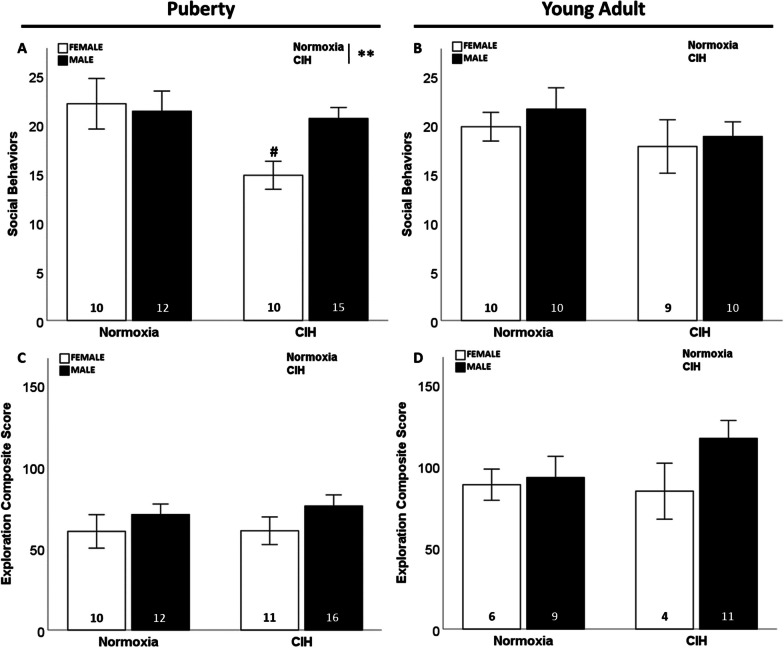
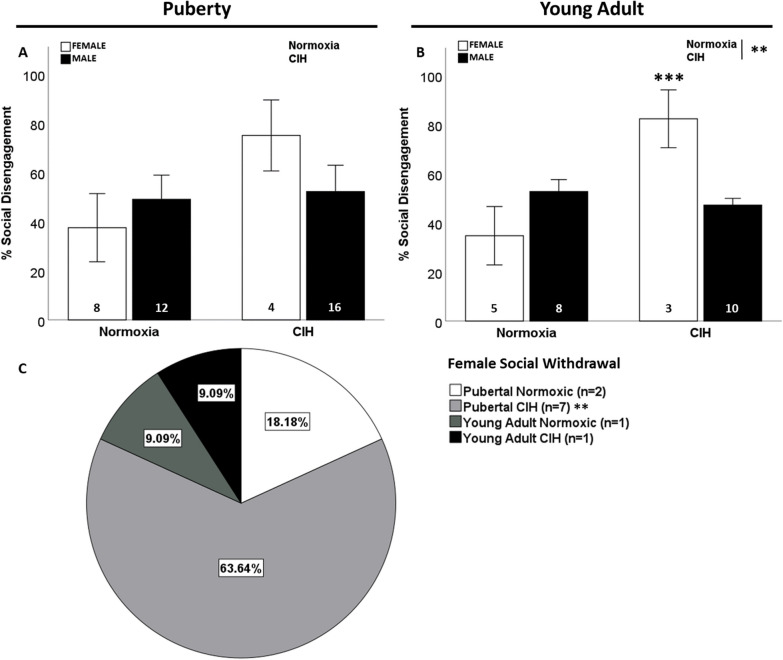
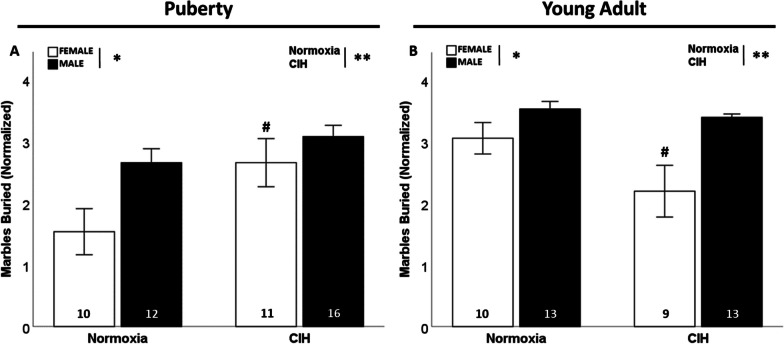
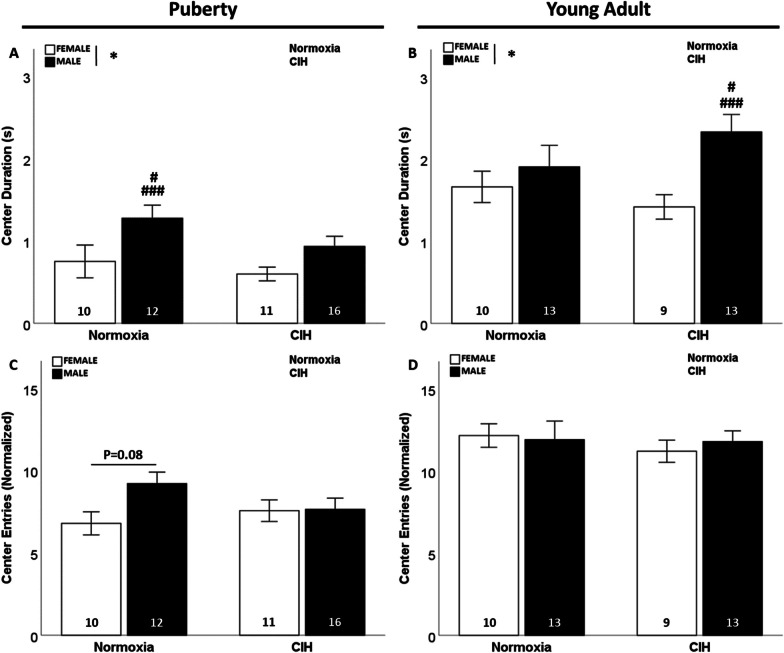
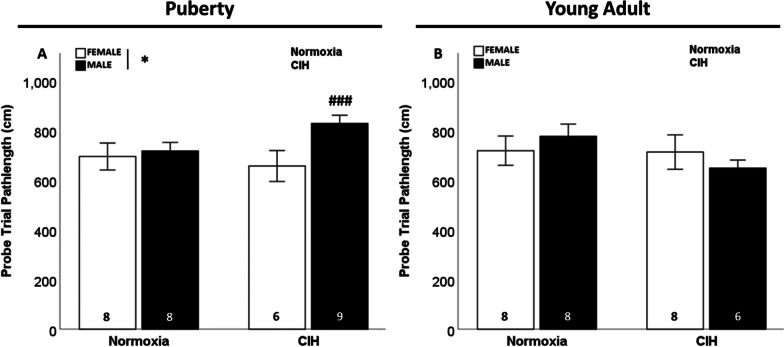
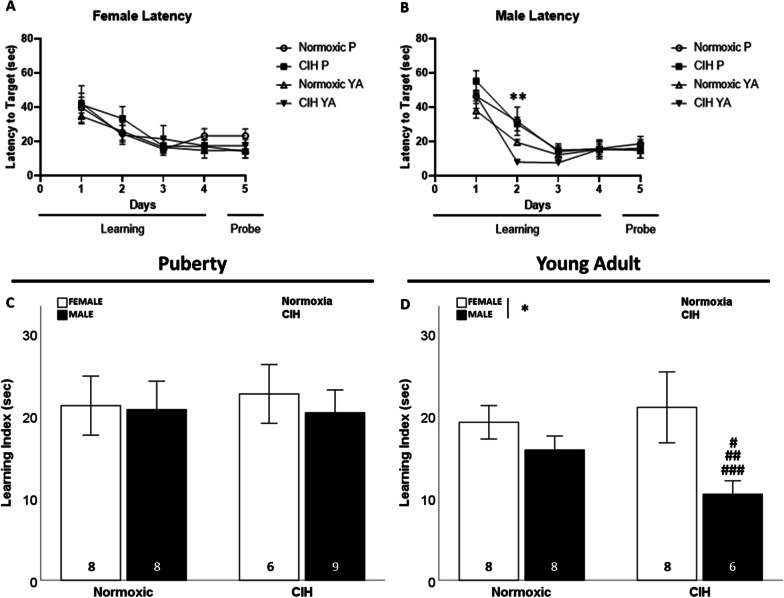
Results: Late gestational CIH induced sex- and age-specific differences in social, repetitive, and memory functions in offspring. In female pubertal offspring, CIH impaired social function, increased repetitive behaviors, and elevated circulating corticosterone levels but did not impact memory. In contrast, CIH transiently induced spatial memory dysfunction in pubertal male offspring but did not impact social or repetitive functions. Long-term effects of gestational CIH on social behaviors were only observed in female offspring, wherein CIH induced social disengagement and suppression of circulating corticosterone levels in young adulthood. No effects of gestational CIH were observed in anxiety-like behaviors, hippocampal neuronal activity, or circulating testosterone and estradiol levels, regardless of sex or age of offspring.
Conclusions: Our results indicate that hypoxia-associated pregnancy complications during late gestation can increase the risk for behavioral and physiological outcomes in offspring, such as social dysfunction, repetitive behaviors, and cognitive impairment, that are dependent on sex and age.
Keywords: Chronic intermittent hypoxia; Hippocampus; Marble burying behaviors; Morris water maze; Open field; Prenatal programming; Sex differences; Social behaviors.
Plain language summary
Sleep apnea during late pregnancy is a common pregnancy complication that can impact the brain development of children born to mothers with sleep apnea. Children with impaired brain development may present with decreased social skills, memory issues, anxiety, and compulsivity. It is unclear if there is a cause and effect relationship between sleep apnea during late pregnancy and behavioral changes in offspring. Additionally, it is unknown whether male or female sex or age of the offspring affects these relationships. In this study, we exposed pregnant rats to a model of sleep apnea called chronic intermittent hypoxia (CIH) within late gestation and examined the behavior of the offspring and brain activity during puberty and young adulthood. We found that CIH during late pregnancy had long-term effects in the offspring that were different in males and females. Notably, female offspring displayed social impairments in response to late gestation CIH, whereas male offspring displayed cognitive dysfunction.
© 2023. The Author(s).
Conflict of interest statement
The authors declare that they have no competing interests.
Figures
Update of
-
Sex and age differences in social and cognitive function in offspring exposed to late gestational hypoxia.Res Sq [Preprint]. 2023 Jun 7:rs.3.rs-2507737. doi: 10.21203/rs.3.rs-2507737/v1. Res Sq. 2023. Update in: Biol Sex Differ. 2023 Nov 11;14(1):81. doi: 10.1186/s13293-023-00557-0. PMID: 37333114 Free PMC article. Updated. Preprint.
References
Publication types
MeSH terms
Substances
Grants and funding
LinkOut - more resources
Full Text Sources
Medical
Research Materials
