


Sex-Based Differences and Risk Factors for Comorbid Nonalcoholic Fatty Liver Disease in Patients with Bipolar Disorder: A Cross-Sectional Retrospective Study
- PMID: 37954889
- PMCID: PMC10637207
- DOI: 10.2147/DMSO.S428523
Sex-Based Differences and Risk Factors for Comorbid Nonalcoholic Fatty Liver Disease in Patients with Bipolar Disorder: A Cross-Sectional Retrospective Study
Erratum in
-
Erratum: Sex-Based Differences and Risk Factors for Comorbid Nonalcoholic Fatty Liver Disease in Patients with Bipolar Disorder: A Cross-Sectional Retrospective Study [Corrigendum].Diabetes Metab Syndr Obes. 2024 Mar 19;17:1335-1336. doi: 10.2147/DMSO.S469079. eCollection 2024. Diabetes Metab Syndr Obes. 2024. PMID: 38525160 Free PMC article.
Abstract
Purpose: Sex-based differences in patients with bipolar disorders (BD) are well recognized, and it is well known that the prevalence and severity of nonalcoholic fatty liver disease (NAFLD) are both higher in men than in women. Although metabolic disorders such as NAFLD are common in patients with BD, sex differences and risk factors for NAFLD comorbidity in these patients have not been thoroughly explored. This study aimed to investigate sex differences in patients with comorbid NAFLD and BD and associated risk factors.
Methods: This retrospective cross-sectional study included 710 patients with BD. Clinical data of patients with BD, including information on fasting glucose, liver function-related enzymes, relevant lipid data, uric acid, the triglyceride-glucose index (TyG), and demographics, were derived from the hospital electronic medical record system from June 2020 to July 2022. We performed logistic regression analysis and calculated the odds ratios with 95% confidence intervals of factors using t-tests, χ²-tests, and receiver operating characteristic. NAFLD was diagnosed using liver ultrasonography.
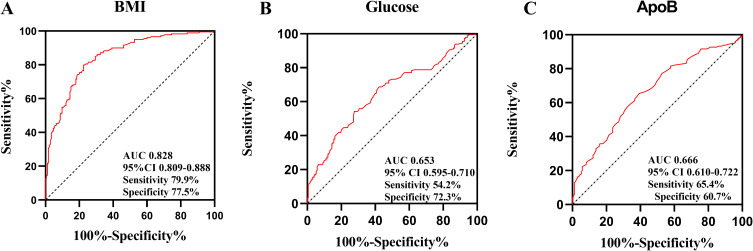
Results: The prevalence of NAFLD was higher in male patients with BD than in female patients (50.9% vs 38.5%), and there were significant differences in the years of education and marital status (all P<0.05). Regression analysis showed that the risk factors for comorbidities were the body mass index (BMI), fasting glucose, and apolipoprotein B levels in male patients and the BMI, bipolar disease course, glutamine transpeptidase levels, and the TyG in female patients.
Conclusion: Sex-based differences exist in risk factors and in the prevalence of comorbid NAFLD among patients with BD. BMI is a sex-independent risk factor, and clinical attention should be targeted to risk factors associated with comorbid NAFLD related to sex, especially in female patients with BD who presenting a high TyG index.
Keywords: metabolic disorders; prevalence; sex differences; triglyceride-glucose index.
© 2023 Wang et al.
Conflict of interest statement
The authors declare no conflicts of interest associated with this research and affirm that the study was conducted without any commercial or financial relationships that could be perceived as potential conflicts of interest.
Figures

References
LinkOut - more resources
Full Text Sources
