


Multi-modal MRI of hippocampal morphometry and connectivity after pediatric severe TBI
- PMID: 37955810
- PMCID: PMC10844146
- DOI: 10.1007/s11682-023-00818-x
Multi-modal MRI of hippocampal morphometry and connectivity after pediatric severe TBI
Abstract
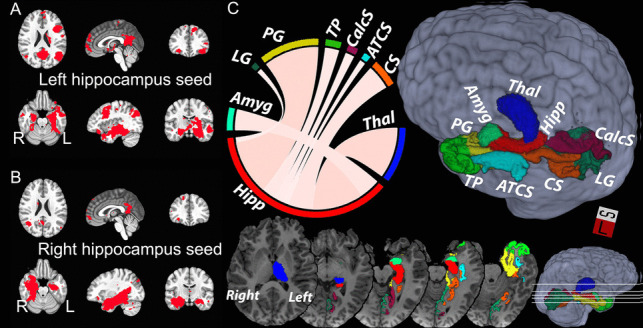
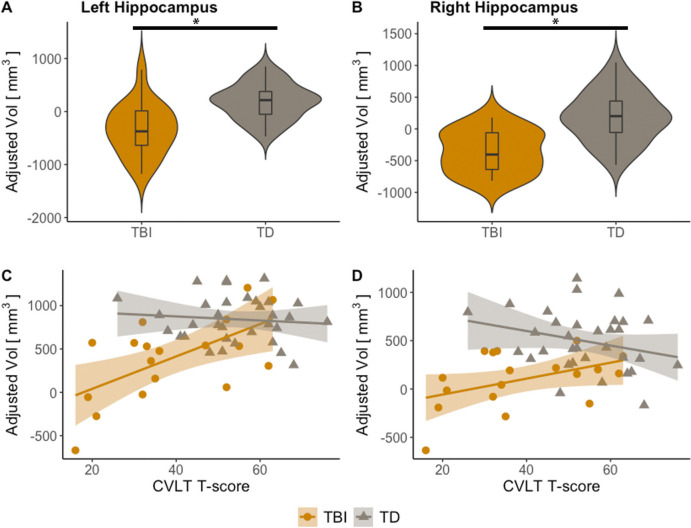
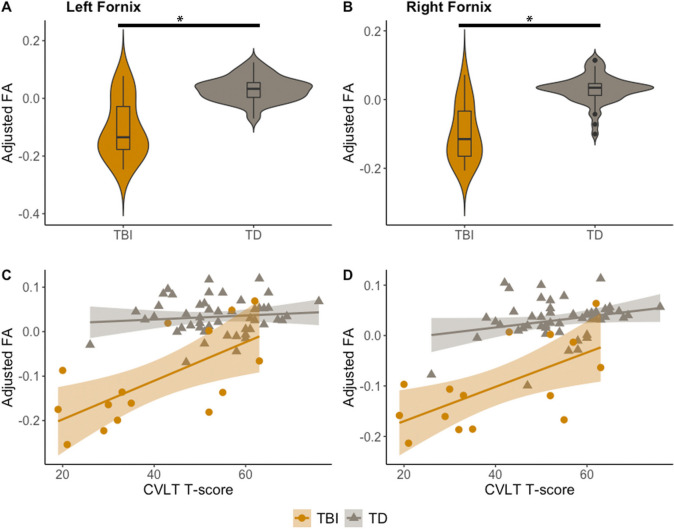
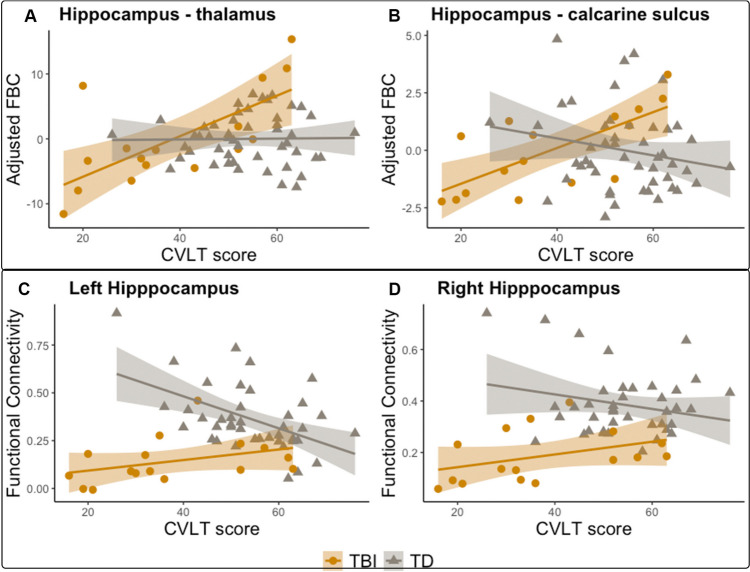
This investigation explores memory performance using the California Verbal Learning Test in relation to morphometric and connectivity measures of the memory network in severe traumatic brain injury. Twenty-two adolescents with severe traumatic brain injury were recruited for multimodal MRI scanning 1-2 years post-injury at 13 participating sites. Analyses included hippocampal volume derived from anatomical T1-weighted imaging, fornix white matter microstructure from diffusion tensor imaging, and hippocampal resting-state functional magnetic resonance imaging connectivity as well as diffusion-based structural connectivity. A typically developing control cohort of forty-nine age-matched children also underwent scanning and neurocognitive assessment. Results showed hippocampus volume was decreased in traumatic brain injury with respect to controls. Further, hippocampal volume loss was associated with worse performance on memory and learning in traumatic brain injury subjects. Similarly, hippocampal fornix fractional anisotropy was reduced in traumatic brain injury with respect to controls, while decreased fractional anisotropy in the hippocampal fornix also was associated with worse performance on memory and learning in traumatic brain injury subjects. Additionally, reduced structural connectivity of left hippocampus to thalamus and calcarine sulcus was associated with memory and learning in traumatic brain injury subjects. Functional connectivity in the left hippocampal network was also associated with memory and learning in traumatic brain injury subjects. These regional findings from a multi-modal neuroimaging approach should not only be useful for gaining valuable insight into traumatic brain injury induced memory and learning disfunction, but may also be informative for monitoring injury progression, recovery, and for developing rehabilitation as well as therapy strategies.
Keywords: Connectivity; Fornix; Hippocampus; Memory; TBI.
© 2023. The Author(s).
Conflict of interest statement
The authors have no conflicts or competing interests to disclose that are relevant to the current work.
Figures
References
-
- Adnan A, Crawley A, Mikulis D, Moscovitch M, Colella B, Green R. Moderate-severe traumatic brain injury causes delayed loss of white matter integrity: Evidence of fornix deterioration in the chronic stage of injury. Brain Injury. 2013;27(12):1415–1422. doi: 10.3109/02699052.2013.823659. - DOI - PubMed
-
- Aggleton JP, O’Mara SM, Vann SD, Wright NF, Tsanov M, Erichsen JT. Hippocampal-anterior thalamic pathways for memory: Uncovering a network of direct and indirect actions: Hippocampal-thalamic pathways for memory. European Journal of Neuroscience. 2010;31(12):2292–2307. doi: 10.1111/j.1460-9568.2010.07251.x. - DOI - PMC - PubMed
-
- Beauchamp MH, Ditchfield M, Maller JJ, Catroppa C, Godfrey C, Rosenfeld JV, Kean MJ, Anderson VA. Hippocampus, amygdala and global brain changes 10 years after childhood traumatic brain injury. International Journal of Developmental Neuroscience. 2011;29(2):137–143. doi: 10.1016/j.ijdevneu.2010.12.003. - DOI - PubMed
-
- Bell MJ, Rosario BL, Kochanek PM, Adelson PD, Morris KP, Au AK, Schober M, Butt W, Edwards RJ, Zimmerman J, Pineda J, Le TM, Dean N, Whalen MJ, Figaji A, Luther J, Beers SR, Gupta DK, Carpenter J, Sarnaik A. Comparative effectiveness of diversion of cerebrospinal fluid for children with severe traumatic brain injury. JAMA Network Open. 2022;5(7):e2220969. doi: 10.1001/jamanetworkopen.2022.20969. - DOI - PMC - PubMed
MeSH terms
LinkOut - more resources
Full Text Sources
Medical
