


Mastering DNA chromatogram analysis in Sanger sequencing for reliable clinical analysis
- PMID: 37955813
- PMCID: PMC10643650
- DOI: 10.1186/s43141-023-00587-6
Mastering DNA chromatogram analysis in Sanger sequencing for reliable clinical analysis
Abstract
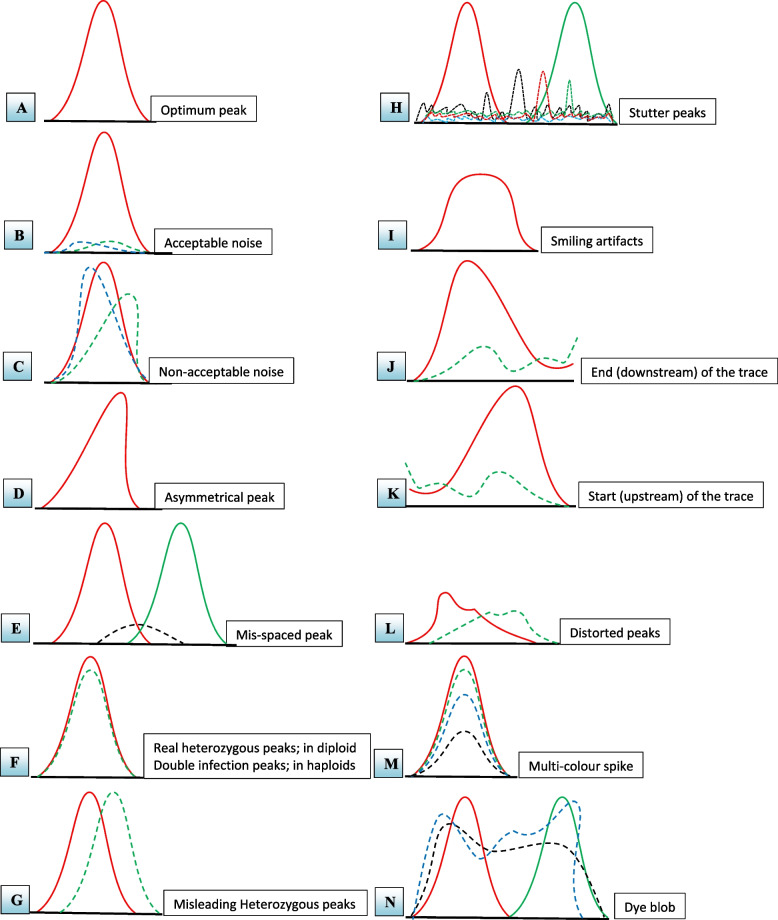
Background: Sanger dideoxy sequencing is vital in clinical analysis due to its accuracy, ability to analyze genetic markers like SNPs and STRs, capability to generate reliable DNA profiles, and its role in resolving complex clinical cases. The precision and robustness of Sanger sequencing contribute significantly to the scientific basis of clinical investigations. Though the reading of chromatograms seems to be a routine step, many errors conducted in PCR may lead to consequent limitations in the readings of AGCT peaks. These errors are possibly associated with improper DNA amplification and its subsequent interpretation of DNA sequencing files, such as noisy peaks, artifacts, and confusion between double-peak technical errors, heterozygosity, and double infection potentials. Thus, it is not feasible to read nucleic acid sequences without giving serious attention to these technical problems. To ensure the accuracy of DNA sequencing outcomes, it is also imperative to detect and rectify technical challenges that may lead to misinterpretation of the DNA sequence, resulting in errors and incongruities in subsequent analyses.
Short conclusion: This overview sheds light on prominent technical concerns that can emerge prior to and during the interpretation of DNA chromatograms in Sanger sequencing, along with offering strategies to address them effectively. The significance of identifying and tackling these technical limitations during the chromatogram analysis is underscored in this review. Recognizing these concerns can aid in enhancing the quality of downstream analyses for Sanger sequencing results, which holds notable improvement in accuracy, reliability, and ability to provide crucial genetic information in clinical analysis.
Keywords: Chromatogram files; Electropherograms; Sanger sequencing; Technical issues; Tips; Troubleshoot.
© 2023. The Author(s).
Conflict of interest statement
The authors declare that they have no competing interests.
Figures
References
-
- Men AE, Wilson P, Siemering K, Forrest S (2008) Sanger DNA sequencing. In: Next Gener Genome Seq Towards Personalized Medicine. John Wiley & Sons, Hoboken
-
- Walker SE, Lorsch J. Sanger dideoxy sequencing of DNA In: Methods in enzymology. Elsevier; 2013. pp. 171–184. - PubMed
-
- Aljubouri TRS, Al-Shuhaib MBS. Genotyping of mitochondrial D-loop sequences in three breeds of sheep. Biologia (Bratisl) 2020;76:203–211. doi: 10.2478/s11756-020-00543-6. - DOI
Publication types
LinkOut - more resources
Full Text Sources
Other Literature Sources