. 2023 Nov 13;13(1):19738.
doi: 10.1038/s41598-023-46249-y.

Inhibitory efficiency of Andrographis paniculata extract on viral multiplication and nitric oxide production

Affiliations

Inhibitory efficiency of Andrographis paniculata extract on viral multiplication and nitric oxide production

Ittipon Siridechakorn et al. Sci Rep. .

Abstract

Andrographis paniculata (Burm. F.) Nees is a medicinal plant previously reported with broad-spectrum antivirals but the mode of inhibition remains elusive. The objective of this study was to identify the most active fraction from A. paniculata ethanol extract (APE, APE-2A, APE-2B and APE-2C) and dry powder extract (APSP) against influenza A (H3N2), representing RNA viruses, and herpes simplex virus-1 (HSV-1), representing DNA viruses. The results showed that the fractions APSP, APE, APE-2B, and APE-2C directly neutralized the HSV-1 and influenza A (H3N2) when incubated at room temperature for 60 min before infecting the cells. The results also showed that the additional APE-2A fraction also directly neutralized the influenza A (H3N2), but not the HSV-1. The APE, APE-2B and APE-2C inhibited the HSV-1 by more than 0.5 log when the fractions were introduced after infection. Similarly, the APSP and APE inhibited the influenza A (H3N2) more than 0.5 log after infection. Only 50 μg/mL APE-2C inhibited the viruses greater than 0.5 log. In addition, A. paniculata extracts were also evaluated for their interfering capacities against nitric oxide (NO) production in LPS-activated RAW 264.7 macrophages. As well, APE-2C potently inhibited NO production at the IC50 of 6.08 μg/mL. HPLC and LC-MS analysis indicated that the most actively antiviral fractions did not contain any andrographolide derivatives, whereas the andrographolide-rich fractions showed moderate activity.


Conflict of interest statement

The authors declare no competing interests.

Figures

Figure 1
Figure 1
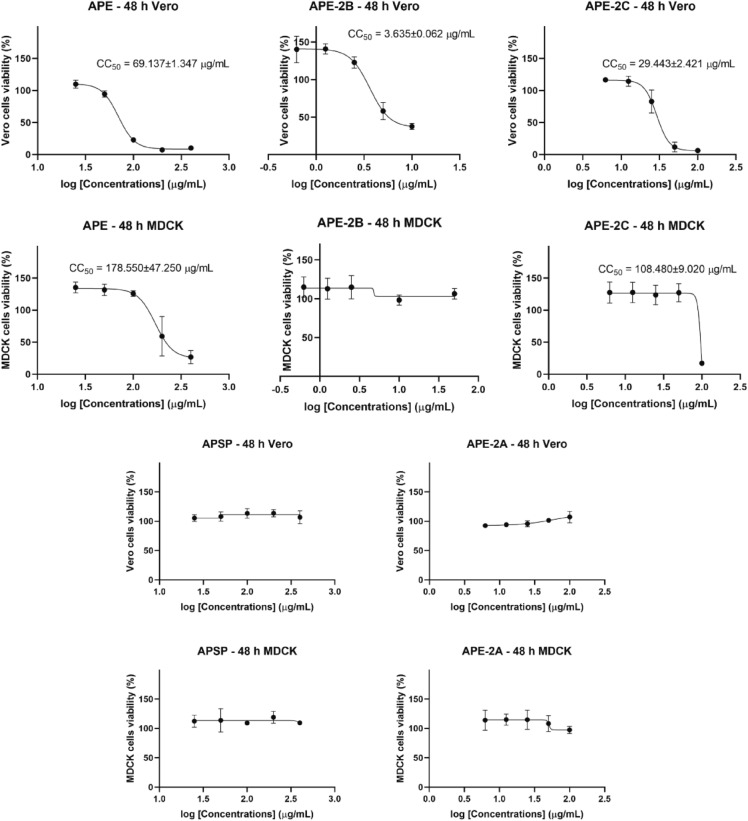
Cytotoxicity assay by MTS for 4 h of Vero and MDCK cells at 24 and 48 h reaction with various concentrations of A. paniculata extracts as follows: APSP, APE, APE-2A, APE-2B, and APE-2C.
Figure 2
Figure 2
Cytotoxicity concentration (CC50) of A. paniculata extracts as follows; APSP, APE, APE-2A, APE-2B, and APE-2C in Vero cells and MDCK cells. Data represented Mean ± standard error of mean (SEM) of three independent experiments.
Figure 3
Figure 3
Pre-exposure experiment of A. paniculata extracts as follows; APSP, APE, APE-2A, APE-2B, and APE-2C against HSV-1 in Vero cell (A) and Influenza A (H3N2) in MDCK cell (B). Data represented means ± standard error of mean (SEM) of three independent experiments. p-value indicated significant difference between treated and control groups (unpaired t-test).
Figure 4
Figure 4
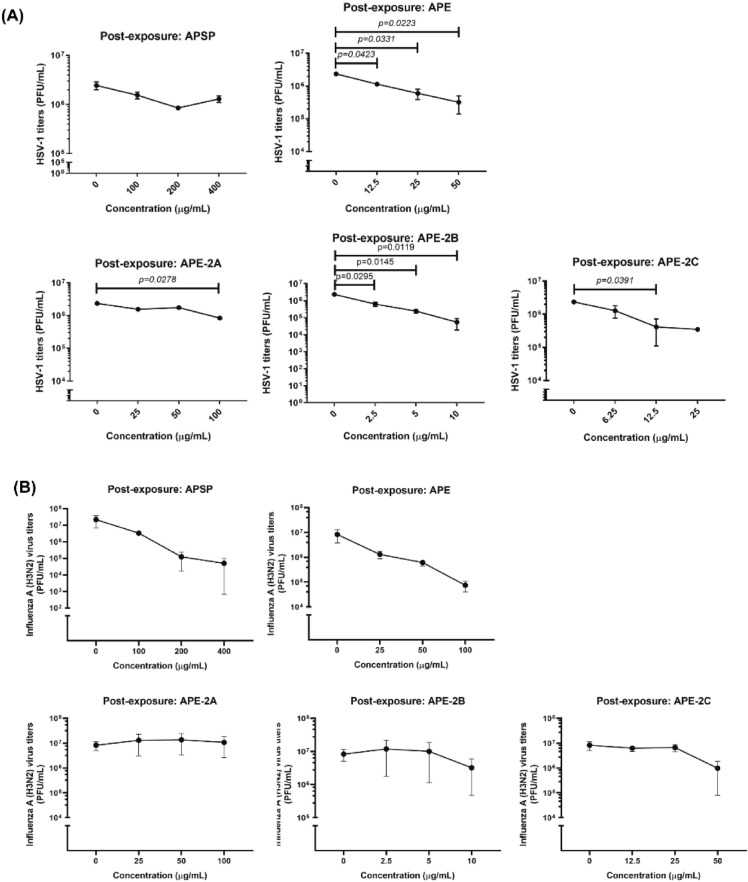
Post-exposure experiment of A. paniculata extracts as follows; APSP, APE, APE-2A, APE-2B, and APE-2C against HSV-1 in Vero cell (A) and Influenza A (H3N2) in MDCK cell (B). Data represented means ± standard error of mean (SEM) of three independent experiments. p-value indicated significant difference between treated and control groups (unpaired t-test).
Figure 5
Figure 5
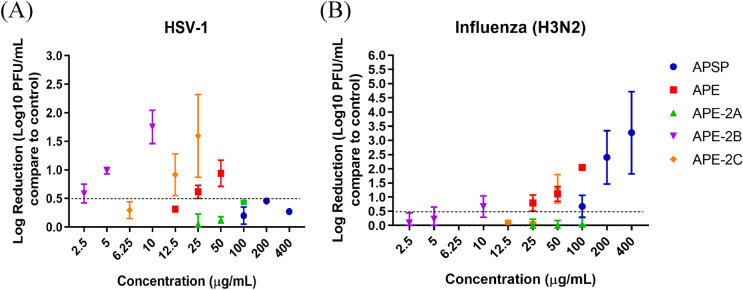
Log10 reduction of HSV-1 (A) and Influenza A (H3N2) (B) after post-exposure with various concentrations of A. paniculata extracts. Error bar represented (SEM).
Figure 6
Figure 6
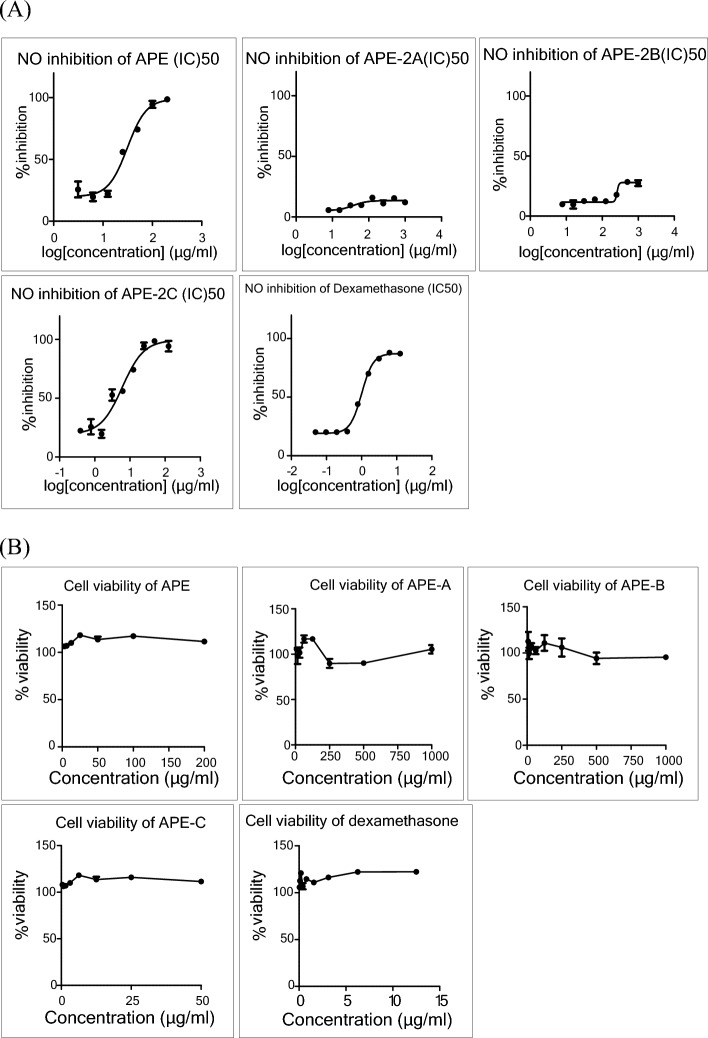
Nitric oxide inhibitory activity (A) and cell viability (B) at the effective doses.
Figure 7
Figure 7
HPLC-VWD chromatogram of APSP (A), APE (B), APE-2B (C) and APE-2C (D).
Figure 8
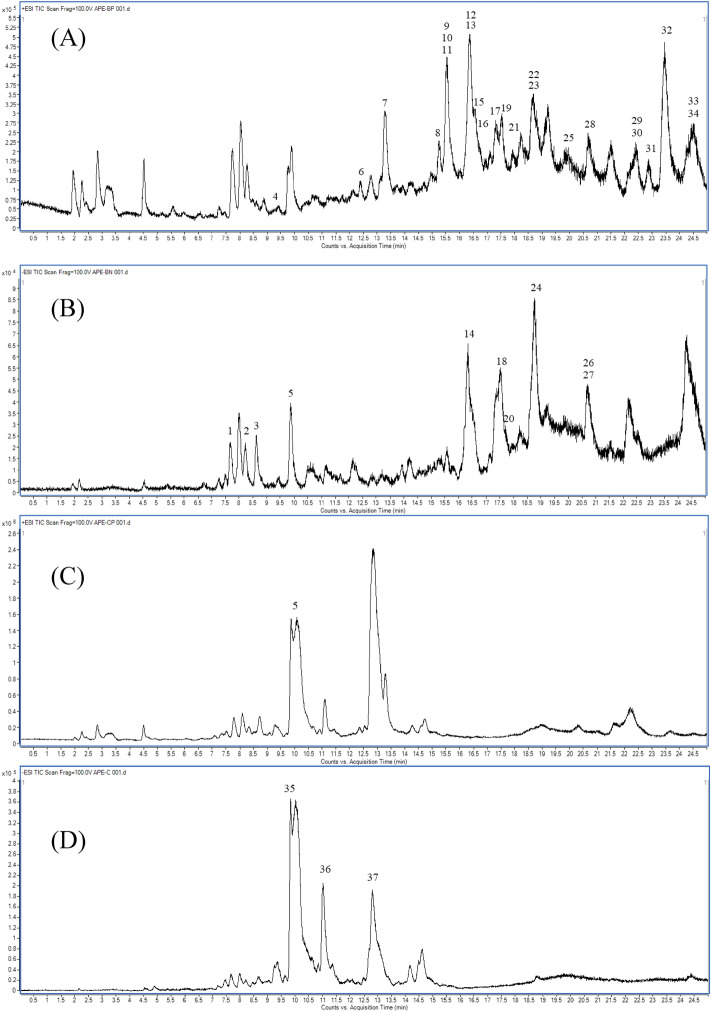
Figure 8
Total ions chromatogram (TIC) of fraction APE-2B in positive mode (A), fraction APE-2B in negative mode (B), fraction APE-2C in positive mode (C) and fraction APE-2C in negative mode (D). Peak numbers of compounds correspond to those in Tables 5 and 6.

References

    1. Kumar RA, Sridevi K, Kumar NV, Nanduri S, Rajagopal S. Anticancer and immunostimulatory compounds from Andrographis paniculata. J. Ethnopharmacol. 2004;92:291–295. doi: 10.1016/j.jep.2004.03.004. - DOI - PubMed
    1. Rajagopal S, Kumar RA, Deevi DS, Satyanarayana C, Rajagopalan R. Andrographolide, a potential cancer therapeutic agent isolated from Andrographis paniculata. J. Exp. Ther. Oncol. 2003;3:147–158. doi: 10.1046/j.1359-4117.2003.01090.x. - DOI - PubMed
    1. Calabrese C, et al. A phase I trial of andrographolide in HIV positive patients and normal volunteers. Phytother. Res. 2000;14:333–338. doi: 10.1002/1099-1573(200008)14:5<333::aid-ptr584>3.0.co;2-d. - DOI - PubMed
    1. Jadhav AK, Karuppayil SM. Andrographis paniculata (Burm. F) Wall ex Nees: Antiviral properties. Phytother. Res. 2021;35:5365–5373. doi: 10.1002/ptr.7145. - DOI - PubMed
    1. Singha PK, Roy S, Dey S. Antimicrobial activity of Andrographis paniculata. Fitoterapia. 2003;74:692–694. doi: 10.1016/s0367-326X(03)00159-X. - DOI - PubMed

Publication types