


Integrative Analysis of Transcriptomic and Lipidomic Profiles Reveals a Differential Subcutaneous Adipose Tissue Mechanism among Ningxiang Pig and Berkshires, and Their Offspring
- PMID: 37958077
- PMCID: PMC10647668
- DOI: 10.3390/ani13213321
Integrative Analysis of Transcriptomic and Lipidomic Profiles Reveals a Differential Subcutaneous Adipose Tissue Mechanism among Ningxiang Pig and Berkshires, and Their Offspring
Abstract
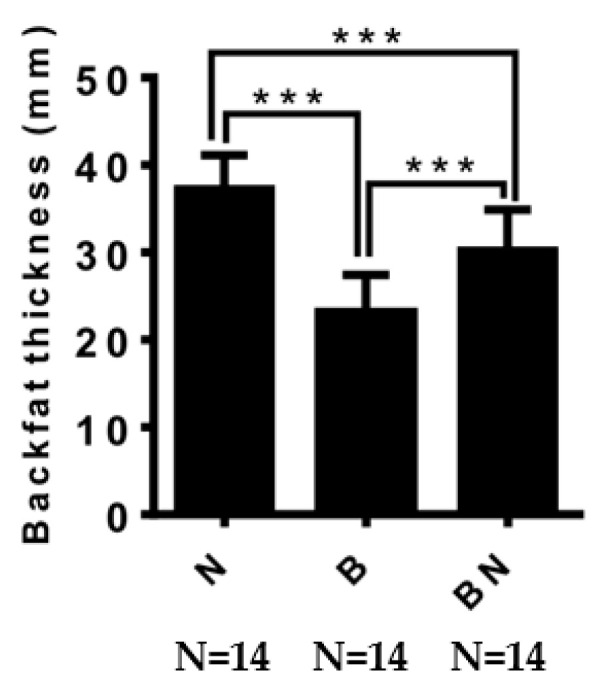
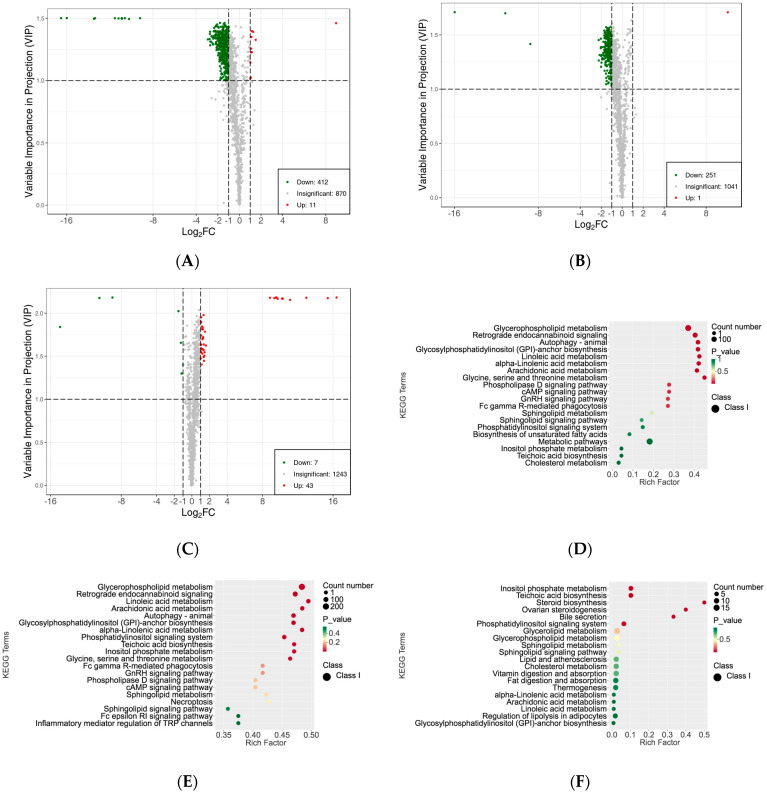
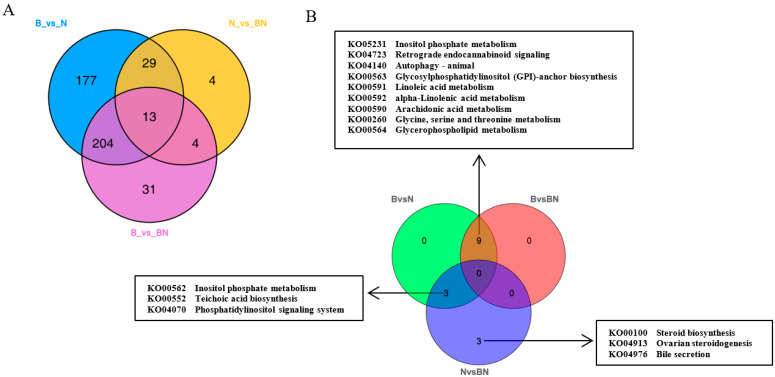
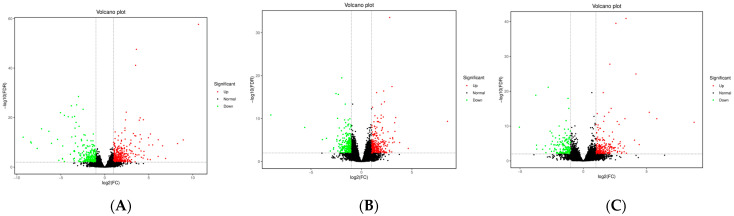
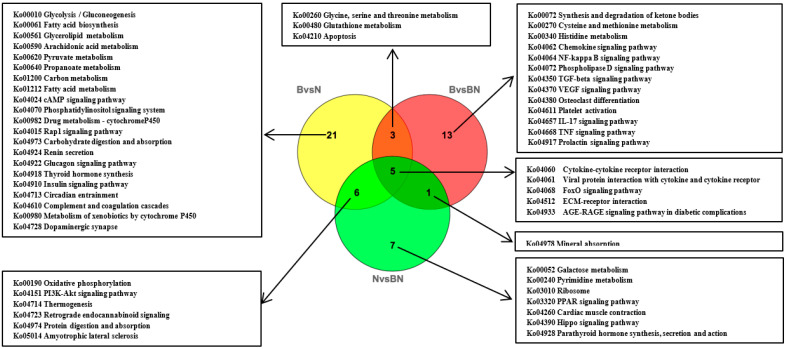
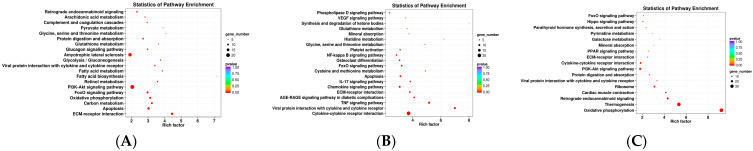
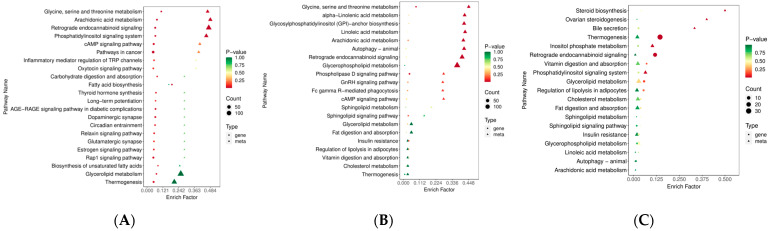
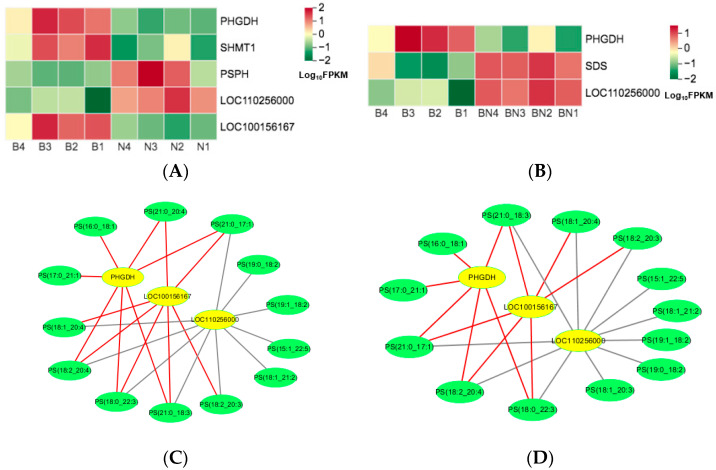
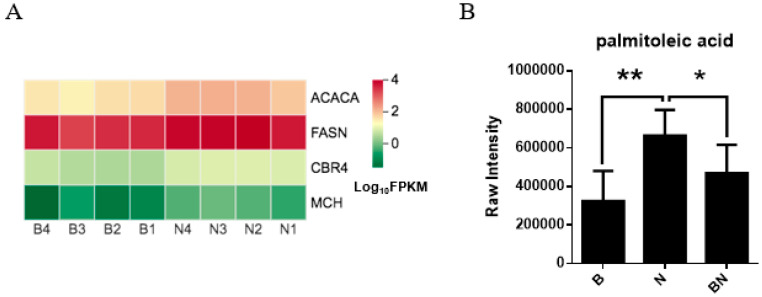
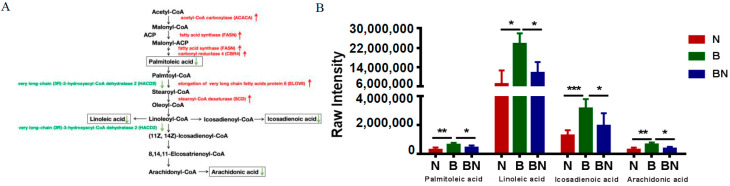
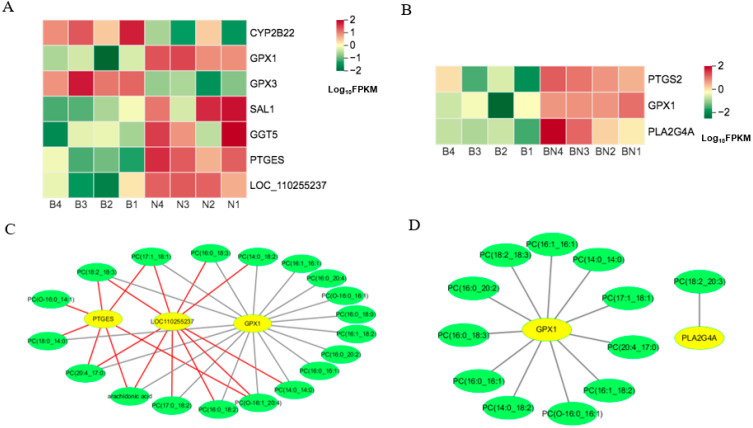
Adipose tissue composition contributes greatly to the quality and nutritional value of meat. Transcriptomic and lipidomic techniques were used to investigate the molecular mechanisms of the differences in fat deposition in Ningxiang pigs, Berkshires and F1 offspring. Transcriptomic analysis identified 680, 592, and 380 DEGs in comparisons of Ningxiang pigs vs. Berkshires, Berkshires vs. F1 offspring, and Ningxiang pigs vs. F1 offspring. The lipidomic analysis screened 423, 252, and 50 SCLs in comparisons of Ningxiang pigs vs. Berkshires, Berkshires vs. F1 offspring, and Ningxiang pigs vs. F1 offspring. Lycine, serine, and the threonine metabolism pathway, fatty acid biosynthesis and metabolism-related pathways were significantly enriched in comparisons of Berkshires vs. Ningxiang pigs and Berkshires vs. F1 offspring. The DEGs (PHGDH, LOC110256000) and the SCLs (phosphatidylserines) may have a great impact on the glycine, serine, and the threonine metabolism pathway. Moreover, the DEGs (FASN, ACACA, CBR4, SCD, ELOV6, HACD2, CYP3A46, CYP2B22, GPX1, and GPX3) and the SCLs (palmitoleic acid, linoleic acid, arachidonic acid, and icosadienoic acid) play important roles in the fatty acid biosynthesis and metabolism of fatty acids. Thus, the difference in fat deposition among Ningxiang pig, Berkshires, and F1 offspring may be caused by differences in the expression patterns of key genes in multiple enriched KEGG pathways. This research revealed multiple lipids that are potentially available biological indicators and screened key genes that are potential targets for molecular design breeding. The research also explored the molecular mechanisms of the difference in fat deposition among Ningxiang pig, Berkshires, and F1 pigs, and provided an insight into selection for backfat thickness and the fat composition of adipose tissue for future breeding strategies.
Keywords: KEGG pathways; lipidomic; pigs; subcutaneous adipose tissue; transcriptomic.
Conflict of interest statement
The authors declare no conflict of interest.
Figures
References
Grants and funding
- NT2021005/Special Funds for the Laboratory of Lingnan Modern Agriculture Project
- 2021NK1009 and 2021NK1012/Special Funds for the Construction of Innovative Provinces in Hunan
- 2023JJ20043 and 2020JJ5635/the Natural Science Foundation of Hunan Province Project
- 2020JJB130030/the Natural Science Foundation of Guangxi Province
- No.ISA2023202/Open Fund of Key Laboratory of Agro-ecological Processes in Subtropical Region, Chinese Academy Open Fund of Key Laboratory of Agro-ecological Processes in Subtropical Region,Chinese Academy of Science
LinkOut - more resources
Full Text Sources
Miscellaneous
