. 2023 Oct 27;24(21):15676.
doi: 10.3390/ijms242115676.

Whole-Exome Sequencing of 21 Families: Candidate Genes for Early-Onset High Myopia

Affiliations

Whole-Exome Sequencing of 21 Families: Candidate Genes for Early-Onset High Myopia

Eloísa Sánchez-Cazorla et al. Int J Mol Sci. .

Abstract

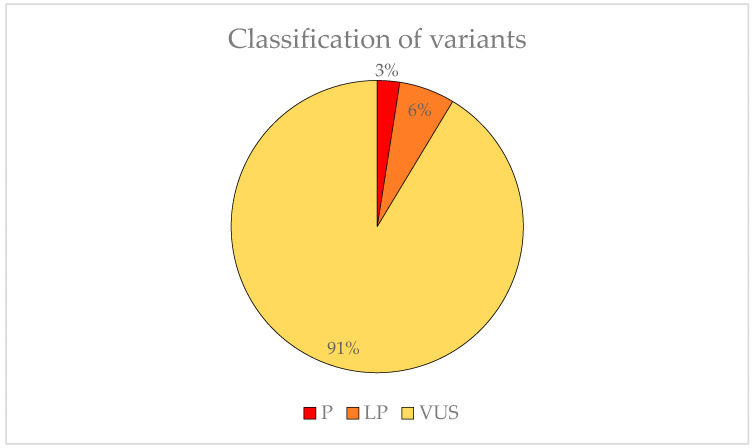
High myopia is the most severe and pathological form of myopia. It occurs when the spherical refractive error exceeds -6.00 spherical diopters (SDs) or the axial length (AL) of the eye is greater than 26 mm. This article focuses on early-onset high myopia, an increasingly common condition that affects children under 10 years of age and can lead to other serious ocular pathologies. Through the genetic analysis of 21 families with early-onset high myopia, this study seeks to contribute to a better understanding of the role of genetics in this disease and to propose candidate genes. Whole-exome sequencing studies with a panel of genes known to be involved in the pathology were performed in families with inconclusive results: 3% of the variants found were classified as pathogenic, 6% were likely pathogenic and the remaining 91% were variants of uncertain significance. Most of the families in this study were found to have alterations in several of the proposed genes. This suggests a polygenic inheritance of the pathology due to the cumulative effect of the alterations. Further studies are needed to validate and confirm the role of these alterations in the development of early-onset high myopia and its polygenic inheritance.

Keywords: candidate genes; early-onset high myopia; ophthalmogenetics; polygenic inheritance; whole-exome sequencing.


Conflict of interest statement

The authors declare no conflict of interest.

Figures

Figure 1
Figure 1
Schematic optics of the eye. In emmetropic eyes, the parallel rays of a distant object are focused precisely on the photoreceptors located on the retina. Myopic eyes have longer axial length, and the image of a distant object falls in front of the photoreceptors and cannot be brought into focus by accommodation. The myopic eye can become highly myopic, accentuating this defocus considerably. Modified from Morgan et al. [5].
Figure 2
Figure 2
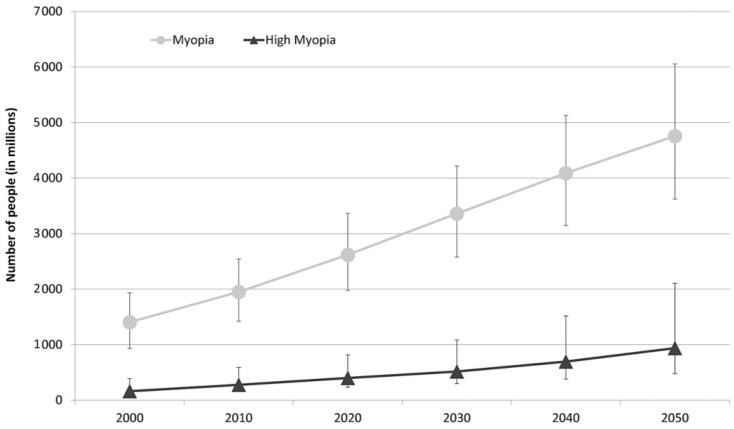
Graph representing the number of people estimated to develop myopia and HM for each decade from 2000 to 2050 [6].
Figure 3
Figure 3
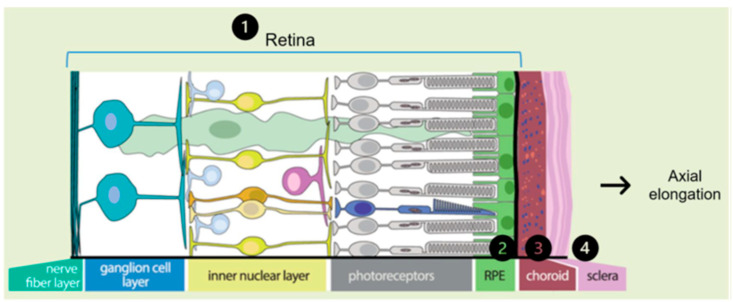
Representation of the multilayer signaling cascade that enables axial elongation. The signaling cascade order is represented by the numbers 1 to 4 Modified from Tedja et al. [7].
Figure 4
Figure 4
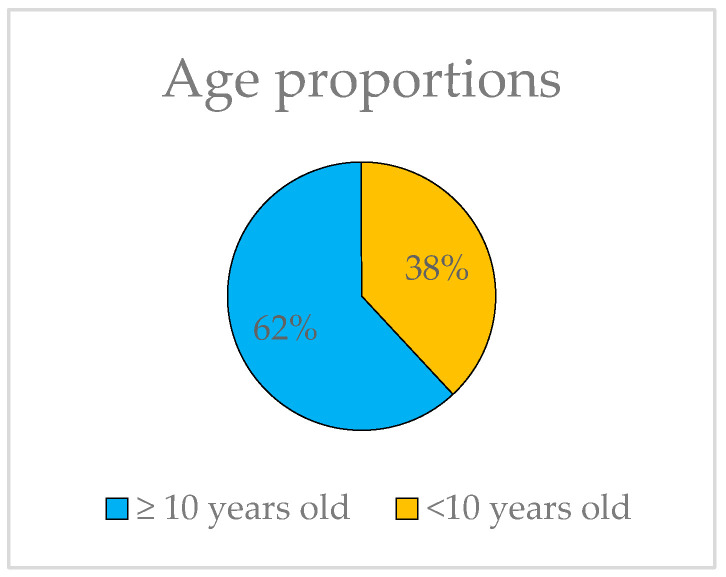
Representation of the proportions of probands younger and older than 10 years old.
Figure 5
Figure 5
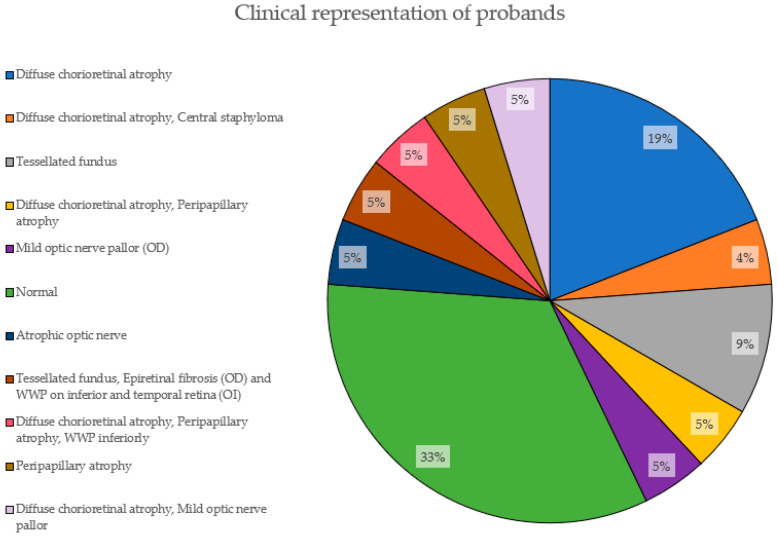
Clinical representation of probands. The proportions of features presented by the probands in this study are shown here, with their corresponding percentage.
Figure 6
Figure 6
Representation of the variant pathogenicity found in possible candidate genes for EoHM.
Figure 7
Figure 7
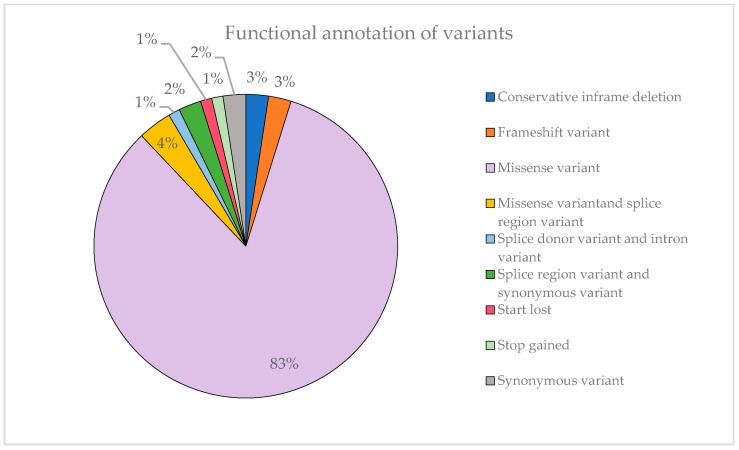
Representation of the functional annotation of variants and their proportion.
Figure 8
Figure 8
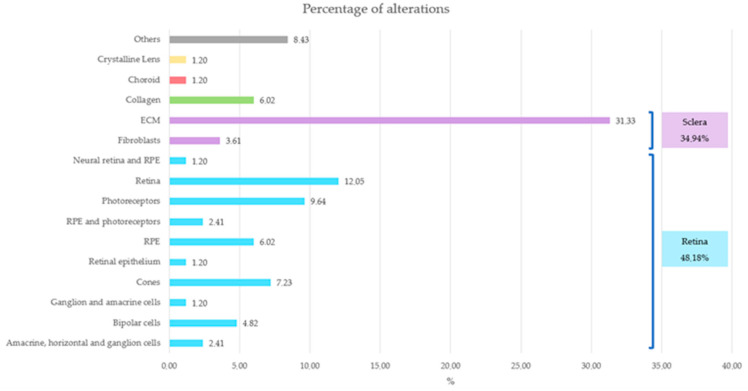
Representation of the affected ocular structures and their corresponding percentage. Retina structures are represented in blue, sclera structures in purple, choroid in red, crystalline lens in yellow, collagen in green and others in gray.
Figure 9
Figure 9
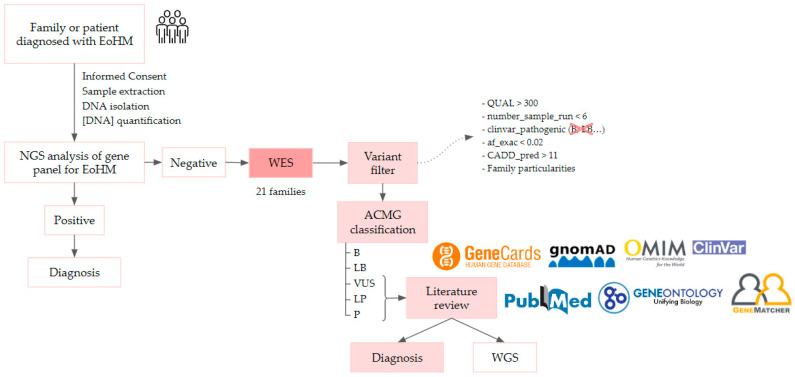
EoHM diagnostic workflow, it is described in more detail below. ACMG: American College of Medical Genetics; WES, whole-exome sequencing; WGS, whole-genome sequencing.

References

    1. Kloss B.A., Tompson S.W., Whisenhunt K.N., Quow K.L., Huang S.J., Pavelec D.M., Rosenberg T., Young T.L. Exome Sequence Analysis of 14 Families with High Myopia. Investig. Opthalmol. Vis. Sci. 2017;58:1982–1990. doi: 10.1167/iovs.16-20883. - DOI - PMC - PubMed
    1. Summers J.A., Schaeffel F., Marcos S., Wu H., Tkatchenko A.V. Functional integration of eye tissues and refractive eye development: Mechanisms and pathways. Exp. Eye Res. 2021;209:108693. doi: 10.1016/j.exer.2021.108693. - DOI - PMC - PubMed
    1. González-Iglesias E., López-Vázquez A., Noval S., Nieves-Moreno M., Granados-Fernández M., Arruti N., Rosa-Pérez I., Pacio-Míguez M., Montaño V.E.F., Rodríguez-Solana P., et al. Next-Generation Sequencing Screening of 43 Families with Non-Syndromic Early-Onset High Myopia: A Clinical and Genetic Study. Int. J. Mol. Sci. 2022;23:4233. doi: 10.3390/ijms23084233. - DOI - PMC - PubMed
    1. Wang Y.-M., Lu S.-Y., Zhang X.-J., Chen L.-J., Pang C.-P., Yam J.C. Myopia Genetics and Heredity. Children. 2022;9:382. doi: 10.3390/children9030382. - DOI - PMC - PubMed
    1. Morgan I.G., Ohno-Matsui K., Saw S.-M. Myopia. Lancet. 2012;379:1739–1748. doi: 10.1016/S0140-6736(12)60272-4. - DOI - PubMed

LinkOut - more resources