Randomized Controlled Trial
. 2023 Nov 1;6(11):e2342482.
doi: 10.1001/jamanetworkopen.2023.42482.

Acupuncture vs Massage for Pain in Patients Living With Advanced Cancer: The IMPACT Randomized Clinical Trial

Affiliations
Randomized Controlled Trial

Acupuncture vs Massage for Pain in Patients Living With Advanced Cancer: The IMPACT Randomized Clinical Trial

Andrew S Epstein et al. JAMA Netw Open. .

Abstract

Importance: Pain is challenging for patients with advanced cancer. While recent guidelines recommend acupuncture and massage for cancer pain, their comparative effectiveness is unknown.

Objective: To compare the effects of acupuncture and massage on musculoskeletal pain among patients with advanced cancer.

Design, setting, and participants: A multicenter pragmatic randomized clinical trial was conducted at US cancer care centers consisting of a northeastern comprehensive cancer center and a southeastern cancer institute from September 19, 2019, through February 23, 2022. The principal investigator and study statisticians were blinded to treatment assignments. The duration of follow-up was 26 weeks. Intention-to-treat analyses were performed (linear mixed models). Participants included patients with advanced cancer with moderate to severe pain and clinician-estimated life expectancy of 6 months or more. Patient recruitment strategy was multipronged (eg, patient database queries, mailings, referrals, community outreach). Eligible patients had English or Spanish as their first language, were older than 18 years, and had a Karnofsky score greater than or equal to 60 (range, 0-100; higher scores indicating less functional impairment).

Interventions: Weekly acupuncture or massage for 10 weeks with monthly booster sessions up to 26 weeks.

Main outcomes and measures: The primary end point was the change in worst pain intensity score from baseline to 26 weeks. The secondary outcomes included fatigue, insomnia, and quality of life. The Brief Pain Inventory (range, 0-10; higher numbers indicate worse pain intensity or interference) was used to measure the primary outcome. The secondary outcomes included fatigue, insomnia, and quality of life.

Results: A total of 298 participants were enrolled (mean [SD] age, 58.7 [14.1] years, 200 [67.1%] were women, 33 [11.1%] Black, 220 [74.1%] White, 46 [15.4%] Hispanic, and 78.5% with solid tumors). The mean (SD) baseline worst pain score was 6.9 (1.5). During 26 weeks, acupuncture reduced the worst pain score, with a mean change of -2.53 (95% CI, -2.92 to -2.15) points, and massage reduced the Brief Pain Inventory worst pain score, with a mean change of -3.01 (95% CI, -3.38 to -2.63) points; the between-group difference was not significant (-0.48; 95% CI, -0.98 to 0.03; P = .07). Both treatments also improved fatigue, insomnia, and quality of life without significant between-group differences. Adverse events were mild and included bruising (6.5% of patients receiving acupuncture) and transient soreness (15.1% patients receiving massage).

Conclusions and relevance: In this randomized clinical trial among patients with advanced cancer, both acupuncture and massage were associated with pain reduction and improved fatigue, insomnia, and quality of life over 26 weeks; however, there was no significant different between the treatments. More research is needed to evaluate how best to integrate these approaches into pain treatment to optimize symptom management for the growing population of people living with advanced cancer.

Trial registration: ClinicalTrials.gov Identifier: NCT04095234.


Conflict of interest statement

Conflict of Interest Disclosures: Dr Epstein reported receiving royalties from UpToDate for peer review of gastrointestinal medical oncology and palliative care topic manuscripts and honoraria for lectures to Great Debates and Updates in Gastrointestinal Malignancies. Mr Baser reported receiving grants from the Patient-Centered Outcomes Research Institute (PCORI) during the conduct of the study. Dr Deng reported receiving grants from the PCORI during the conduct of the study and outside the submitted work. Dr Farrar reported receiving grants from the PCORI during the conduct of the study; and grants from the National Institutes of Health (NIH) National Center for Advancing Translational Sciences, the NIH National Institute of Diabetes and Digestive and Kidney Diseases, and the NIH National Institute of Neurological Disorders and Stroke; a contract from the US Food and Drug Administration; personal fees from Vertx Pharma and EicOsis Pharma outside the submitted work; and is the unpaid president of the US Association for the Study of Pain. Dr Mao reported receiving grants from Tibet CheeZheng Tibetan Medicine Co Ltd to Memorial Sloan Kettering Cancer Center and Zhongke Health International LLC to Memorial Sloan Kettering Cancer Center outside the submitted work; and serving in an unpaid leadership or fiduciary role as copresident of the Society for Acupuncture Research. No other disclosures were reported.

Figures

Figure 1.
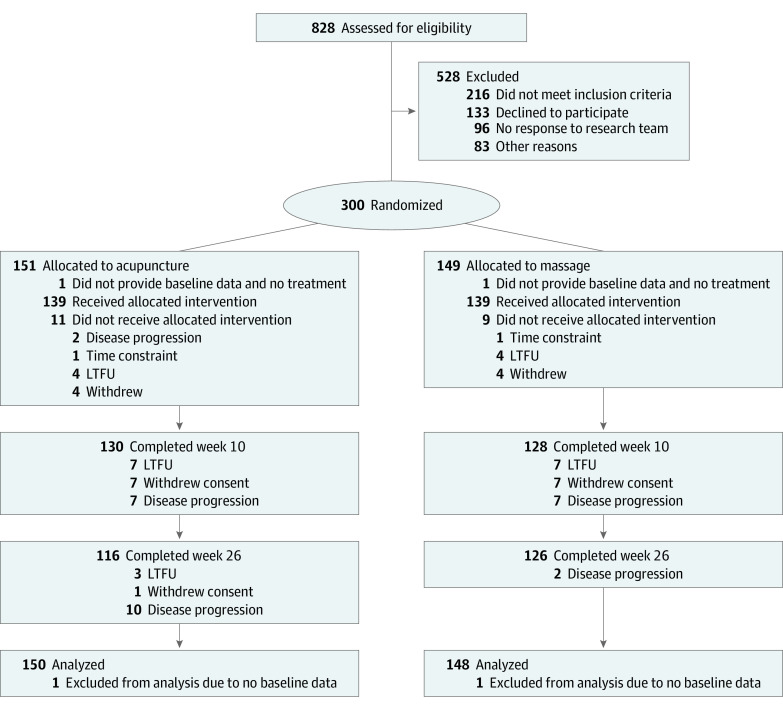
Figure 1.. Trial Enrollment and Follow-Up
LTFU indicates lost to follow-up.
Figure 2.
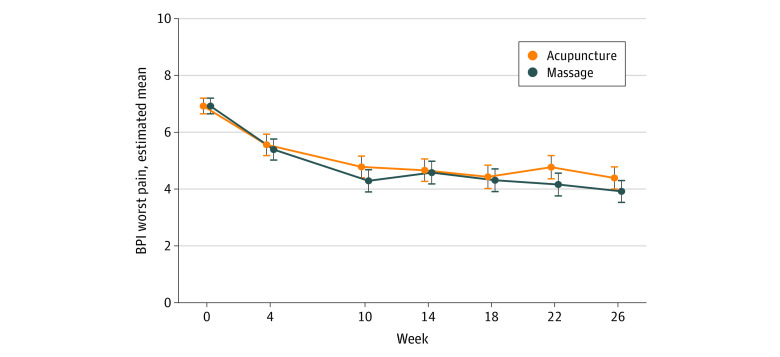
Figure 2.. Estimated Brief Pain Inventory (BPI) Worst Pain Means by Week and Arm
The BPI worst pain scores range from 0 to 10, with higher scores indicating worse pain. Data points represent the model-estimated BPI worst pain means and 95% CI (error bars) from a linear mixed model with baseline means constrained to be equal across study arms. The dependent variable vector included the prerandomization baseline (week 0) assessment, as well as all postrandomization assessments. The independent variables were the randomization stratification variables (accrual site and baseline opioid use), treatment arm, week (categorical), and the arm-by-week interaction. A patient-level random intercept was included in the model to account for the repeated outcome measurements within patients.

References

    1. van den Beuken-van Everdingen MH, Hochstenbach LM, Joosten EA, Tjan-Heijnen VC, Janssen DJ. Update on prevalence of pain in patients with cancer: systematic review and meta-analysis. J Pain Symptom Manage. 2016;51(6):1070-1090.e9. doi: 10.1016/j.jpainsymman.2015.12.340 - DOI - PubMed
    1. Porta-Sales J, Nabal-Vicuna M, Vallano A, et al. Have we improved pain control in cancer patients? a multicenter study of ambulatory and hospitalized cancer patients. J Palliat Med. 2015;18(11):923-932. doi: 10.1089/jpm.2015.29002.jps - DOI - PubMed
    1. Dong ST, Butow PN, Costa DS, Lovell MR, Agar M. Symptom clusters in patients with advanced cancer: a systematic review of observational studies. J Pain Symptom Manage. 2014;48(3):411-450. doi: 10.1016/j.jpainsymman.2013.10.027 - DOI - PubMed
    1. Dong ST, Butow PN, Tong A, et al. Patients’ experiences and perspectives of multiple concurrent symptoms in advanced cancer: a semi-structured interview study. Support Care Cancer. 2016;24(3):1373-1386. doi: 10.1007/s00520-015-2913-4 - DOI - PubMed
    1. Johnsen AT, Petersen MA, Pedersen L, Groenvold M. Symptoms and problems in a nationally representative sample of advanced cancer patients. Palliat Med. 2009;23(6):491-501. doi: 10.1177/0269216309105400 - DOI - PubMed

Publication types

Associated data