


Comparison of arthroscopic and open Brostrom-Gould surgery for chronic ankle instability: a systematic review and meta-analysis
- PMID: 37964306
- PMCID: PMC10644443
- DOI: 10.1186/s13018-023-04292-5
Comparison of arthroscopic and open Brostrom-Gould surgery for chronic ankle instability: a systematic review and meta-analysis
Abstract
Background: Approximately 20% of acute ankle sprains progress to chronic lateral ankle instability (CLAI) requiring surgical intervention. There has been growing interest among surgeons regarding whether arthroscopic techniques can replace open Brostrom-Gould surgery in treating CLAI. The purpose of this study was to pool the results of multiple studies comparing the treatment effects of these two fixation approaches.
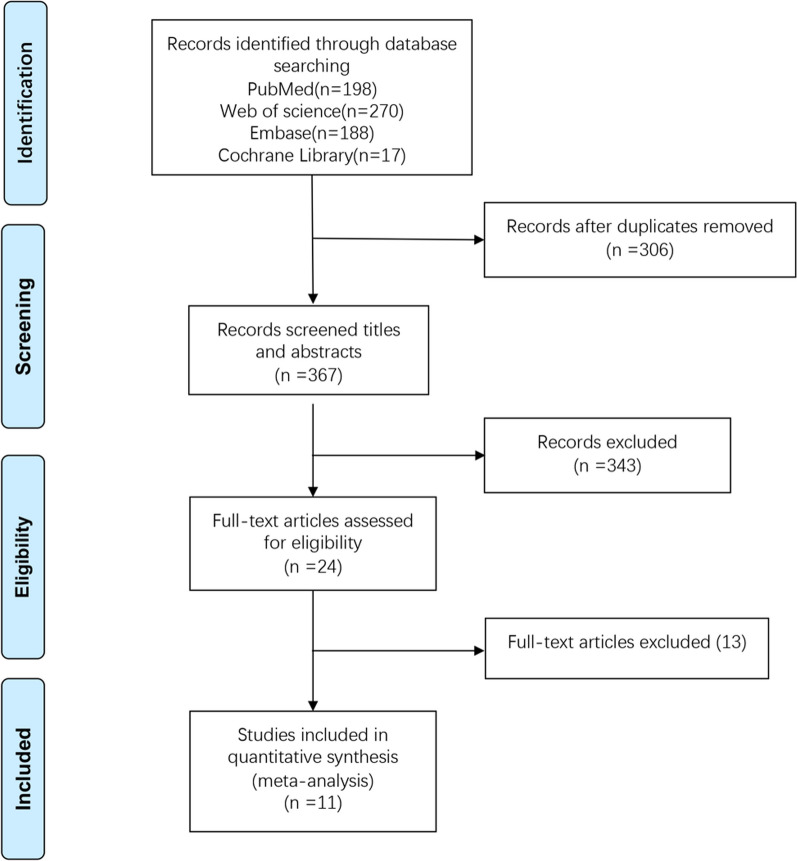
Methods: Our study involved thorough searches across multiple electronic databases, including PubMed, Cochrane, Embase, and Web of Science, to identify all relevant publications on CLAI that were repaired using the arthroscopic or open Broström-Gould technique. Through a comprehensive meta-analysis, we evaluated several outcomes, including post-operative function, radiological measurements, complications, and time efficiency.
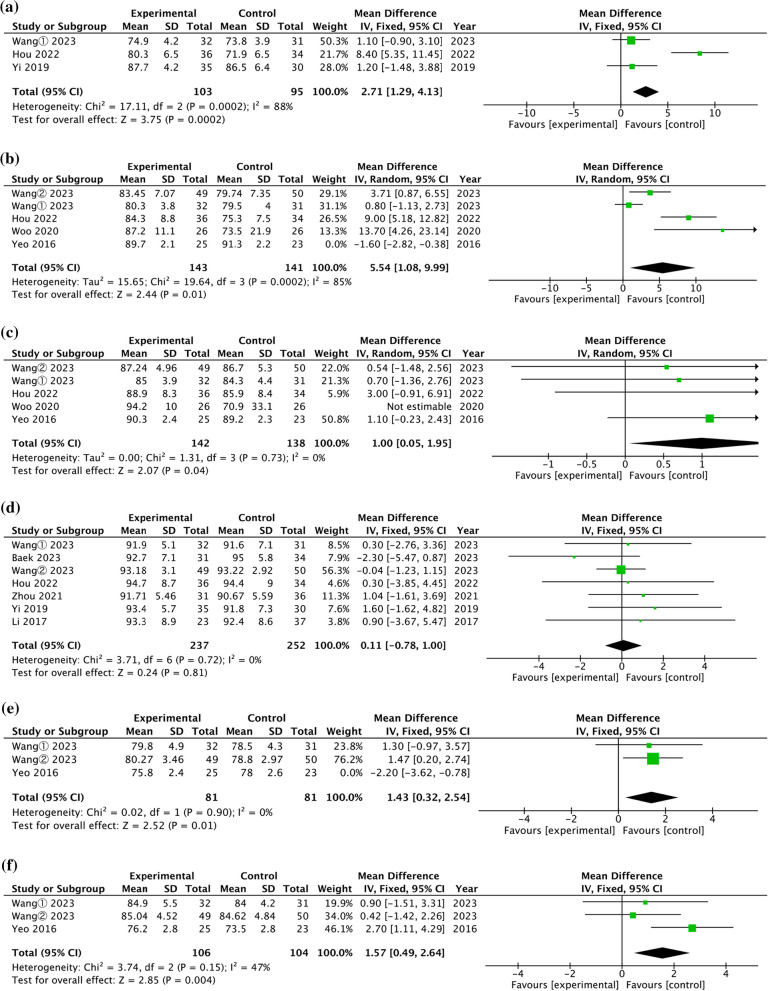
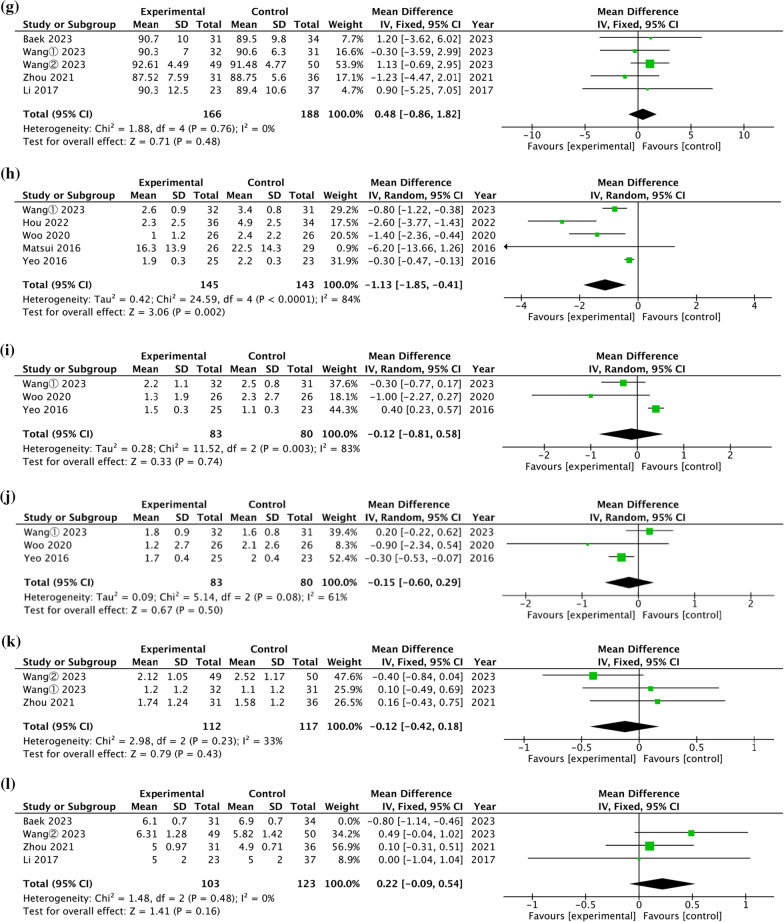
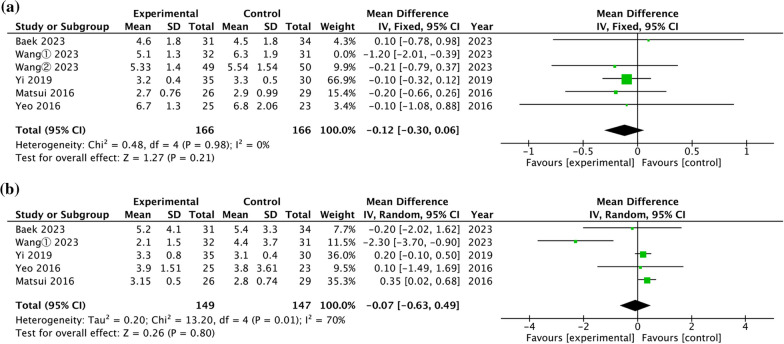
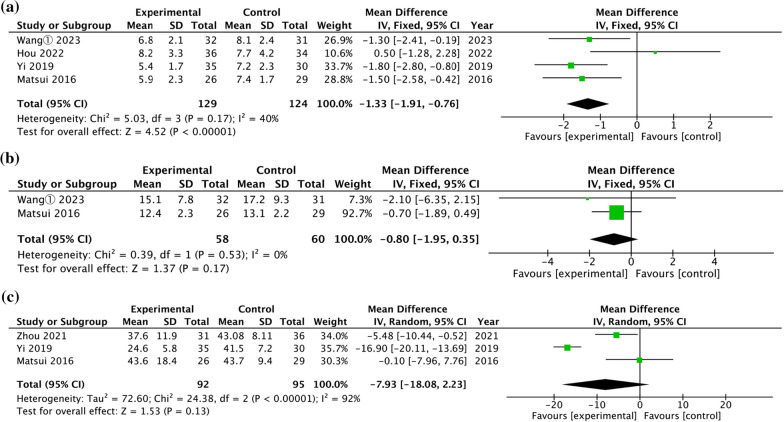
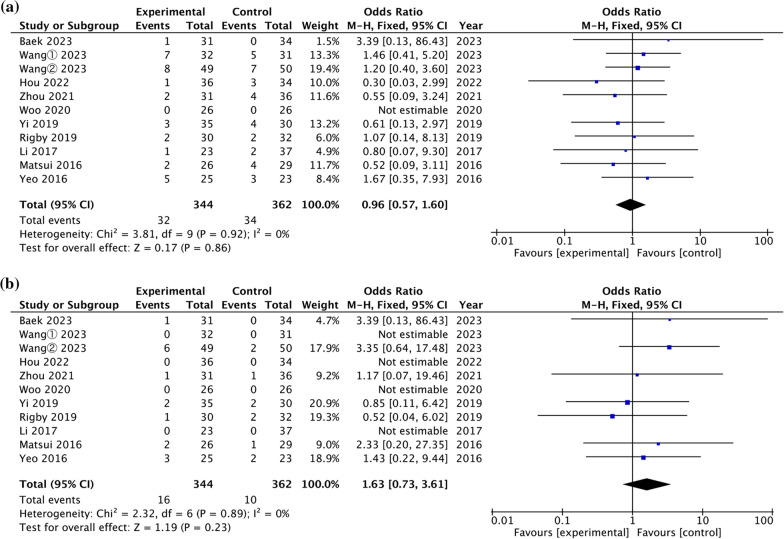
Result: A total of 686 patients from 11 studies were included in the analysis. Among them, 351 patients underwent open repair, and 335 underwent arthroscopic Brostrom-Gould surgery. The present study revealed that arthroscopic and open Brostrom-Gould techniques demonstrated no significant differences in talar tilt, talar anterior translation, complication rate, and time to return to previous level of activity. Furthermore, no significant differences were observed in AOFAS, K-P, VAS, and Tegner scores at the 2-year follow-up. However, significant differences were noted between the two surgical approaches in terms of early weight-bearing (WMD = - 1.33 weeks, 95% CI = [- 1.91, - 0.76], P = 0.17, I2 = 40%), as well as AOFAS scores (WMD = 1.00, 95% CI = [0.05, 1.95], P = 0.73, I2 = 0%), K-P scores (WMD = 1.57, 95% CI = [0.49, 2.64], P = 0.15, I2 = 47%), and VAS scores (WMD = - 0.15, 95% CI = [- 0.60, 0.29], P < 0.08, I2 = 61%) within the first postoperative year.
Conclusions: Our findings support that arthroscopic repair yields comparable outcomes to open surgery. Consequently, we advocate for adopting arthroscopic repair as a preferred alternative to the conventional open Broström-Gould procedure for treating chronic lateral ankle instability.
Keywords: Arthroscopic; Brostrom-Gould; Chronic lateral ankle instability; Meta-analysis; Open; Repair.
© 2023. The Author(s).
Conflict of interest statement
The author declare that they have no potential competing interests.
Figures
Similar articles
-
Arthroscopic Broström-Gould repair has comparable radiological and clinical outcomes compared to traditional open Broström-Gould repair in high-demand patients.Knee Surg Sports Traumatol Arthrosc. 2023 Jun;31(6):2208-2215. doi: 10.1007/s00167-022-07289-5. Epub 2022 Dec 23. Knee Surg Sports Traumatol Arthrosc. 2023. PMID: 36562810
-
All-inside arthroscopic modified Broström-Gould procedure for chronic lateral ankle instability with and without anterior talofibular ligament remnant repair produced similar functional results.Knee Surg Sports Traumatol Arthrosc. 2021 Aug;29(8):2453-2461. doi: 10.1007/s00167-020-06361-2. Epub 2020 Nov 18. Knee Surg Sports Traumatol Arthrosc. 2021. PMID: 33206208 Free PMC article.
-
A comparison of the "All-Inside" arthroscopic Broström procedure with the traditional open modified Broström-Gould technique: A review of 62 patients.Foot Ankle Surg. 2019 Feb;25(1):31-36. doi: 10.1016/j.fas.2017.07.642. Epub 2018 Feb 9. Foot Ankle Surg. 2019. PMID: 29409264
-
Outcomes of Open Versus Arthroscopic Broström Surgery for Chronic Lateral Ankle Instability: A Systematic Review and Meta-analysis of Comparative Studies.Orthop J Sports Med. 2021 Jul 21;9(7):23259671211015207. doi: 10.1177/23259671211015207. eCollection 2021 Jul. Orthop J Sports Med. 2021. PMID: 34368381 Free PMC article. Review.
-
Clinical Outcomes of Open Versus Arthroscopic Broström Procedure for Lateral Ankle Instability: A Meta-analysis.J Foot Ankle Surg. 2021 May-Jun;60(3):577-584. doi: 10.1053/j.jfas.2020.10.001. Epub 2020 Oct 7. J Foot Ankle Surg. 2021. PMID: 33509712
Cited by
-
Management of peroneal tendon subluxation with concominant anterior talofibular ligament tear: A case report and literature review.Int J Surg Case Rep. 2024 Dec;125:110583. doi: 10.1016/j.ijscr.2024.110583. Epub 2024 Nov 12. Int J Surg Case Rep. 2024. PMID: 39561571 Free PMC article.
-
Postural stability after operative reconstruction of the AFTL in chronic ankle instability comparing three different surgical techniques.Open Med (Wars). 2024 Sep 2;19(1):20241028. doi: 10.1515/med-2024-1028. eCollection 2024. Open Med (Wars). 2024. PMID: 39247443 Free PMC article.
-
Postural Stability and Pedobarography After Reconstruction of Peroneus Brevis Tendon Split Lesion.Int Orthop. 2024 Sep;48(9):2311-2318. doi: 10.1007/s00264-024-06239-9. Epub 2024 Jun 21. Int Orthop. 2024. PMID: 38904764
-
Two portals are sufficient for all-inside arthroscopic isolate anterior talofibular ligament repair.Arch Orthop Trauma Surg. 2025 May 24;145(1):316. doi: 10.1007/s00402-025-05927-4. Arch Orthop Trauma Surg. 2025. PMID: 40413275 Free PMC article.
-
Uncertainty and risk of misleading conclusions: an umbrella review of the quality of the evidence for ankle arthroscopy.Acta Orthop. 2025 Jul 25;96:574-583. doi: 10.2340/17453674.2025.44330. Acta Orthop. 2025. PMID: 40711444 Free PMC article.
References
Publication types
MeSH terms
LinkOut - more resources
Full Text Sources
