


Artificial intelligence to support out-of-hospital cardiac arrest care: A scoping review
- PMID: 37965243
- PMCID: PMC10641545
- DOI: 10.1016/j.resplu.2023.100491
Artificial intelligence to support out-of-hospital cardiac arrest care: A scoping review
Abstract
Background: Artificial intelligence (AI) has demonstrated significant potential in supporting emergency medical services personnel during out-of-hospital cardiac arrest (OHCA) care; however, the extent of research evaluating this topic is unknown. This scoping review examines the breadth of literature on the application of AI in early OHCA care.
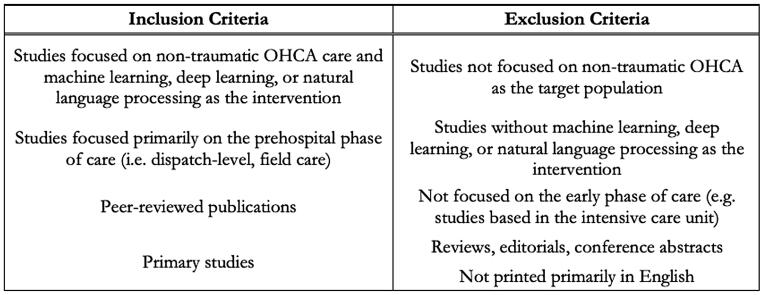
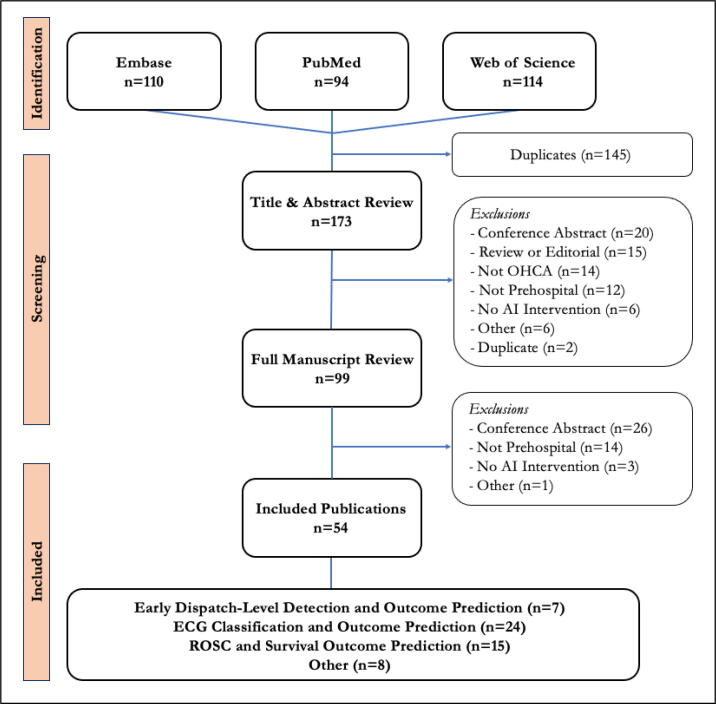
Methods: We conducted a search of PubMed®, Embase, and Web of Science in accordance with the Preferred Reporting Items for Systematic Reviews and Meta-Analyses Extension for Scoping Reviews guidelines. Articles focused on non-traumatic OHCA and published prior to January 18th, 2023 were included. Studies were excluded if they did not use an AI intervention (including machine learning, deep learning, or natural language processing), or did not utilize data from the prehospital phase of care.
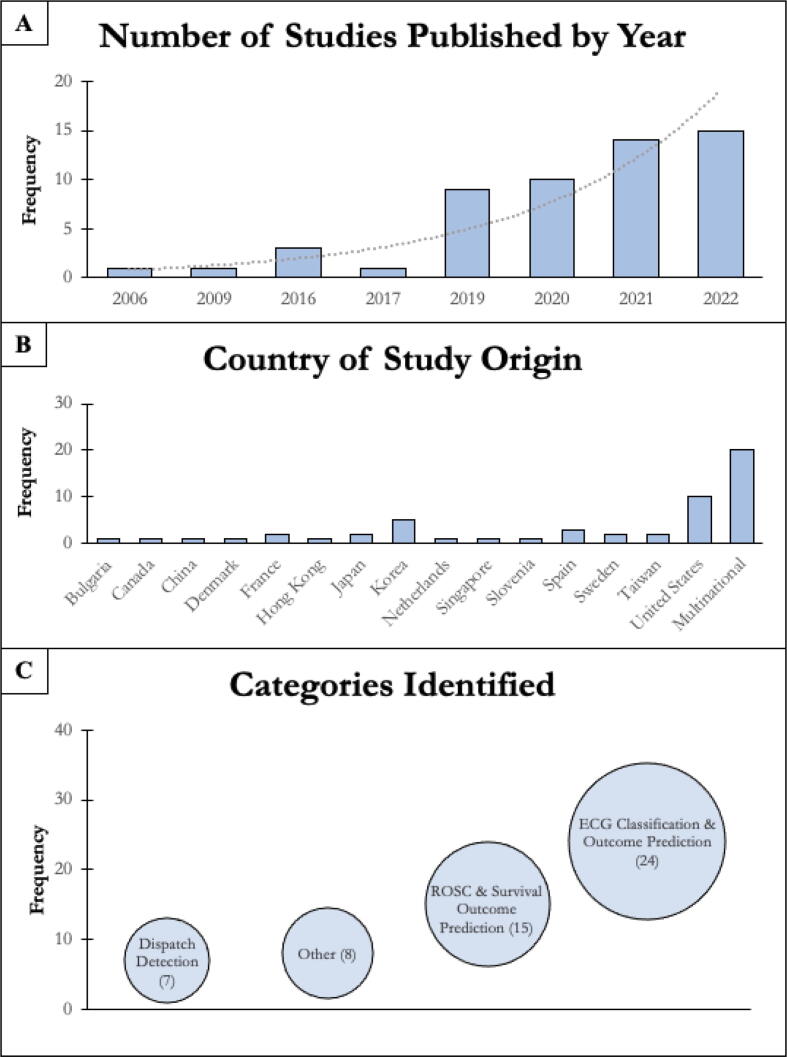
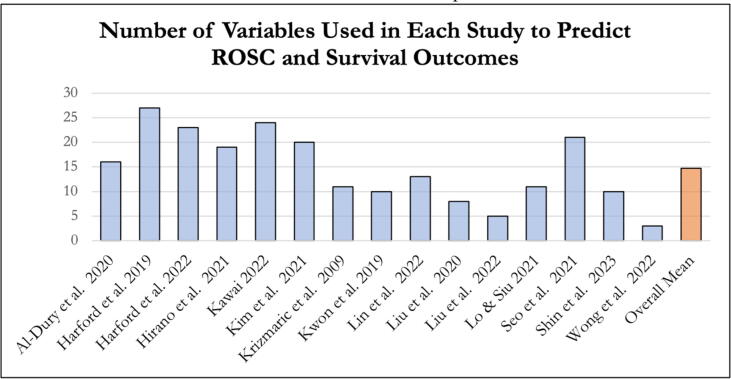
Results: Of 173 unique articles identified, 54 (31%) were included after screening. Of these studies, 15 (28%) were from the year 2022 and with an increasing trend annually starting in 2019. The majority were carried out by multinational collaborations (20/54, 38%) with additional studies from the United States (10/54, 19%), Korea (5/54, 10%), and Spain (3/54, 6%). Studies were classified into three major categories including ECG waveform classification and outcome prediction (24/54, 44%), early dispatch-level detection and outcome prediction (7/54, 13%), return of spontaneous circulation and survival outcome prediction (15/54, 20%), and other (9/54, 16%). All but one study had a retrospective design.
Conclusions: A small but growing body of literature exists describing the use of AI to augment early OHCA care.
Keywords: Artificial intelligence; Deep learning; Emergency medical services; Machine learning; Medical dispatch; Out-of-hospital cardiac arrest; Prehospital care.
© 2023 The Authors.
Conflict of interest statement
The authors declare the following financial interests/personal relationships which may be considered as potential competing interests: [Jake Toy, DO, Declarations of interest: none. Nichole Bosson, MD, MPH, Declarations of interest: none. Shira Schlesinger, MD, MPH, Declarations of interest: none, Marianne Gausche-Hill, MD, Declarations of interest: Member of the CARES Advisory Board beginning in September 2023. Sam Stratton, MD, Declarations of interest: none].
Figures
References
-
- 2021 CARES Annual Report. Accessed December 9, 2022. https://mycares.net/sitepages/uploads/2022/2021_flipbook/index.html?page=1.
-
- Part 12: From Science to Survival | Circulation. Accessed October 28, 202. https://www.ahajournals.org/doi/10.1161/circ.102.suppl_1.I-358. - DOI
