


Mesenchymal stromal/stem cells and bronchopulmonary dysplasia
- PMID: 37965579
- PMCID: PMC10642488
- DOI: 10.3389/fcell.2023.1247339
Mesenchymal stromal/stem cells and bronchopulmonary dysplasia
Abstract
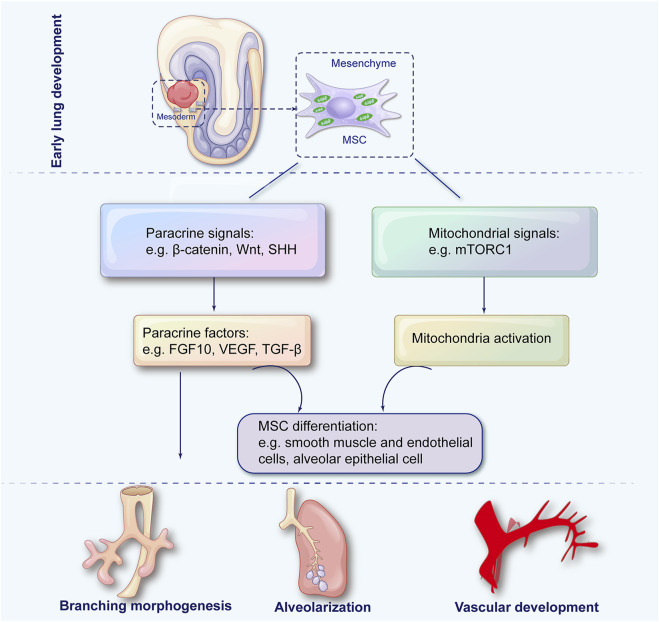
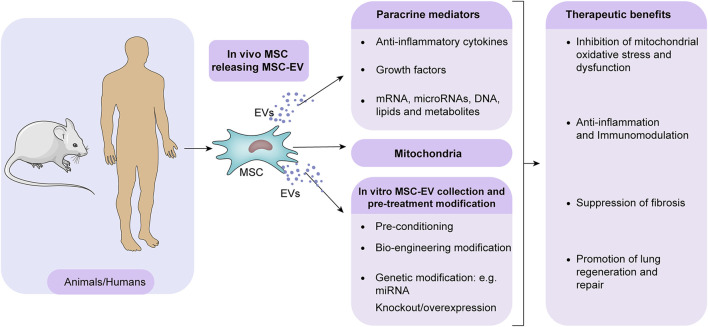
Bronchopulmonary dysplasia (BPD) is a common complication in preterm infants, leading to chronic respiratory disease. There has been an improvement in perinatal care, but many infants still suffer from impaired branching morphogenesis, alveolarization, and pulmonary capillary formation, causing lung function impairments and BPD. There is an increased risk of respiratory infections, pulmonary hypertension, and neurodevelopmental delays in infants with BPD, all of which can lead to long-term morbidity and mortality. Unfortunately, treatment options for Bronchopulmonary dysplasia are limited. A growing body of evidence indicates that mesenchymal stromal/stem cells (MSCs) can treat various lung diseases in regenerative medicine. MSCs are multipotent cells that can differentiate into multiple cell types, including lung cells, and possess immunomodulatory, anti-inflammatory, antioxidative stress, and regenerative properties. MSCs are regulated by mitochondrial function, as well as oxidant stress responses. Maintaining mitochondrial homeostasis will likely be key for MSCs to stimulate proper lung development and regeneration in Bronchopulmonary dysplasia. In recent years, MSCs have demonstrated promising results in treating and preventing bronchopulmonary dysplasia. Studies have shown that MSC therapy can reduce inflammation, mitochondrial impairment, lung injury, and fibrosis. In light of this, MSCs have emerged as a potential therapeutic option for treating Bronchopulmonary dysplasia. The article explores the role of MSCs in lung development and disease, summarizes MSC therapy's effectiveness in treating Bronchopulmonary dysplasia, and delves into the mechanisms behind this treatment.
Keywords: bronchopulmonary dysplasia; development; extracellular vesicles; mitochondria; stem cells.
Copyright © 2023 Zhang, Mulder, Riddle, Song and Yue.
Conflict of interest statement
The authors declare that the research was conducted in the absence of any commercial or financial relationships that could be construed as a potential conflict of interest.
Figures
References
-
- Abele A. N., Taglauer E. S., Almeda M., Wilson N., Abikoye A., Seedorf G. J., et al. (2022). Antenatal mesenchymal stromal cell extracellular vesicle treatment preserves lung development in a model of bronchopulmonary dysplasia due to chorioamnionitis. Am. J. Physiol. Lung Cell Mol. Physiol. 322, L179–L190. 10.1152/ajplung.00329.2021 - DOI - PMC - PubMed
-
- Alvarez-Fuente M., Arruza L., Lopez-Ortego P., Moreno L., Ramirez-Orellana M., Labrandero C., et al. (2018). Off-label mesenchymal stromal cell treatment in two infants with severe bronchopulmonary dysplasia: clinical course and biomarkers profile. Cytotherapy 20, 1337–1344. 10.1016/j.jcyt.2018.09.003 - DOI - PubMed
Publication types
LinkOut - more resources
Full Text Sources
