


Assessing hand hygiene knowledge, attitudes, and behaviors among Guatemalan primary school students in the context of the COVID-19 pandemic
- PMID: 37974121
- PMCID: PMC10652458
- DOI: 10.1186/s12889-023-17168-4
Assessing hand hygiene knowledge, attitudes, and behaviors among Guatemalan primary school students in the context of the COVID-19 pandemic
Abstract
Background: Hand hygiene (HH) is an important practice that prevents transmission of infectious diseases, such as COVID-19. However, in resource-limited areas, where water and soap are not always available, it can be difficult to practice HH correctly and at appropriate moments. The purpose of this study was to assess HH knowledge and behaviors among students from six elementary schools in Quetzaltenango, Guatemala to identify gaps that could later inform interventions to improve HH.
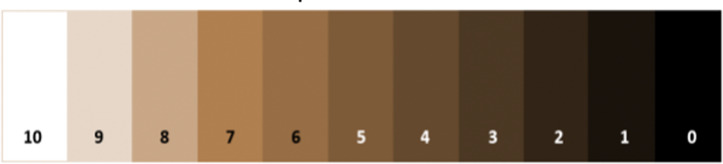
Methods: We conducted knowledge, attitude, and practices (KAP) surveys among primary school students during the COVID-19 pandemic in July 2022. We also observed students' HH practices at three different moments during the day, making note of the use of the HH station and materials, duration of handwashing, presence of a HH assistant, and the students' sex. We also used the Quantitative Personal Hygiene Assessment Tool (qPHAT), to measure hand dirtiness before eating, after restroom use, and upon arriving to school.
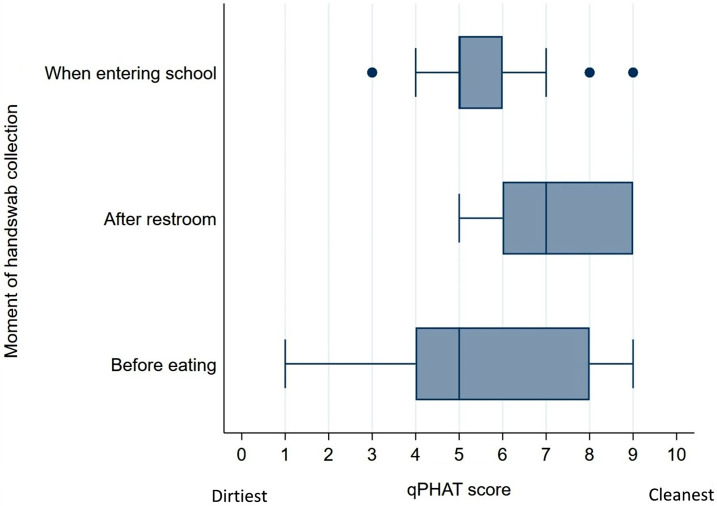
Results: We surveyed 109 students across six schools. Mean scores were 4 out of 5 for knowledge, 8 out of 8 for attitudes, and 6 out of 7 for HH practices. Most students identified "before eating" as a critical moment for HH (68.8%), fewer identified "after restroom use" (31.2%), and no students mentioned HH being necessary "after coughing or sneezing". We observed 326 HH opportunities of which 51.2% performed correct HH (used water and soap for at least 20 s or used alcohol-based hand rub, where materials were available). We collected 82 qPHAT hand swabs. A Kruskal Wallis test revealed a significant difference in hand dirtiness between entering the school and after restroom use (p = 0.017), but no significant difference before eating and after entering the school (p = 0.6988).
Conclusions: The results from the KAP survey show high scores, however correct identification of key moments for HH was relatively uncommon, especially after restroom use and after coughing or sneezing. Additionally, half of HH opportunities observed had correct HH practices and on average, hands were dirtiest when arriving at school. These findings will inform interventions to improve HH practices and behaviors, which will be evaluated with follow-up data collection.
Keywords: Attitudes; COVID-19; Hand hygiene; Hand hygiene behavior; Hand hygiene observations; Hard dirtiness; Knowledge; Practices.
© 2023. The Author(s).
Conflict of interest statement
The authors declare no competing interests.
Figures



References
-
- Willmott M, Nicholson A, Busse H, MacArthur GJ, Brookes S, Campbell R. Effectiveness of hand hygiene interventions in reducing Illness absence among children in educational settings: a systematic review and meta-analysis. Arch Dis Child. 2016;101(1):42–50. doi: 10.1136/archdischild-2015-308875. - DOI - PMC - PubMed
-
- Show Me the Science. - Why Wash Your Hands? | Handwashing | CDC [Internet]. 2023 [cited 2023 May 10]. Available from: https://www.cdc.gov/handwashing/why-handwashing.html.
-
- World Health Organization. Advice for the public [Internet]. [cited 2022 Aug 29]. Available from: https://www.who.int/emergencies/diseases/novel-coronavirus-2019/advice-f....
-
- PROTOCOLO DEL MINISTERIO DE EDUCACIÓN Para director o. responsable del espacio de aprendizaje y Coordinador Departamental de Educación Extraescolar [Internet]. [cited 2022 Dec 7]. Available from: https://aprendoencasayenclase.mineduc.gob.gt/wp-content/uploads/PROTOCOL....
Publication types
MeSH terms
Substances
Grants and funding
LinkOut - more resources
Full Text Sources
Medical
