


The role of Culex territans mosquitoes in the transmission of Batrachochytrium dendrobatidis to amphibian hosts
- PMID: 37974288
- PMCID: PMC10655354
- DOI: 10.1186/s13071-023-05992-x
The role of Culex territans mosquitoes in the transmission of Batrachochytrium dendrobatidis to amphibian hosts
Abstract
Background: Mosquitoes are the deadliest organisms in the world, killing an estimated 750,000 people per year due to the pathogens they can transmit. Mosquitoes also pose a major threat to other vertebrate animals. Culex territans is a mosquito species found in temperate zones worldwide that feeds almost exclusively on amphibians and can transmit parasites; however, little is known about its ability to transmit other pathogens, including fungi. Batrachochytrium dendrobatidis (Bd) is a topical pathogenic fungus that spreads through contact. With amphibian populations around the world experiencing mass die-offs and extinctions due to this pathogen, it is critical to study all potential modes of transmission. Because Cx. territans mosquitoes are in contact with their hosts for long periods of time while blood-feeding, we hypothesize that they can transmit and pick up Bd.
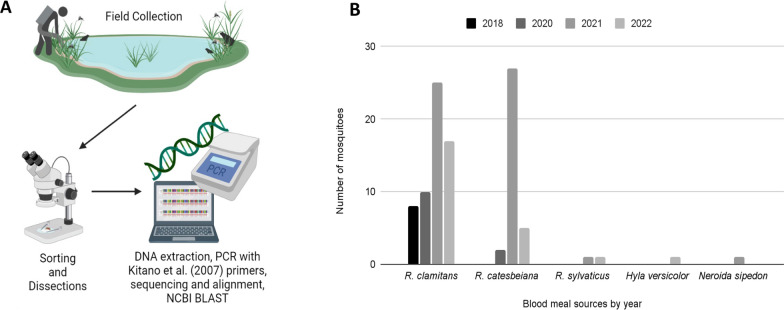
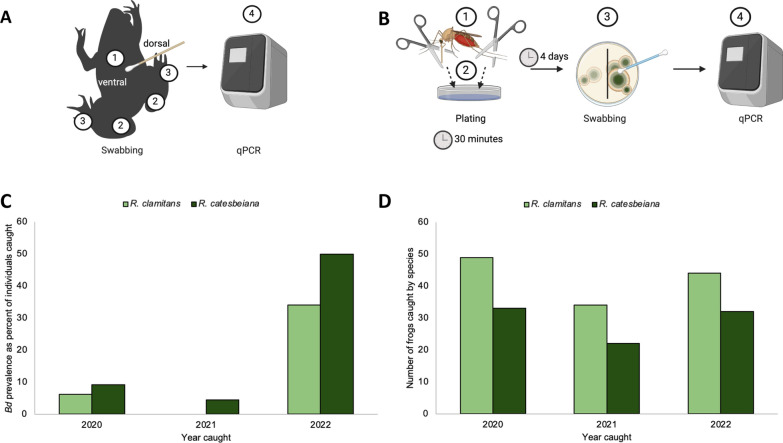
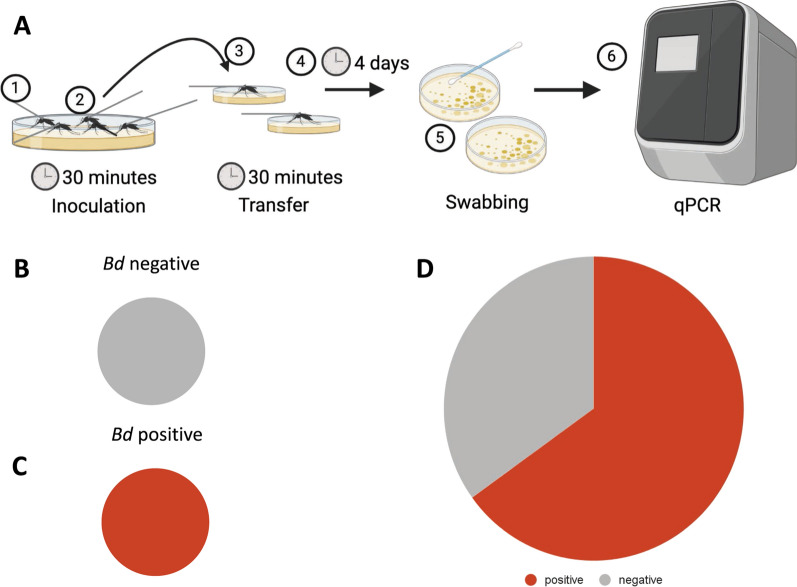
Methods: In this study, we first assessed Cx. territans ability to transfer the fungus from an infected surface to a clean one under laboratory conditions. We also conducted a surveillance study of Bd infections in frogs and mosquitoes in the field (Mountain Lake Biological station, VA, USA). In parallel, we determined Cx. territans host preference via blood meal analysis of field caught mosquitoes.
Results: We found that this mosquito species can carry the fungus to an uninfected surface, implying that they may have the ability to transmit Bd to their amphibian hosts. We also found that Cx. territans feed primarily on green frogs (Rana clamitans) and bullfrogs (Rana catesbeiana) and that the prevalence of Bd within the frog population at our field site varied between years.
Conclusions: This study provides critical insights into understanding the role of amphibian-biting mosquitoes in transmitting pathogens, which can be applied to disease ecology of susceptible amphibian populations worldwide.
Keywords: Blood-feeding; Chytrid fungus; Host preference; Mosquito-borne disease; Pathogen transmission.
© 2023. The Author(s).
Conflict of interest statement
The authors declare no competing interests.
Figures
References
-
- Center for Disease Control and Prevention (CDC). 2018. https://www.cdc.gov/globalhealth/stories/2019/world-deadliest-animal.html. Accessed 26 Jan 2023.
-
- Gates B. The deadliest animal in the world Mosquito Week. Kirkland: The Gates Notes LLC; 2014.
MeSH terms
Grants and funding
LinkOut - more resources
Full Text Sources
Medical
