


Factors Affecting the Quality of Life of Parents Caring for Pediatric Patients with a Tracheostomy
- PMID: 37974559
- PMCID: PMC10631839
- DOI: 10.1055/s-0043-1771345
Factors Affecting the Quality of Life of Parents Caring for Pediatric Patients with a Tracheostomy
Abstract
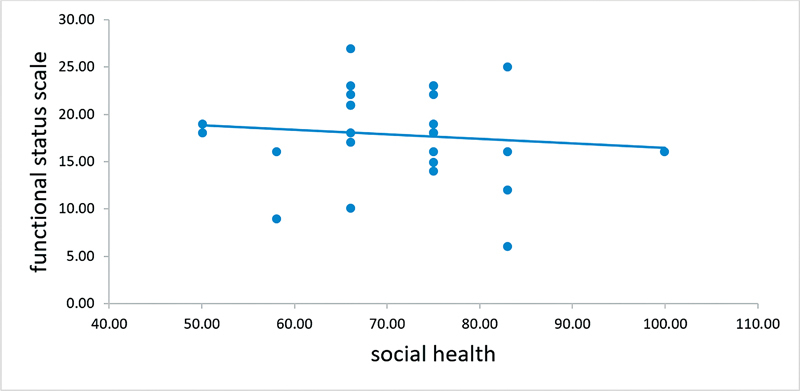
Objectives This study aimed to evaluate factors affecting the quality of life (QOL) of parents of children who underwent placement of a tracheostomy while in the pediatric intensive care unit (PICU) through postdischarge use of a standardized questionnaire, Functional Status Scale (FSS) for patients, and WHOQoL-BREF (a QOL scale) for parents. Methods The parents were initially contacted by telephone, postdischarge, during which the standardized questionnaire was completed. The functional status of the patients was evaluated using the FSS, and the QOL of parents was determined through use of the WHOQoL-BREF scale. Results From 2011 to 2021, tracheostomy was performed in 119 PICU patients. Overall, 93 patients were excluded due to death in 66 (56%), decannulation in 24 (20%) and, 3 (2%) were not available for follow-up. The parents of 26 (22%) patients were available for follow-up and for which the standardized questionnaire FSS and WHOQoL-BREF QOL scales were completed. The mean FSS score of the patients was elevated at 17.84. In comparison, reduced mean scores were observed for parental physical health of 20.61, psychological health of 20.57, social health of 11.15, and environmental health of 29.00. As a result, a moderate ( r < 0.80), yet significant ( p ≤ 0.004) negative correlation was found between the FSS scores of patients and the physical, social relationships, environmental, and psychological health QOL scores of parents. Conclusion This study is unique in that, to our knowledge, it is the first to compare parental QOL with the FSS of pediatric patients who have undergone a tracheostomy while hospitalized in the PICU. Our findings indicate that the parental QOL was reduced in four areas and correlates with an elevation in FSS score (indicating a greater functional disorder) of pediatric patients who had previously undergone a tracheostomy while hospitalized in the PICU.
Keywords: Functional Status Scale; pediatric tracheostomy; quality of life.
Thieme. All rights reserved.
Conflict of interest statement
Conflict of Interest None declared.
Figures



References
-
- Glendinning C, Kirk S, Guiffrida A, Lawton D. Technology-dependent children in the community: definitions, numbers and costs. Child Care Health Dev. 2001;27(04):321–334. - PubMed
-
- Beale H. Respite care for technology-dependent children and their families. Paediatr Nurs. 2002;14(07):18–19. - PubMed
-
- McCormick M E, Ward E, Roberson D W, Shah R K, Stachler R J, Brenner M J. Life after tracheostomy: patient and family perspectives on teaching, transitions, and multidisciplinary teams. Otolaryngol Head Neck Surg. 2015;153(06):914–920. - PubMed
-
- North American Growth in Cerebral Palsy Study . Stevenson R D, Conaway M, Chumlea W C et al. Growth and health in children with moderate-to-severe cerebral palsy. Pediatrics. 2006;118(03):1010–1018. - PubMed
LinkOut - more resources
Full Text Sources
Research Materials
