


Engineered probiotics introduced to improve intestinal microecology for the treatment of chronic diseases: present state and perspectives
- PMID: 37975092
- PMCID: PMC10638336
- DOI: 10.1007/s40200-023-01279-1
Engineered probiotics introduced to improve intestinal microecology for the treatment of chronic diseases: present state and perspectives
Abstract
Purpose: Correcting intestinal microecological imbalance has become one of the core strategies to treat chronic diseases. Some traditional microecology-based therapies targeting intestine, such as prebiotic therapy, probiotic therapy and fecal microbiota transplantation therapy, have been used in the prevention and treatment of clinical chronic diseases, which still facing low safety and poor controllability problems. The development of synthetic biology technology has promoted the development of intestinal microecology-based therapeutics for chronic diseases, which exhibiting higher robustness and controllability, and become an important part of the next generation of microecological therapy. The purpose of this review is to summarize the application of synthetic biology in intestinal microecology-based therapeutics for chronic diseases.
Methods: The available literatures were searched to find out experimental studies and relevant review articles on the application of synthetic biology in intestinal microecology-based therapeutics for chronic diseases from year 1990 to 2023.
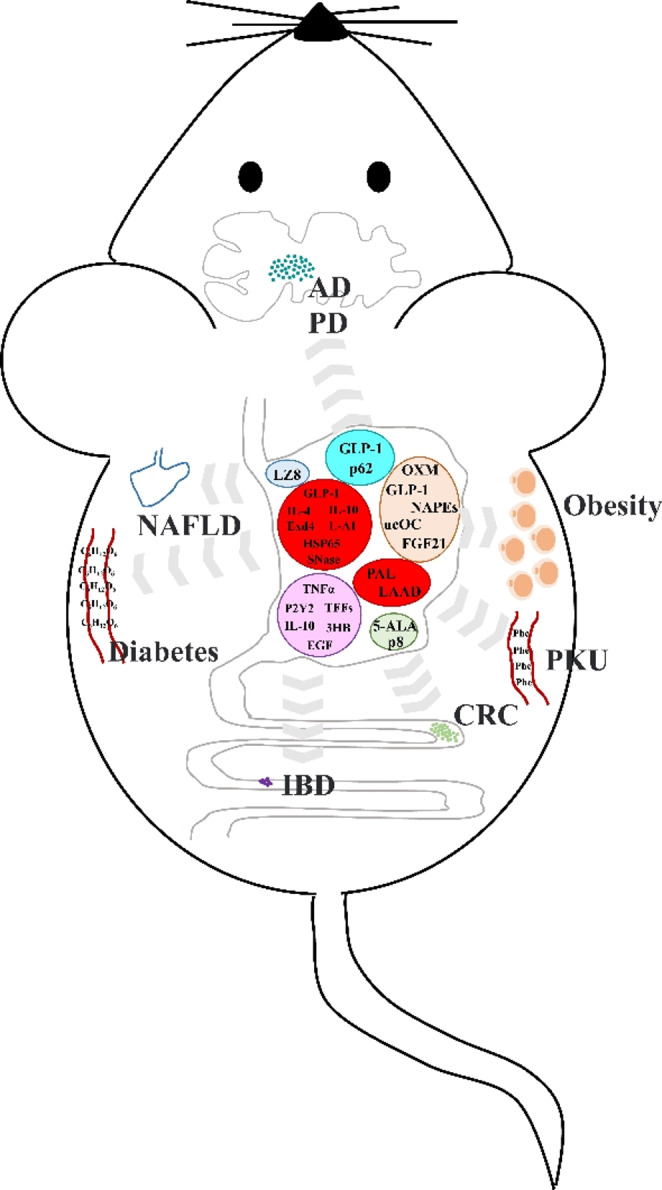
Results: Evidence proposed that synthetic biology has been applied in the intestinal microecology-based therapeutics for chronic diseases, covering metabolic diseases (e.g. diabetes, obesity, nonalcoholic fatty liver disease and phenylketonuria), digestive diseases (e.g. inflammatory bowel disease and colorectal cancer), and neurodegenerative diseases (e.g. Alzheimer's disease and Parkinson's disease).
Conclusion: This review summarizes the application of synthetic biology in intestinal microecology-based therapeutics for major chronic diseases and discusses the opportunities and challenges in the above process, providing clinical possibilities of synthetic biology technology applied in microecological therapies.
Keywords: Chronic diseases; Intestinal metabolites; Microecology-based therapeutics; Probiotics; Synthetic biology.
© The Author(s), under exclusive licence to Tehran University of Medical Sciences 2023. Springer Nature or its licensor (e.g. a society or other partner) holds exclusive rights to this article under a publishing agreement with the author(s) or other rightsholder(s); author self-archiving of the accepted manuscript version of this article is solely governed by the terms of such publishing agreement and applicable law.
Conflict of interest statement
Competing interestsThe authors declare no competing interests.
Figures
References
-
- Gibson GR, Hutkins R, Sanders ME, Prescott SL, Reimer RA, Salminen SJ, et al. Expert consensus document: the International Scientific Association for Probiotics and Prebiotics (ISAPP) consensus statement on the definition and scope of prebiotics. Nat reviews Gastroenterol Hepatol. 2017;14(8):491–502. doi: 10.1038/nrgastro.2017.75. - DOI - PubMed
-
- Martin R, Miquel S, Benevides L, Bridonneau C, Robert V, Hudault S, et al. Functional characterization of Novel Faecalibacterium prausnitzii strains isolated from healthy volunteers: a Step Forward in the Use of F. prausnitzii as a Next-Generation Probiotic. Front Microbiol. 2017;81226. 10.3389/fmicb.2017.01226. - PMC - PubMed
Publication types
LinkOut - more resources
Full Text Sources
