


Molecular diagnostics tailoring personalized cancer therapy-an oncologist's view
- PMID: 37982847
- PMCID: PMC10948510
- DOI: 10.1007/s00428-023-03702-7
Molecular diagnostics tailoring personalized cancer therapy-an oncologist's view
Abstract
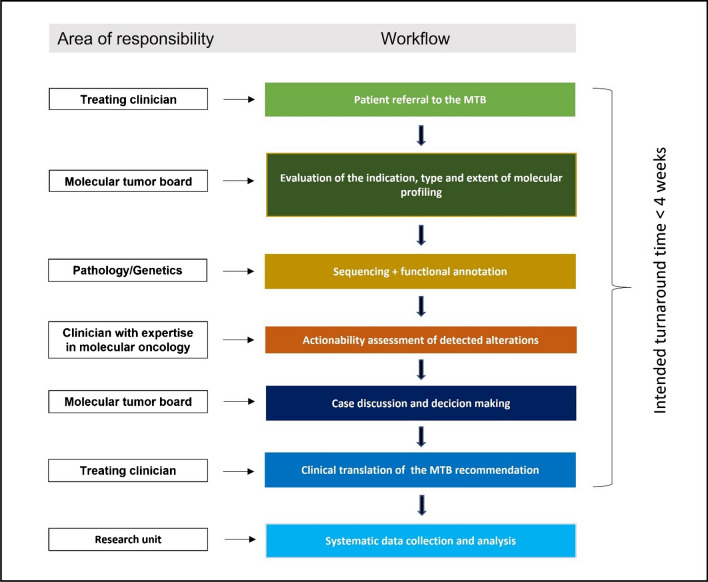
Medical oncology is rapidly evolving with the implementation of personalized, targeted therapies. Advances in molecular diagnostics and the biologic understanding of cancer pathophysiology led to the identification of specific genetic alterations as drivers of cancer progression. Further, improvements in drug development enable the direct interference with these pathways, which allow tailoring personalized treatments based on a distinct molecular characterization of tumors. Thereby, we are currently experiencing a paradigm-shift in the treatment of cancers towards cancer-type agnostic, molecularly targeted, personalized therapies. However, this concept has several important hurdles and limitations to overcome to ultimately increase the proportion of patients benefitting from the precision oncology approach. These include the assessment of clinical relevancy of identified alterations, capturing and interpreting levels of heterogeneity based on intra-tumoral or time-dependent molecular evolution, and challenges in the practical implementation of precision oncology in routine clinical care. In the present review, we summarize the current state of cancer-agnostic precision oncology, discuss the concept of molecular tumor boards, and consider current limitations of personalized cancer therapy. Further, we provide an outlook towards potential future developments including the implementation of functionality assessments of identified genetic alterations and the broader use of liquid biopsies in order to obtain more comprehensive and longitudinal genetic information that might guide personalized cancer therapy in the future.
Keywords: Cancer; Molecular oncology; Personalized treatment; Precision oncology; Targeted therapy.
© 2023. The Author(s).
Conflict of interest statement
The authors declare no competing interests.
Figures
References
Publication types
MeSH terms
LinkOut - more resources
Full Text Sources
Medical
