doi: 10.3201/eid2912.230938.
Neurotropic Highly Pathogenic Avian Influenza A(H5N1) Virus in Red Foxes, Northern Germany
- PMID: 37987587
- PMCID: PMC10683810
- DOI: 10.3201/eid2912.230938
Item in Clipboard
Neurotropic Highly Pathogenic Avian Influenza A(H5N1) Virus in Red Foxes, Northern Germany
Emerg Infect Dis.
2023 Dec.
Abstract
In a 1-year survey of wild terrestrial predators in northern Germany, we found that 5 of 110 foxes were infected with contemporary avian influenza A(H5N1) viruses, forming a temporal cluster during January‒March 2023. Encephalitis and strong cerebral virus replication but only sporadic mammalian-adaptive viral polymerase basic 2 protein E627K mutations were seen.
Figures
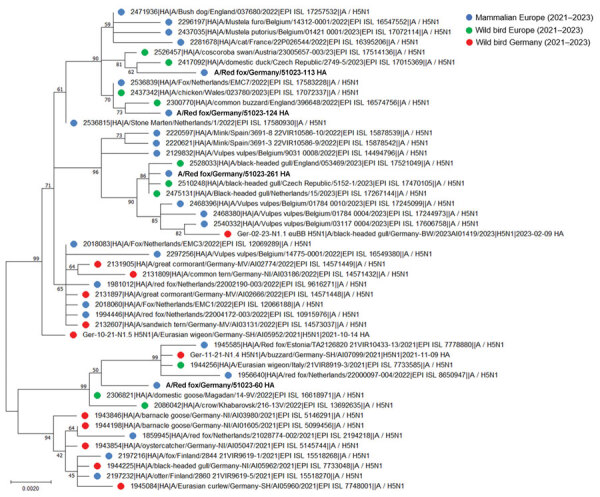
Phylogenetic analyses of highly pathogenic avian influenza virus H5 sequences of mammals and wild birds, Germany. The maximum-likelihood tree was built with 500 bootstrap iterations. H5 variants included 4 red foxes from Lower Saxony, Germany, their 3 closest relatives according to BLAST (https://blast.ncbi.nlm.nih.gov/Blast.cgi ) analyses, and distinct H5 sequences detected in wild birds from northern Germany and in mammalian species from Europe during 2021–2023. Bold text indicates virus variants found in this study. Numbers along branches indicate percentage bootstrap values. Scale bar indicates nucleotide substitutions per site. H, hemagglutinin.
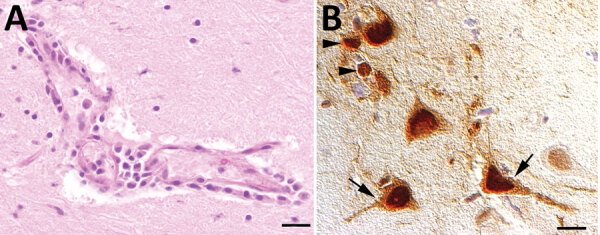
Results of testing for highly pathogenic avian influenza virus in red foxes (Vulpes vulpes), Germany. A) Microscopic findings in the brain of an influenza A(H5N1) virus‒infected red fox showing a lymphocytic to histiocytic perivascular encephalitis (hematoxylin and eosin stained, scale bar = 50 μm). B) Immunohistochemical demonstration of influenza A virus nucleoprotein in neurons (arrows) and glial cells (arrowheads) in the cerebrum of a virus‒infected red fox (avidin biotin complex method, scale bar = 20 μm).
References
-
- Adlhoch C, Fusaro A, Gonzales JL, Kuiken T, Marangon S, Mirinaviciute G, et al. ; European Food Safety Authority; European Centre for Disease Prevention and Control; European Union Reference Laboratory for Avian Influenza. Avian influenza overview December 2022 - March 2023. EFSA J. 2023;21:e07917. - PMC - PubMed
MeSH terms
Substances
LinkOut - more resources
Full Text Sources
Medical