


Major Adverse Dystrophinopathy Events (MADE) Score as Marker of Cumulative Morbidity and Risk for Mortality in Boys with Duchenne Muscular Dystrophy
- PMID: 37990740
- PMCID: PMC10659574
- DOI: 10.1016/j.ppedcard.2023.101639
Major Adverse Dystrophinopathy Events (MADE) Score as Marker of Cumulative Morbidity and Risk for Mortality in Boys with Duchenne Muscular Dystrophy
Abstract
Background: Overlapping symptoms from cardiomyopathy, respiratory insufficiency, and skeletal myopathy confound assessment of heart failure in Duchenne Muscular Dystrophy. We developed an ordinal scale of multiorgan clinical variables that reflect cumulative disease burden-the Major Adverse Dystrophinopathy Event (MADE) Score. We hypothesized that a higher MADE score would be associated with increased mortality in boys with Duchenne Muscular Dystrophy. The Cooperative International Neuromuscular Research Group Duchenne Natural History Study dataset was utilized for validation.
Methods: Duchenne Natural History Study variables were selected based on clinical relevance to prespecified domains: Cardiac, Pulmonary, Myopathy, Nutrition. Severity points (0-4) were assigned and summed for study visits. MADE score for cohorts defined by age, ambulatory status, and survival were compared at enrollment and longitudinally.Associations between MADE score and mortality were examined.
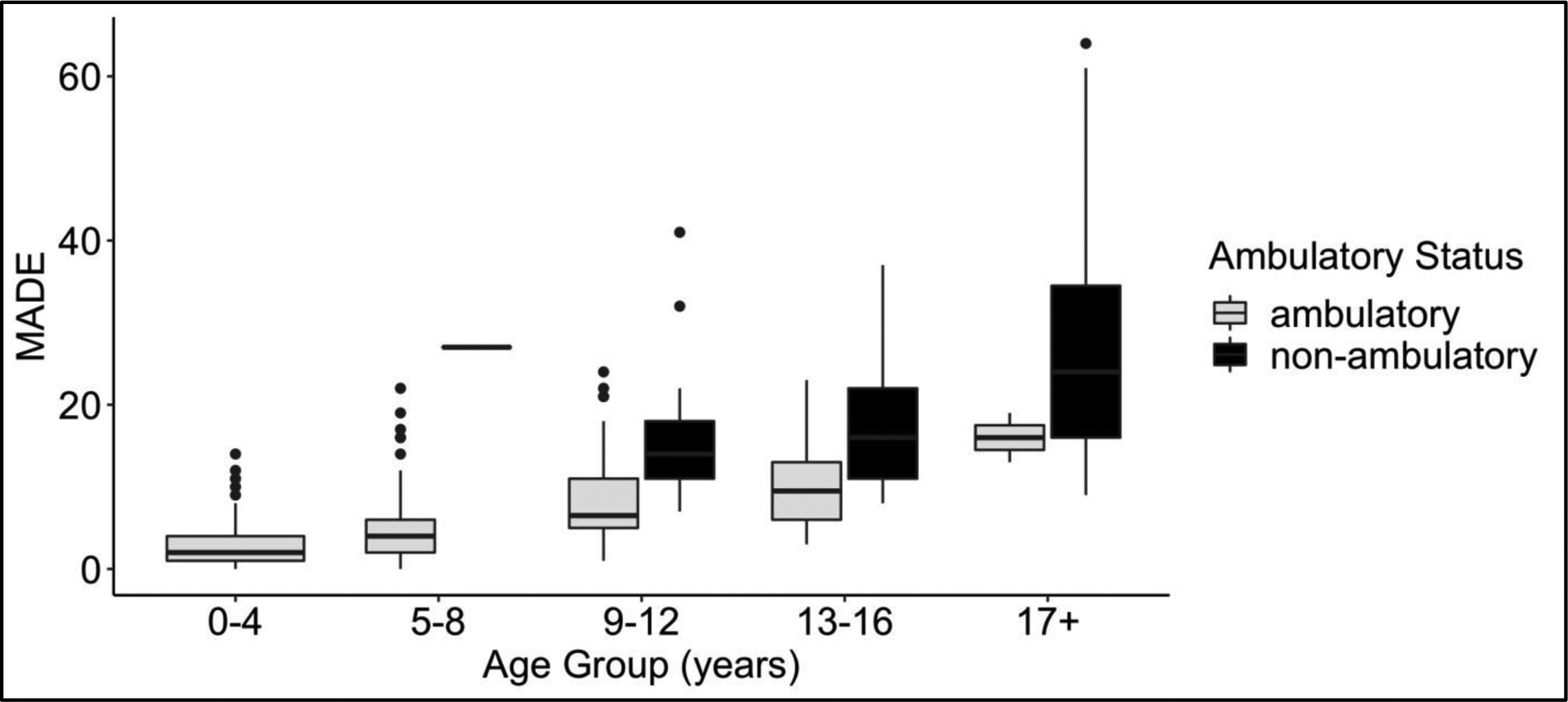
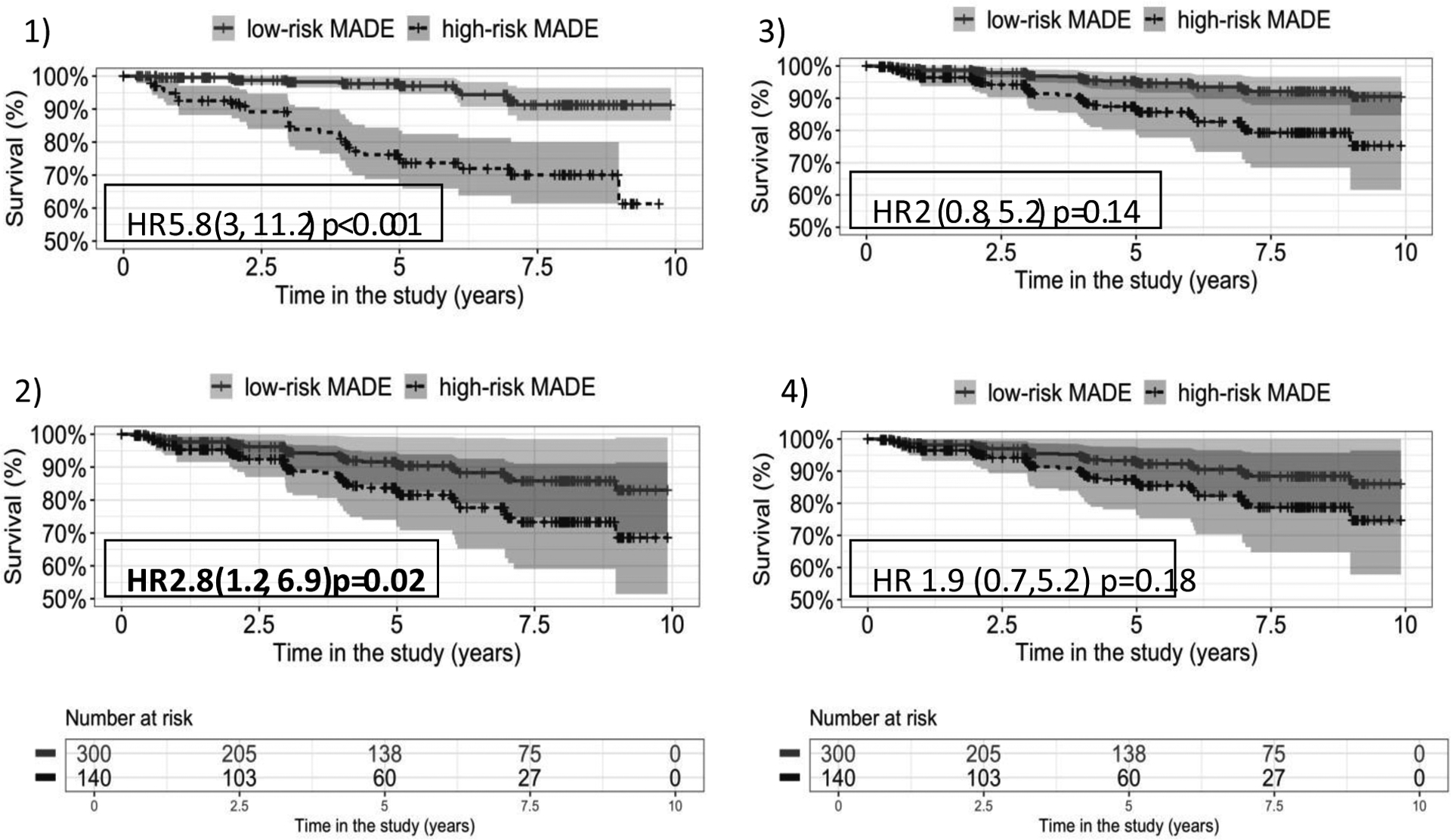
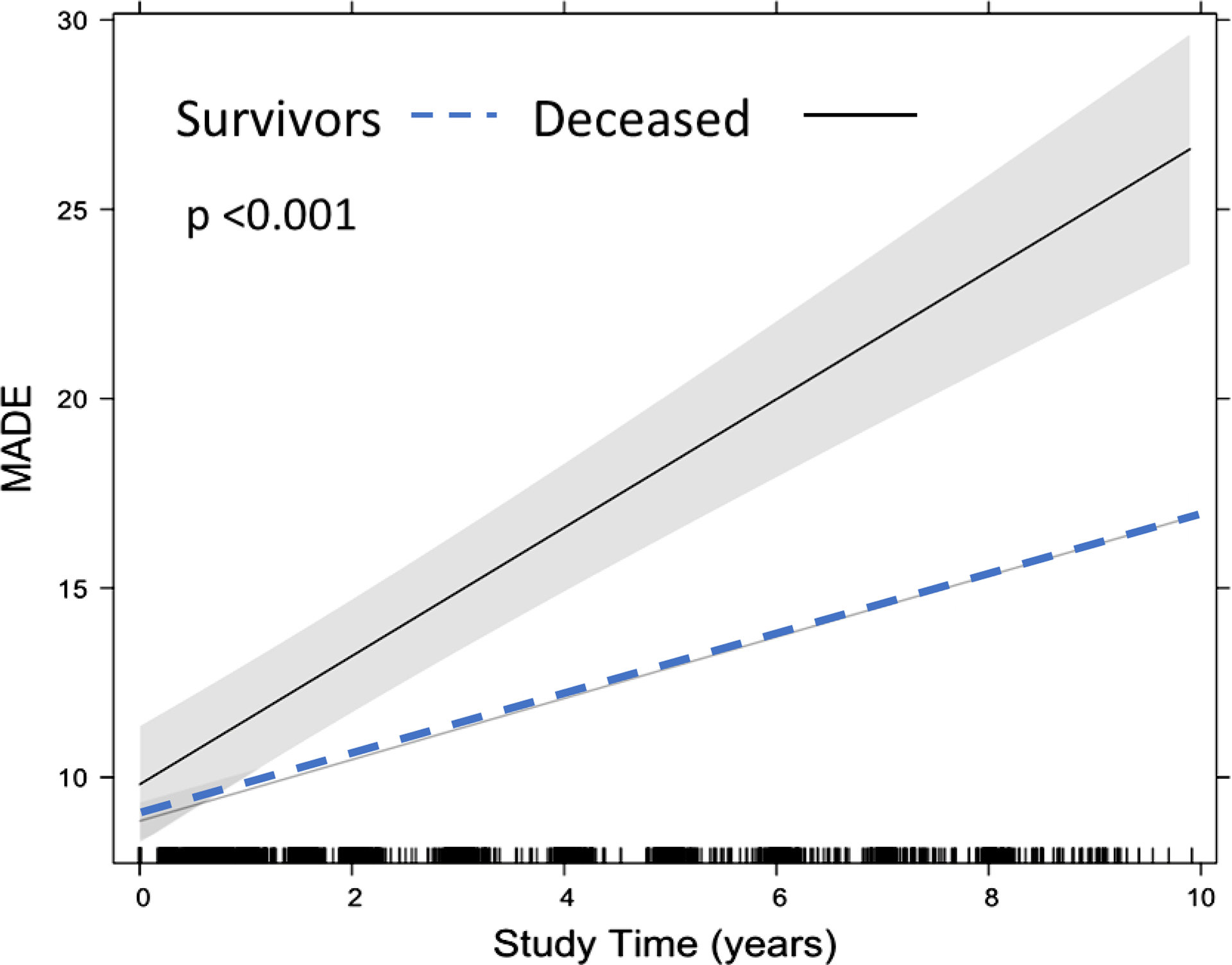
Results: Duchenne Natural History Study enrolled 440 males, 12.6 ±6.1 years old, with 3,559 visits over 4.6 ±2.8 years, 45 deaths. MADE score increased with age and nonambulatory status. Mean MADE score per visit was 19 ±10 for those who died vs. 9.8 ±9.3 in survivors p=0.03. Baseline MADE score >12 predicted mortality independent of age (78% sensitivity, CPE.70). Rising MADE score trajectory was associated with mortality in models adjusted for enrollment age, follow-up time, and ambulatory status, all p<.001.
Conclusion: A multiorgan severity score, MADE, was developed to track cumulative morbidities that impact heart failure in Duchenne muscular dystrophy. MADE score predicted Duchenne Natural History Study mortality. MADE score can be used for serial heart failure assessment in males and may serve as an endpoint for Duchenne muscular dystrophy clinical research.
Keywords: Duchenne muscular dystrophy; dystrophinopathy; heart failure; mortality risk predictor.
Figures
References
-
- Henricson EK, et al. , The cooperative international neuromuscular research group DNHS: glucocorticoid treatment preserves clinically meaningful functional milestones and reduces rate of disease progression as measured by manual muscle testing and other commonly used clinical trial outcome measures. Muscle Nerve, 2013. 48(1): p. 55–67. - PMC - PubMed
-
- McDonald CM, et al. , Long-term effects of glucocorticoids on function, quality of life, and survival in patients with DMD: a prospective cohort study. Lancet, 2018. 391(10119): p. 451461. - PubMed
-
- McDonald CM, et al. , Longitudinal pulmonary function testing outcome measures in DMD: Long-term natural history with and without glucocorticoids. Neuromuscul Disord, 2018. 28(11): p. 897–909. - PubMed
-
- Van Ruiten HJ, Marini Bettolo C, Cheetham T, Eagle M, Lochmuller H, Straub V, Bushby K, Guglieri M (2016) Why are some patients with DMD dying young: An analysis of causes of death in North East England. Eur J Paediatr Neurol 20:904–909 - PubMed
Grants and funding
LinkOut - more resources
Full Text Sources
Research Materials
Miscellaneous