


Recommendations on scuba diving in Birt-Hogg-Dubé syndrome
- PMID: 37991821
- PMCID: PMC10763569
- DOI: 10.1080/17476348.2023.2284375
Recommendations on scuba diving in Birt-Hogg-Dubé syndrome
Abstract
Introduction: Although very uncommon, severe injury and death can occur during scuba diving. One of the main causes of scuba diving fatalities is pulmonary barotrauma due to significant changes in ambient pressure. Pathology of the lung parenchyma, such as cystic lesions, might increase the risk of pulmonary barotrauma.
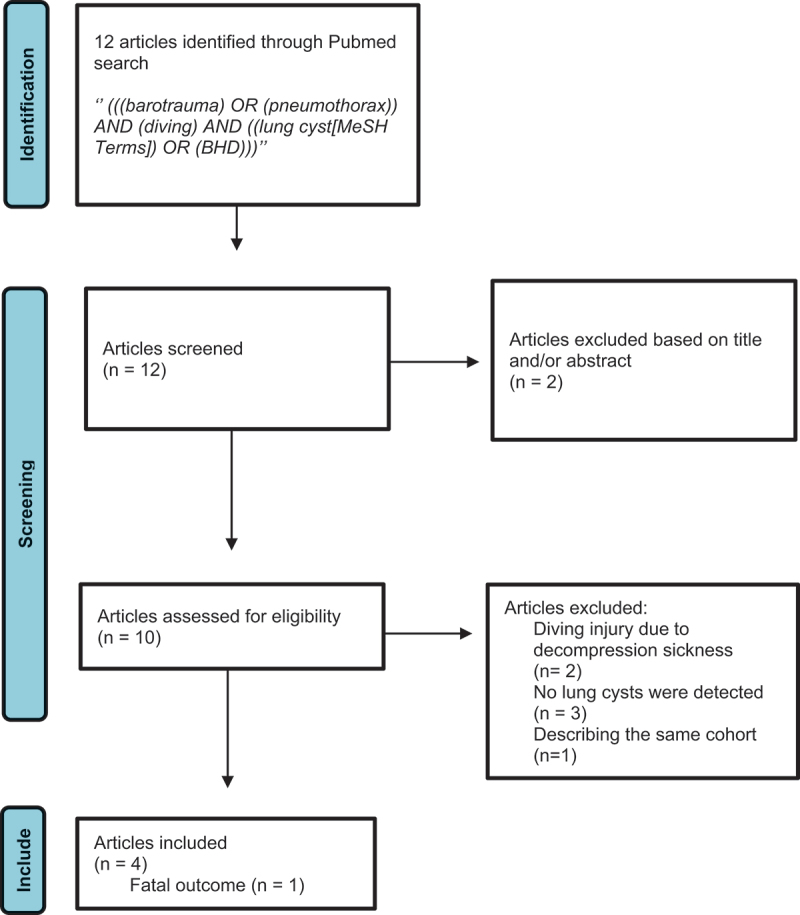
Areas covered: Birt-Hogg-Dubé syndrome (BHD), caused by pathogenic variants in the FLCN gene, is characterized by skin fibrofolliculomas, an increased risk of renal cell carcinoma, multiple lung cysts and spontaneous pneumothorax. Given the pulmonary involvement, in some countries patients with BHD are generally recommended to avoid scuba diving, although evidence-based guidelines are lacking. We aim to provide recommendations on scuba diving for patients with BHD, based on a survey of literature on pulmonary cysts and pulmonary barotrauma in scuba diving.
Expert opinion: In our opinion, although the absolute risks are likely to be low, caution is warranted. Given the relative paucity of literature and the potential fatal outcome, patients with BHD with a strong desire for scuba diving should be informed of the potential risks in a personal assessment. If available a diving physician should be consulted, and a low radiation dose chest computed tomography (CT)-scan to assess pulmonary lesions could be considered.
Keywords: Birt–Hogg–Dubé syndrome; FLCN; Scuba diving; arterial gas embolism; barotrauma; folliculin; lung cysts; spontaneous pneumothorax.
Conflict of interest statement
The authors have no relevant affiliations or financial involvement with any organization or entity with a financial interest in or financial conflict with the subject matter or materials discussed in the manuscript. This includes employment, consultancies, honoraria, stock ownership or options, expert testimony, grants or patents received or pending, or royalties.
References
-
- Penrice D, Cooper JS.. Diving Casualties. In: StatPearls. Treasure Island (FL): StatPearls; 2022. Nov 28. - PubMed
Publication types
MeSH terms
Substances
Grants and funding
LinkOut - more resources
Full Text Sources
Medical
