Review
. 2023 Nov 28;82(22):2128-2151.
doi: 10.1016/j.jacc.2023.09.819.

Novel Imaging Approaches to Cardiac Manifestations of Systemic Inflammatory Diseases: JACC Scientific Statement

Affiliations
Review

Novel Imaging Approaches to Cardiac Manifestations of Systemic Inflammatory Diseases: JACC Scientific Statement

Brittany N Weber et al. J Am Coll Cardiol. .

Abstract

Derangements in the innate and adaptive immune responses observed in systemic inflammatory syndromes contributes to unique elevated atherosclerotic risk and incident cardiovascular disease. Novel multimodality imaging techniques may improve diagnostic precision for the screening and monitoring of disease activity. The integrated application of these technologies lead to earlier diagnosis and noninvasive monitoring of cardiac involvement in systemic inflammatory diseases that will aid in preclinical studies, enhance patient selection, and provide surrogate endpoints in clinical trials, thereby improving clinical outcomes. We review the common cardiovascular manifestations of immune-mediated systemic inflammatory diseases and address the clinical and investigational role of advanced multimodality cardiac imaging.

Keywords: PET; cardiac magnetic resonance; computed tomography; echocardiography; systemic inflammatory disease.


Conflict of interest statement

Funding Support and Author Disclosures Dr Weber has received funding support from the National Institutes of Health National Heart, Lung, and Blood Institute K23HL159276-02 and American Heart Association 21CDA851511; and has served on the Scientific Advisory Board of Novo Nordisk, Horizon Therapeutics, and Kiniksa. Dr Paik has received funding support from the National Institutes of Health NIAMS K23AR073927-03. Dr Klein has received research grants from and served on the scientific advisory board of Kiniksa and Cardiology Therapeutics. Dr Yu has received funding support from the National Institutes of Health National Heart, Lung, and Blood Institute R01HL159443-02 and National Institutes of Health NIAMS R01AR057374-09. Dr Mukherjee has received funding support from the National Institutes of Health National Heart, Lung, and Blood Institute R01HL162851 and National Scleroderma Foundation; and has served on the Data Safety Monitoring Board of Advarra, Inc. All other authors have reported that they have no relationships relevant to the contents of this paper to disclose.

Figures

FIGURE 1
FIGURE 1. Coronary Computed Angiography in Rheumatoid Arthritis
(A) 3-dimensional volume-rendered coronary computed tomography angiography image of a rheumatoid arthritis patient demonstrates occlusion of the mid left anterior descending artery (white arrows), and curved multiplanar reconstruction image (B) of the left anterior descending artery shows a large amount of plaque (white arrows) with an occluded (white asterisk) segment. In the curved multiplanar reconstruction image of the left circumflex (C), a small amount of plaque is present (white arrow).
FIGURE 2
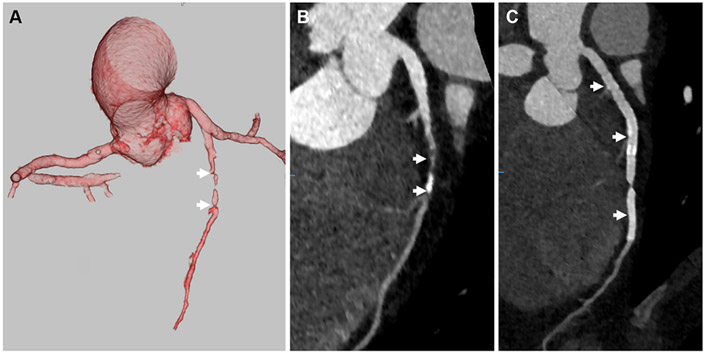
FIGURE 2. Coronary Computed Angiography in Psoriatic Arthritis
(A) 3-dimensional volume-rendered coronary computed tomography angiography image of a psoriatic arthritis patient demonstrating occlusion of the mid portion of the left anterior descending artery (white arrows), and curved multiplane reconstruction image (B) of the left anterior descending artery shows a moderate amount of plaque (white arrows) with an occluded segment. (C) Curved multiplanar reconstruction image after percutaneous intervention with a long segment stent (white arrows) throughout the left anterior descending artery.
FIGURE 3
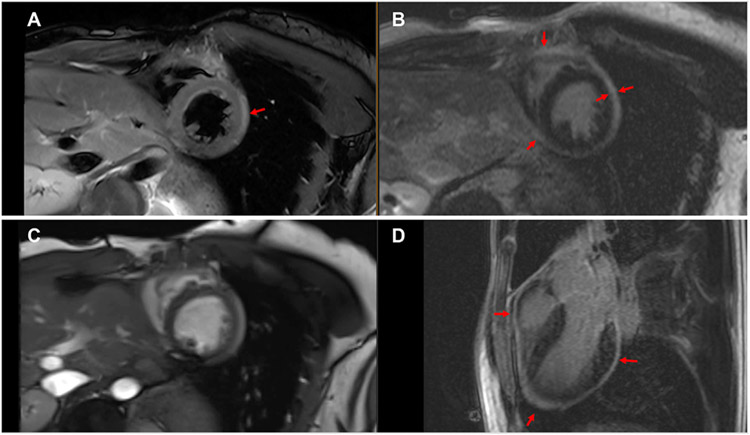
FIGURE 3. Cardiac Magnetic Resonance in Systemic Lupus Erythematosus
(A) T2-weighted image is shown demonstrating pericardial thickening and edema in a patient with systemic lupus erythematosus. (B) Short-axis late gadolinium enhancement image of pericardial thickening and enhancement. (C) Cine steady-state free precession image demonstrates enhancement and thickening. (D) 3-chamber view late gadolinium enhancement image demonstrates circumferential pericardial thickening and enhancement, prominent in the apical region. Red arrows indicate pericardial thickening and enhancement.
FIGURE 4
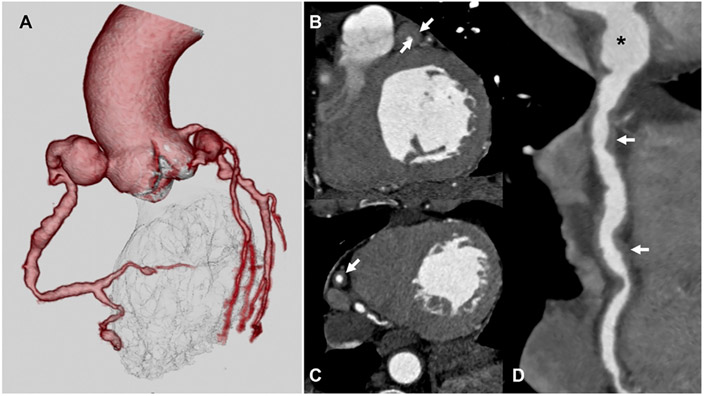
FIGURE 4. Coronary Computed Angiography in Vasculitis
(A) 3-dimensional volume-rendered coronary computed tomography angiography image of a patient with IgG-4 vasculitis demonstrates Diffuse ectasia and multifocal aneurysms throughout the coronary arteries. Multiplanar reformat computed tomography angiography images through the left anterior descending artery (B), right coronary artery (C), and significant wall thickening (white arrows). Similarly, the curved MPR image (D) of the RCA shows diffuse ectasia, aneurysm (black asterisk) of the proximal segment, and marked wall thickening.
FIGURE 5
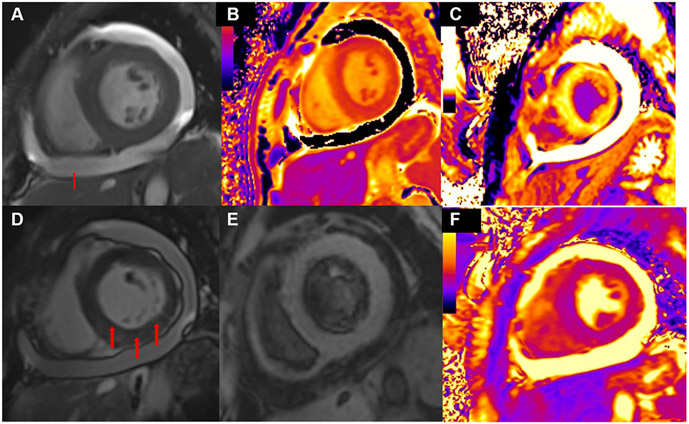
FIGURE 5. Cardiac Magnetic Resonance in Systemic Sclerosis
(A) Moderate circumferential pericardial effusion seen in the short-axis view. (B) Native T1 mapping demonstrates myocardial inflammation. (C) Comparison of precontrast and postcontrast T1 mapping demonstrates diffuse myocardial inflammation (D) At the same level, late gadolinium enhancement demonstrates myocardial fibrosis. (E) T2-weighted short-tau inversion recovery imaging suppresses the signal of blood flow from fat thereby enhancing sensitivity to tissue fluid. Here, we see evidence of myocardial edema. (F) T2 mapping is more sensitive than qualitative and semiquantitative approaches to detect myocardial edema showing evidence of diffuse edema.
FIGURE 6
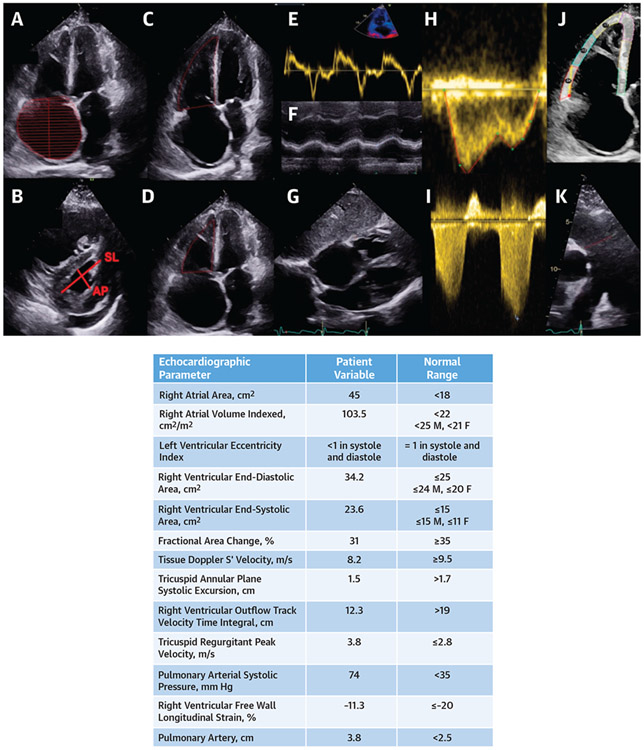
FIGURE 6. Echocardiography in Systemic Sclerosis With Pulmonary Arterial Hypertension
(A) Severe right atrial enlargement with rightward bowing of the interatrial septum. Red hash marks represent end-diastolic volume of the right atrium. (B) Right ventricular enlargement, abnormal eccentricity index, and a small posterior pericardial effusion. (C and D) Severely dilated right heart chambers. Fractional area change is decreased at 31%. Red outline in C represent end-diastolic area of the right ventricle and represent end-systolic area of the right ventricle in D. (E) Tissue Doppler S’ velocity is reduced at 8.2 cm/s. (F) Tricuspid annular plane systolic excursion is reduced at 1.5 cm. (G) Increased right ventricular free wall thickness. (H) Right ventricular outflow track (RVOT) velocity time integral. (I) Pulmonary arterial systolic pressure is elevated at 74 mm Hg. (J) Right ventricular free wall strain is reduced at −11.3% (red indicates basal segment, blue indicates midventricular, and yellow indicates apical). (K) The main pulmonary artery is dilated at 3.8 cm (red line indicates end-diastolic diameter of the proximal pulmonary artery). AP = anteroposterior; SL = septolateral.
FIGURE 7
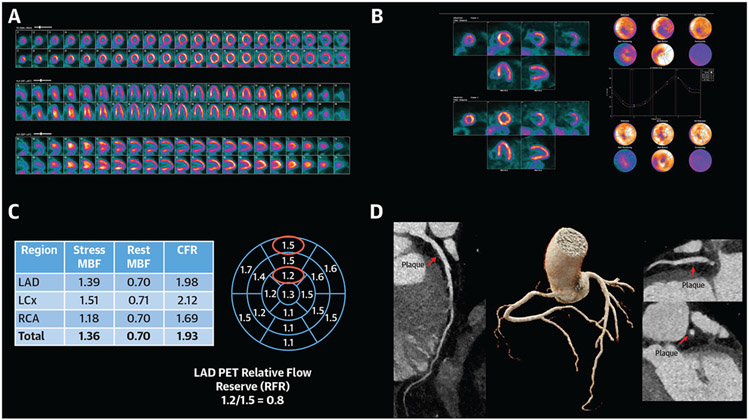
FIGURE 7. Coronary Microvascular Dysfunction in a Patient With Active Rheumatoid Arthritis Presenting With Dyspnea
(A) 13N-ammonia Perfusion PET. Perfusion images demonstrate moderate ischemia in the left anterior descending (LAD) artery with vasodilator administration. (B) Functional imaging reveals normal LV volumes and systolic function at rest and stress (63% and 75%, respectively) without regional wall motion abnormalities. (C) Coronary flow reserve demonstrates globally reduced peak myocardial blood flow (normal >1.8) and associated reduction in coronary flow reserve (abnormal defined as CFR<2.0). The 17-segment model highlights the LAD relative flow reserve and a gradient suggestive of diffuse nonobstructive atherosclerosis. (D) Coronary CT was performed to rule out severe LAD stenosis which revealed evidence of a medium amount of predominantly noncalcified coronary plaque throughout the epicardial coronaries, resulting in minimal stenosis of the left main, proximal and mid-LAD, proximal left circumflex, and right coronary artery (shown is the LAD)
CENTRAL ILLUSTRATION
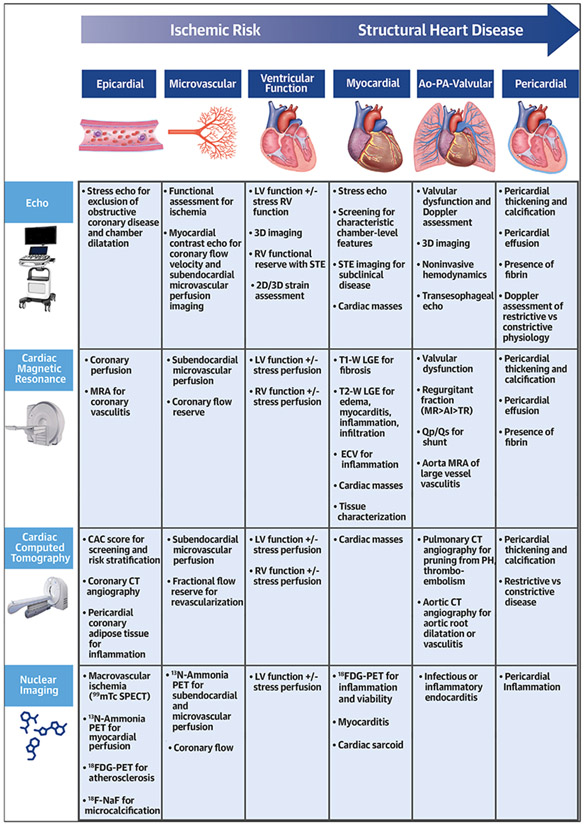
CENTRAL ILLUSTRATION. The Role of Multimodality Cardiac Imaging in Systemic Inflammatory Diseases
The integrated application of multimodality imaging techniques may improve diagnostic precision for disease activity screening and monitoring of cardiac involvement in systemic inflammatory diseases. 2D = 2-dimensional; 3D = 3-dimensional; CAC = cardiac calcium calcification; CT = computed tomography; Echo = echocardiography; ECV = extracellular volume; FDG = fluorodeoxyglucose; LGE = late gadolinium enhancement; LV = left ventricle; MR = mitral regurgitation; MRA = magnetic resonance angiography; PET = positron emission tomography; RV = right ventricle; SPECT = single photon emission computed tomography; STE = speckle tracking echocardiograpy; TR = tricuspid regurgitation.

References

    1. Gasparyan AY. Cardiovascular risk and inflammation: pathophysiological mechanisms, drug design, and targets. Curr Pharm Des. 2012;18:1447–1449. 10.2174/138161212799504777 - DOI - PubMed
    1. Zhao TX, Mallat Z. Targeting the immune system in atherosclerosis: JACC state-of-the-art review. J Am Coll Cardiol. 2019;73:1691–1706. 10.1016/j.jacc.2018.12.083 - DOI - PubMed
    1. Avina-Zubieta JA, Thomas J, Sadatsafavi M, Lehman AJ, Lacaille D. Risk of incident cardiovascular events in patients with rheumatoid arthritis: a meta-analysis of observational studies. Ann Rheum Dis. 2012;71:1524–1529. 10.1136/annrheumdis-2011-200726 - DOI - PubMed
    1. Mavrogeni S, Pepe A, Nijveldt R, et al. Cardiovascular magnetic resonance in autoimmune rheumatic diseases: a clinical consensus document by the European Association of Cardiovascular Imaging. Eur Heart J Cardiovasc Imaging. 2022;23:e308–e322. 10.1093/ehjci/jeac134 - DOI - PubMed
    1. Ohta H, Wada H, Niwa T, et al. Disruption of tumor necrosis factor-alpha gene diminishes the development of atherosclerosis in ApoE-deficient mice. Atherosclerosis. 2005;180:11–17. 10.1016/j.atherosclerosis.2004.11.016 - DOI - PubMed

Publication types

LinkOut - more resources