


Effect of Membrane Permeance and System Parameters on the Removal of Protein-Bound Uremic Toxins in Hemodialysis
- PMID: 37993752
- PMCID: PMC10859350
- DOI: 10.1007/s10439-023-03397-6
Effect of Membrane Permeance and System Parameters on the Removal of Protein-Bound Uremic Toxins in Hemodialysis
Abstract
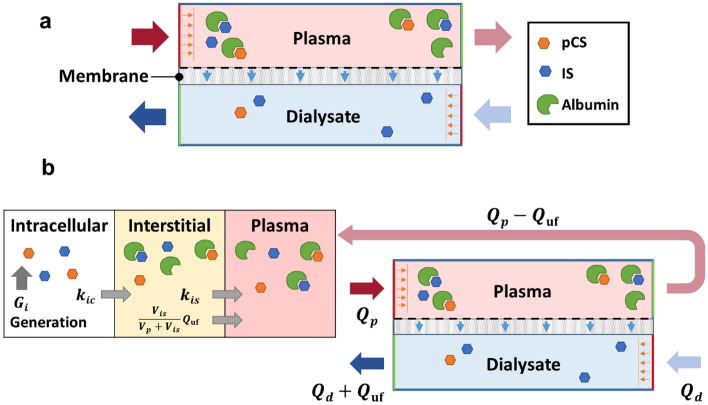
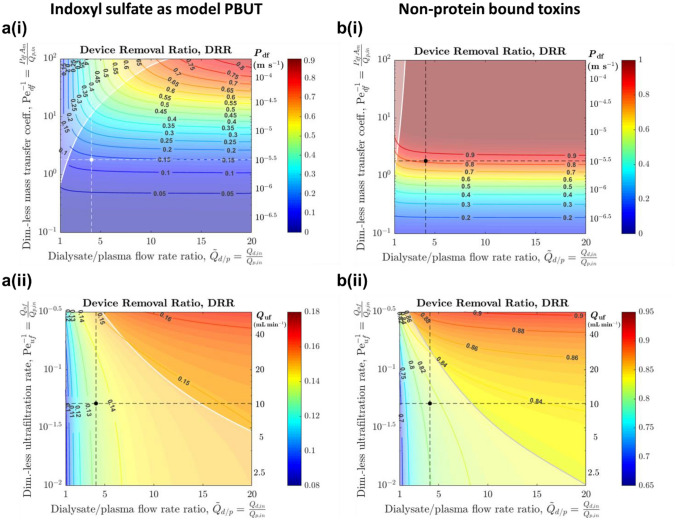
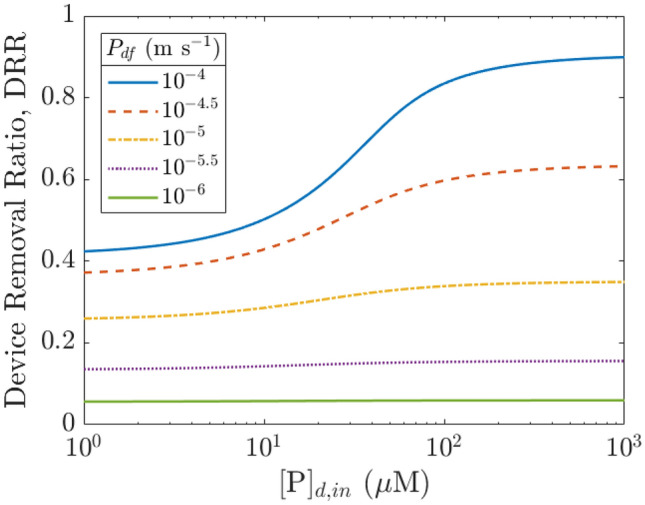
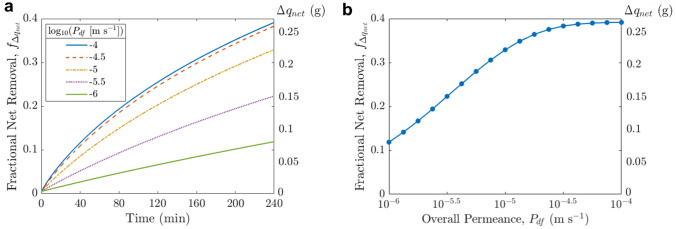
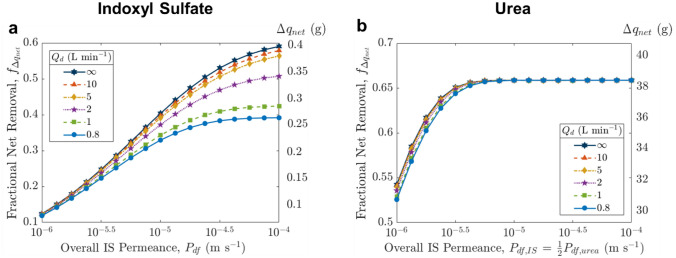
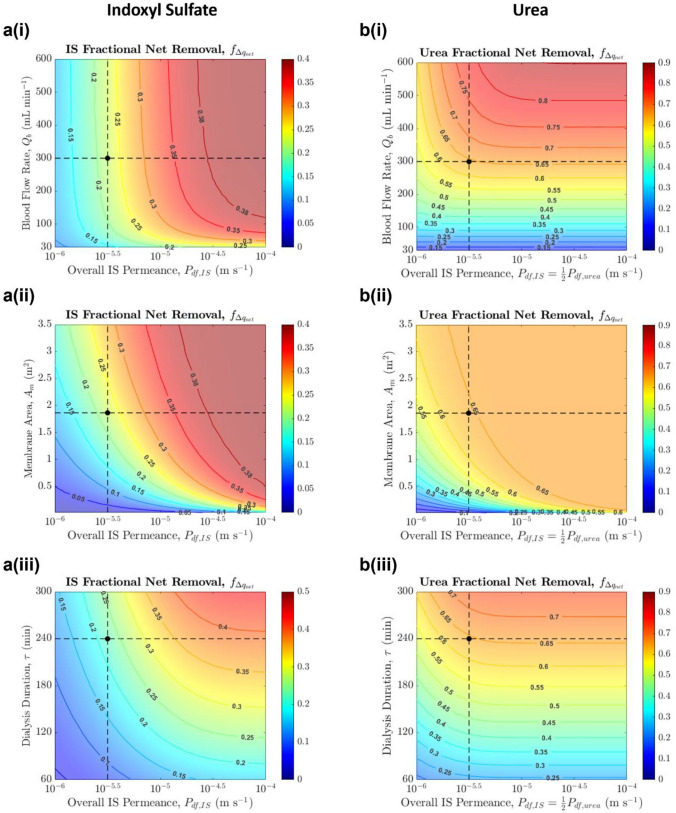
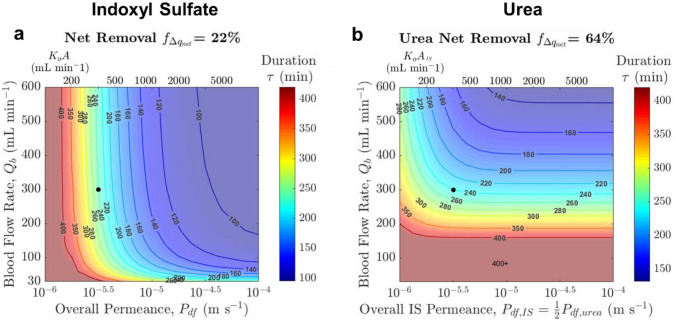
Inadequate clearance of protein-bound uremic toxins (PBUTs) during dialysis is associated with morbidities in chronic kidney disease patients. The development of high-permeance membranes made from materials such as graphene raises the question whether they could enable the design of dialyzers with improved PBUT clearance. Here, we develop device-level and multi-compartment (body) system-level models that account for PBUT-albumin binding (specifically indoxyl sulfate and p-cresyl sulfate) and diffusive and convective transport of toxins to investigate how the overall membrane permeance (or area) and system parameters including flow rates and ultrafiltration affect PBUT clearance in hemodialysis. Our simulation results indicate that, in contrast to urea clearance, PBUT clearance in current dialyzers is mass-transfer limited: Assuming that the membrane resistance is dominant, raising PBUT permeance from 3 × 10⁻⁶ to 10-5 m s-1 (or equivalently, 3.3 × increase in membrane area from ~ 2 to ~ 6 m2) increases PBUT removal by 48% (from 22 to 33%, i.e., ~ 0.15 to ~ 0.22 g per session), whereas increasing dialysate flow rates or adding adsorptive species have no substantial impact on PBUT removal unless permeance is above ~ 10-5 m s-1. Our results guide the future development of membranes, dialyzers, and operational parameters that could enhance PBUT clearance and improve patient outcomes.
Keywords: Chronic kidney disease; Dialysis; Indoxyl sulfate; Mass transfer; Modeling; Nanoporous graphene; p-cresyl sulfate.
© 2023. The Author(s).
Conflict of interest statement
This research was supported by Dialyze Direct Innovation Lab. The authors are co-inventors on one or more patent applications related to membranes for dialysis. R.K. discloses financial interest and relationship with Nephrodite Inc. that is developing implantable dialysis solutions.
Figures
References
-
- Basile C, Libutti P, di Turo AL, Casino FG, Vernaglione L, Tundo S, Maselli P, de Nicol EV, Ceci E, Teutonico A, Lomonte C. Removal of uraemic retention solutes in standard bicarbonate haemodialysis and long-hour slow-flow bicarbonate haemodialysis. Nephrol. Dial. Transpl. 2011;26:1296–1303. doi: 10.1093/ndt/gfq543. - DOI - PubMed
MeSH terms
Substances
LinkOut - more resources
Full Text Sources
