Risk factors for mortality in intensive care unit patients with Stenotrophomonas maltophilia pneumonia in South Korea
- PMID: 37994018
- PMCID: PMC10718495
- DOI: 10.4266/acc.2023.00682
Risk factors for mortality in intensive care unit patients with Stenotrophomonas maltophilia pneumonia in South Korea
Abstract
Background: Stenotrophomonas maltophilia has been increasingly recognized as an opportunistic pathogen associated with high morbidity and mortality. Data on the prognostic factors associated with S. maltophilia pneumonia in patients admitted to intensive care unit (ICU) are lacking.
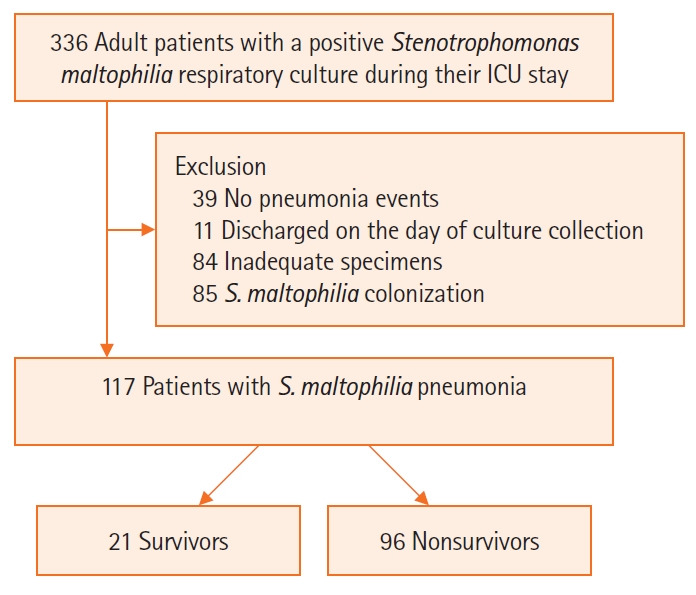
Methods: We conducted a retrospective analysis of data from 117 patients with S. maltophilia pneumonia admitted to the ICUs of two tertiary referral hospitals in South Korea between January 2011 and December 2022. To assess risk factors associated with in-hospital mortality, multivariable logistic regression analyses were performed.
Results: The median age of the study population was 71 years. Ventilator-associated pneumonia was 76.1% of cases, and the median length of ICU stay before the first isolation of S. maltophilia was 15 days. The overall in-hospital mortality rate was 82.1%, and factors independently associated with mortality were age (odds ratio [OR], 1.05; 95% confidence interval [CI], 1.00-1.09; P=0.046), Sequential Organ Failure Assessment (SOFA) score (OR, 1.21; 95%; CI, 1.02-1.43; P=0.025), corticosteroid use (OR, 4.19; 95% CI, 1.26-13.91; P=0.019), and polymicrobial infection (OR, 95% CI 0.07-0.69). However, the impact of appropriate antibiotic therapy on mortality was insignificant. In a subgroup of patients who received appropriate antibiotic therapy (n=58), antibiotic treatment modality-related variables, including combination or empirical therapy, also showed no significant association with survival.
Conclusions: Patients with S. maltophilia pneumonia in ICU have high mortality rates. Older age, higher SOFA score, and corticosteroid use were independently associated with increased in-hospital mortality, whereas polymicrobial infection was associated with lower mortality. The effect of appropriate antibiotic therapy on prognosis was insignificant.
Keywords: Stenotrophomonas maltophilia; anti-bacterial agents; intensive care units; pneumonia; risk factors.
Conflict of interest statement
No potential conflict of interest relevant to this article was reported.
Figures
References
-
- Looney WJ, Narita M, Mühlemann K. Stenotrophomonas maltophilia: an emerging opportunist human pathogen. Lancet Infect Dis. 2009;9:312–23. - PubMed
-
- Sader HS, Castanheira M, Mendes RE, Flamm RK. Frequency and antimicrobial susceptibility of Gram-negative bacteria isolated from patients with pneumonia hospitalized in ICUs of US medical centres (2015-17) J Antimicrob Chemother. 2018;73:3053–9. - PubMed
LinkOut - more resources
Full Text Sources