


Effects of disliked music on psychophysiology
- PMID: 38001083
- PMCID: PMC10674009
- DOI: 10.1038/s41598-023-46963-7
Effects of disliked music on psychophysiology
Abstract
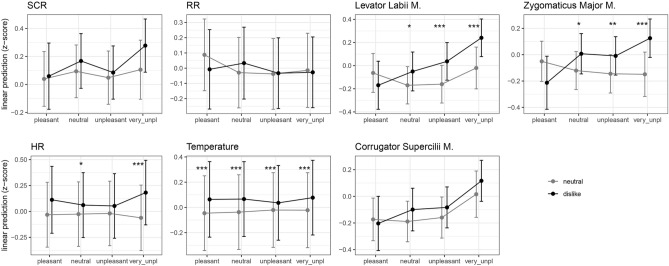
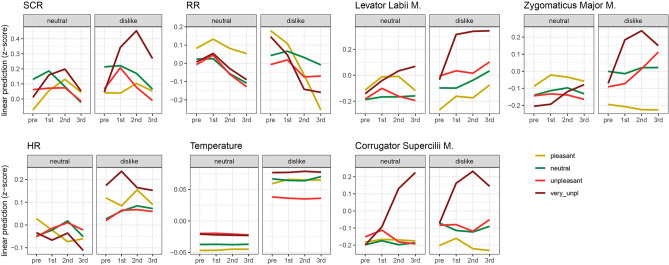
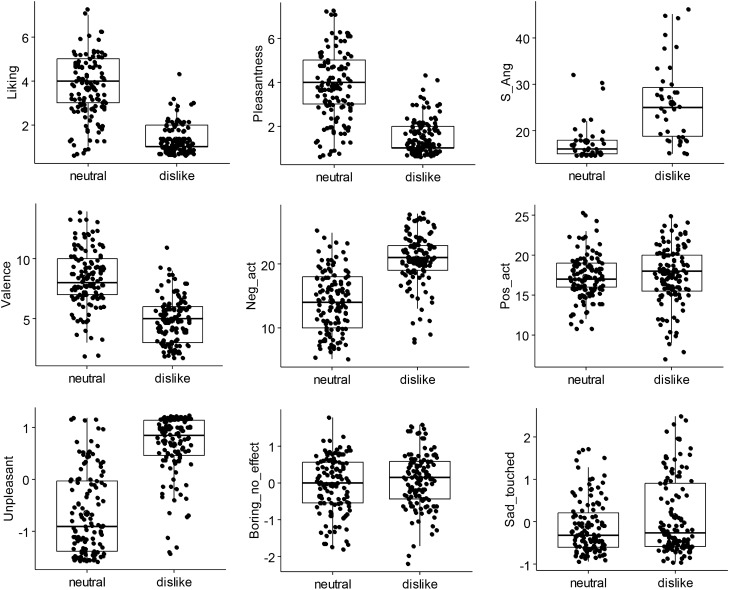
While previous research has shown the positive effects of music listening in response to one's favorite music, the negative effects of one's most disliked music have not gained much attention. In the current study, participants listened to three self-selected disliked musical pieces which evoked highly unpleasant feelings. As a contrast, three musical pieces were individually selected for each participant based on neutral liking ratings they provided to other participants' disliked music. During music listening, real-time ratings of subjective (dis)pleasure and simultaneous recordings of peripheral measures were obtained. Results showed that compared to neutral music, listening to disliked music evoked physiological reactions reflecting higher arousal (heart rate, skin conductance response, body temperature), disgust (levator labii muscle), anger (corrugator supercilii muscle), distress and grimacing (zygomaticus major muscle). The differences between conditions were most prominent during "very unpleasant" real-time ratings, showing peak responses for the disliked music. Hence, disliked music has a strenuous effect, as shown in strong physiological arousal responses and facial expression, reflecting the listener's attitude toward the music.
© 2023. The Author(s).
Conflict of interest statement
The authors declare no competing interests.
Figures
References
-
- Greb F, Schlotz W, Steffens J. Personal and situational influences on the functions of music listening. Psychol. Music. 2018;46:763–794. doi: 10.1177/0305735617724883. - DOI
-
- Hargreaves DJ, North AC. The functions of music in everyday life: Redefining the social in music psychology. Psychol. Music. 1999;27:71–83. doi: 10.1177/0305735699271007. - DOI
-
- North AC, Hargreaves DJ, Hargreaves JJ. Uses of music in everyday life. Music Percept. 2004;22:41–77. doi: 10.1525/mp.2004.22.1.41. - DOI
-
- Schäfer T, Sedlmeier P. What makes us like music? Determinants of music preference. Psychol. Aesthet. Creat. Arts. 2010;4:223–234. doi: 10.1037/a0018374. - DOI
MeSH terms
LinkOut - more resources
Full Text Sources
Research Materials
