


Reproduction and Productivity in Dairy Cattle after Abortions Both Related and Unrelated to Coxiella burnetii
- PMID: 38003178
- PMCID: PMC10668823
- DOI: 10.3390/ani13223561
Reproduction and Productivity in Dairy Cattle after Abortions Both Related and Unrelated to Coxiella burnetii
Abstract
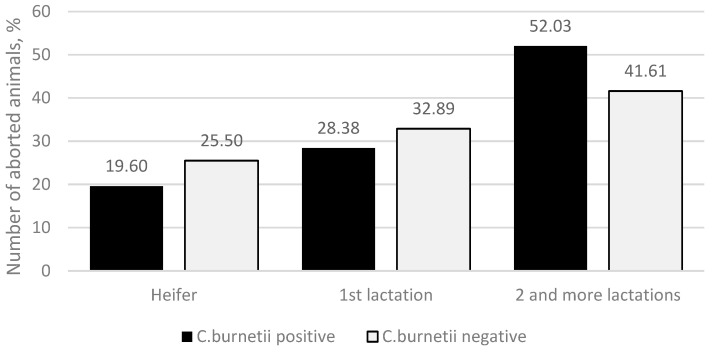
C. burnetii is a widespread pathogen, causing abortions and reproductive disorders in ruminants. The study aimed to evaluate animal reproductive capacity and productivity after abortion, related and unrelated to C. burnetii. We compared data about the abortion time, the outcome of the animals after an abortion, further reproduction, and productivity for C. burnetii-positive (n = 148) and C. burnetii-negative (n = 149) aborted dairy cows and heifers. C. burnetii-positive animals had a positive serological response or presence of C. burnetii DNA at the time of abortion. C. burnetii-positive animals had a significantly higher number of lactations at the time of abortion. However, in the other indicators, we observed no significant differences between the groups. Comparing indicators of all the aborted animals, we found that if animals started a new lactation after abortion, they had a significantly lower milk yield, lower fat, protein, and somatic cell counts (SCCs) in milk during the standard lactation for both primiparous and multiparous cows compared to herd averages in each group. Lower SCCs can be due to animals with a high SCC being culled earlier. We found an economic disadvantage to aborting, not only because of the loss of offspring, but also because of the high culling rate and lower productivity in both primiparous and multiparous cows.
Keywords: C. burnetii; abortion; dairy cattle; productivity; reproduction.
Conflict of interest statement
The authors declare no conflict of interest.
Figures


References
-
- Holloway P., Gibson M., Nash S., Holloway T., Cardwell J., Al Omari B., Abu-Basha E., Mangtani P., Guitan J. A cross-sectional study of Q fever in Camels: Risk factors for infection, the role of small ruminants and public health implications for desert-dwelling pastoral communities. Zoonoses Public Health. 2023;70:238–247. doi: 10.1111/zph.13019. - DOI - PMC - PubMed
-
- Mangena M.L., Gcebe N., Thompson P.N., Adesiyun A.A. Q fever and toxoplasmosis in South African livestock and wildlife: A retrospective study on seropositivity, sporadic abortion, and stillbirth cases in livestock caused by Coxiella burnetii. BMC Vet. Res. 2023;19:168. doi: 10.1186/s12917-023-03645-w. - DOI - PMC - PubMed
Grants and funding
LinkOut - more resources
Full Text Sources
Research Materials
