


Effects of Perilla Seed Meal on Productive Performance, Egg Quality, Antioxidant Capacity and Hepatic Lipid Metabolism of Wenchang Breeder Hens
- PMID: 38003204
- PMCID: PMC10668772
- DOI: 10.3390/ani13223587
Effects of Perilla Seed Meal on Productive Performance, Egg Quality, Antioxidant Capacity and Hepatic Lipid Metabolism of Wenchang Breeder Hens
Abstract
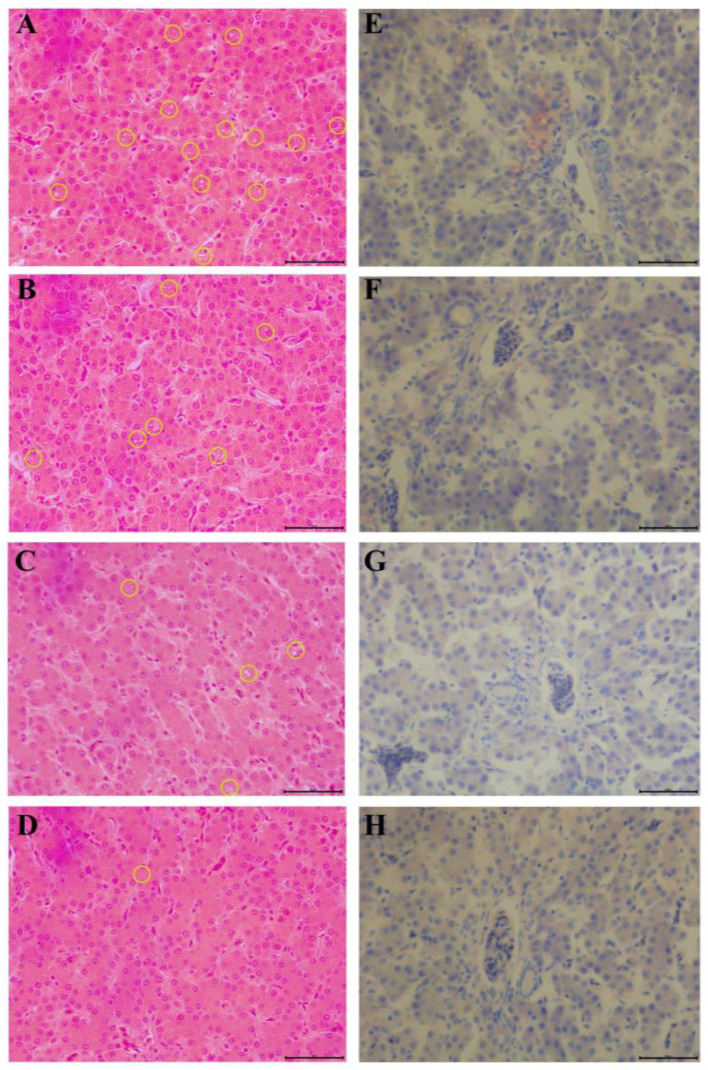
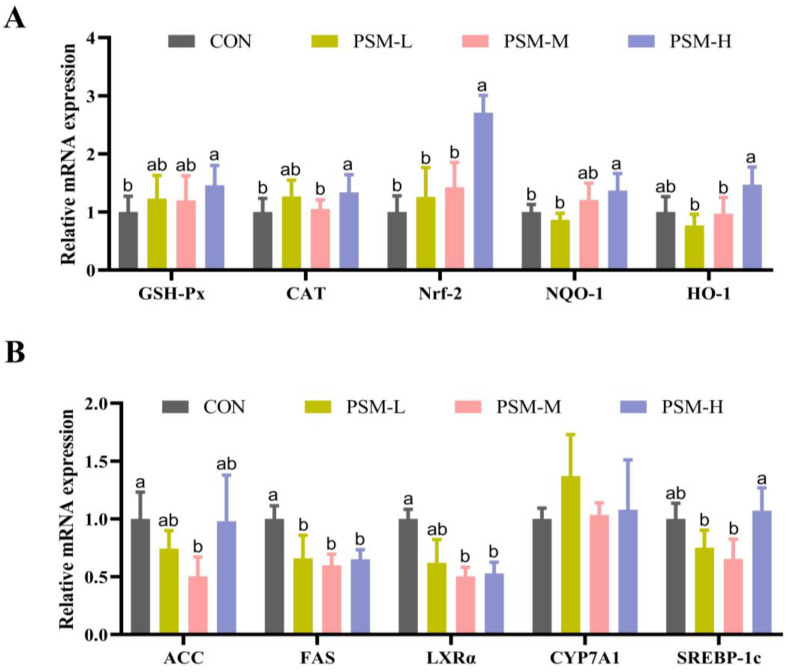
The aim of this study was to investigate the effects of adding perilla seed meal (PSM) to the diet on reproductive performance, egg quality, yolk fatty acids, antioxidant capacity and liver lipid metabolism in breeding hens. A total of 192 31-week-old yellow-feathered hens were randomly divided into 4 treatments with 6 replicates of 8 birds for 8 weeks. The chickens were fed a typical corn-soybean meal diet containing 0% (control), 0.3%, 0.6%, and 1% PSM. The results showed that PSM can change the productivity of laying hens. Adding 0.6% PSM to the feed reduced the mortality rate of chickens. Adding 1% PSM improved the fertilization rate and hatching rate of chickens. Regarding egg quality, the albumen height and Haugh unit were improved in the 0.6% PSM group. The content of MUFAs and PUFAs in the egg yolk was increased in all the PSM groups, while SFAs were only increased in the 0.6% PSM group. Among the indicators related to lipid metabolism, serum GLU decreased in all the PSM groups. The 0.6% PSM group had a reduction in serum and liver TG, as well as reductions in serum LDL-C and ALT. The same results were observed for the abdominal fat percentage in the 0.6% PSM group. Liver lipid metabolism-associated gene expression of FAS and LXRα was decreased in all the PSM groups, and the mRNA expression of ACC and SREBP-1c was significantly reduced in the 0.6% PSM group. HE staining showed that the vacuoles in the liver tissue gradually decreased with increasing PSM doses, especially the 1% PSM dose. Lipid droplets with a similar trend were observed using Oil Red O staining. In the results of the antioxidant capacity test, the serum T-AOC was increased in the 0.6% and 1% PSM groups, and the SOD in both the serum and liver was significantly increased in all the PSM groups. The expression of antioxidant-related genes such as Nrf2, NQO-1, HO-1, CAT and GSH-Px was significantly upregulated in the 1% PSM group. In conclusion, the PSM diet improved the lipid metabolism and antioxidant capacity of breeding hens. PSM reduces mortality and improves fertilization and hatchability in the late laying period of chickens, resulting in greater benefits. We recommend adding 0.6% PSM to layer feed, which improves the physical condition of the hens and brings higher economic benefits.
Keywords: anti-oxidation capacity; lipid metabolism; perilla seed meal; reproductive performance.
Conflict of interest statement
Fenggang Sun was employed by Guangdong Weilai Biotechnology Co., Ltd. The remaining authors declare that the research was conducted in the absence of any commercial or financial relationship that could be construed as a potential conflict of interest.
Figures
References
-
- Zhu Y., Zhang X., Pengfei D., Wang Z., Luo P., Huang Y., Liu Z., Zhang H., Chen W. Dietary herbaceous mixture supplementation reduced hepatic lipid deposition and improved hepatic health status in post-peak laying hens. Poult. Sci. 2022;101:101870. doi: 10.1016/j.psj.2022.101870. - DOI - PMC - PubMed
-
- Obrosova I.G., Stevens M.J. Effect of dietary taurine supplementation on GSH and NAD(P)-redox status, lipid peroxidation, and energy metabolism in diabetic precataractous lens. Investig. Ophthalmol. Vis. Sci. 1999;40:680–688. - PubMed
-
- Kirk C.K. Avian gastrointestinal anatomy and physiology. Semin. Avian Exot. Pet. Med. 1999;8:42–50.
Grants and funding
LinkOut - more resources
Full Text Sources
Research Materials
Miscellaneous
