


Outcomes of surgery and subsequent therapy for central nervous system oligoprogression in EGFR-mutated NSCLC patients
- PMID: 38007448
- PMCID: PMC10675964
- DOI: 10.1186/s12957-023-03248-7
Outcomes of surgery and subsequent therapy for central nervous system oligoprogression in EGFR-mutated NSCLC patients
Abstract
Background: Oligoprogression is an emerging issue in patients with epidermal growth factor receptor (EGFR)-mutated non-small cell lung cancer (NSCLC). However, the surgical treatment for central nervous system (CNS) oligoprogression is not widely discussed. We investigated the outcomes of craniotomy with adjuvant whole-brain radiotherapy (WBRT) and subsequent therapies for CNS oligoprogression in patients with EGFR-mutated NSCLC.
Methods: NSCLC patients with CNS oligoprogression were identified from a tertiary medical center. The outcomes of surgery with adjuvant WBRT or WBRT alone were analyzed, along with other variables. Overall survival and progression-free survival were analyzed using the log-rank test as the primary and secondary endpoints. A COX regression model was used to identify the possible prognostic factors.
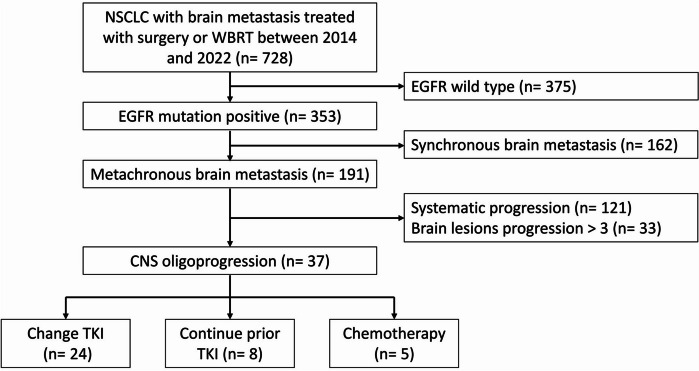
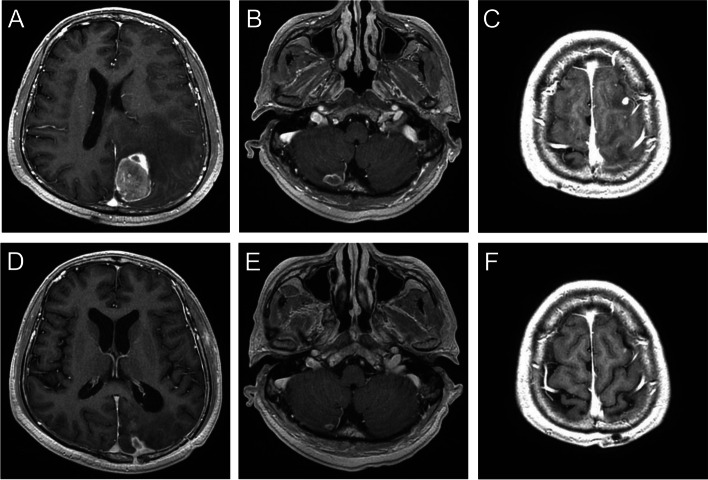
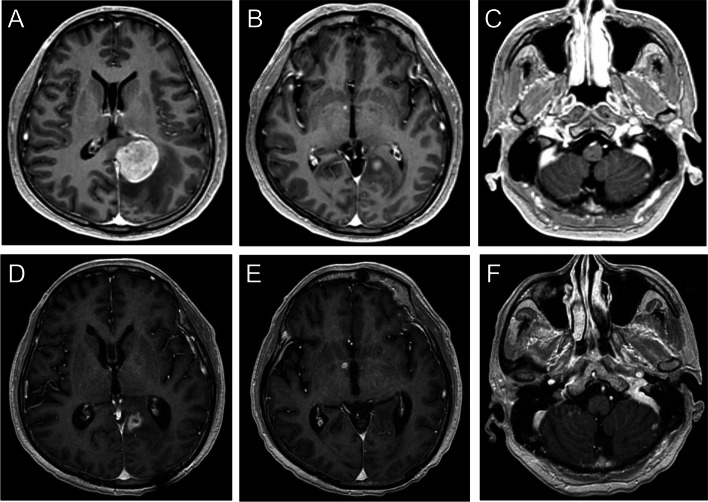
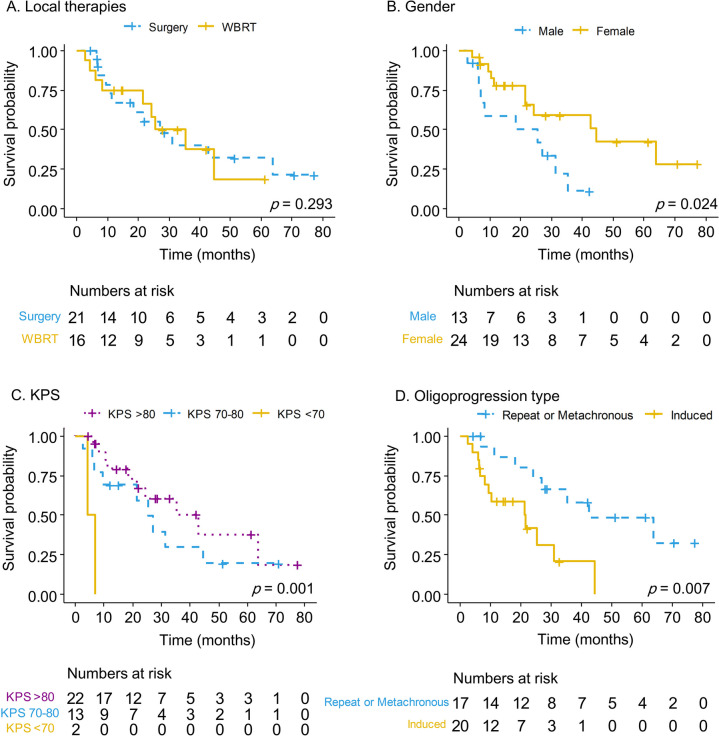
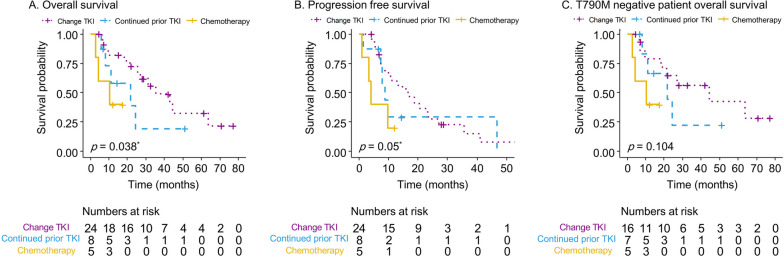
Results: Thirty-seven patients with CNS oligoprogression who underwent surgery or WBRT were included in the study after reviewing 728 patients. Twenty-one patients underwent surgery with adjuvant WBRT, and 16 received WBRT alone. The median overall survival for surgery and WBRT alone groups was 43 (95% CI 17-69) and 22 (95% CI 15-29) months, respectively. Female sex was a positive prognostic factor for overall survival (OR 0.19, 95% CI 0.06-0.57). Patients who continued previous tyrosine kinase inhibitors (OR 3.48, 95% CI 1.06-11.4) and induced oligoprogression (OR 3.35, 95% CI 1.18-9.52) were associated with worse overall survival. Smoking history (OR 4.27, 95% CI 1.54-11.8) and induced oligoprogression (OR 5.53, 95% CI 2.1-14.7) were associated with worse progression-free survival.
Conclusions: Surgery combined with adjuvant WBRT is a feasible treatment modality for CNS oligoprogression in patients with EGFR-mutated NSCLC. Changing the systemic-targeted therapy after local treatments may be associated with improved overall survival.
Keywords: Metastasis; Metastatic brain tumors; Non-small cell lung cancer; Oligometastasis; Oligoprogression; Tyrosine kinase inhibitor.
© 2023. The Author(s).
Conflict of interest statement
The authors declare no competing interests.
Figures
References
-
- Schoenmaekers J, Paats MS, Dingemans AC and Hendriks LEL. Central nervous system metastases and oligoprogression during treatment with tyrosine kinase inhibitors in oncogene-addicted non-small cell lung cancer: how to treat and when? Transl Lung Cancer Res. 2020; 9: 2599–2617. 2021/01/26. 10.21037/tlcr-20-459. - PMC - PubMed
-
- Li W-Y, Zhao T-T, Xu H-M, Wang Z-N, Xu Y-Y, Han Y, et al. The role of EGFR mutation as a prognostic factor in survival after diagnosis of brain metastasis in non-small cell lung cancer: a systematic review and meta-analysis. BMC Cancer. 2019;19:145. doi: 10.1186/s12885-019-5331-z. - DOI - PMC - PubMed
-
- Yang XN, Yan HH, Wang J, Chu XY, Liu ZD, Shen Y, et al. Real-world survival outcomes based on EGFR mutation status in Chinese patients with lung adenocarcinoma after complete resection: results from the ICAN study. JTO Clin Res Rep. 2022; 3: 100257. 2022/01/04. 10.1016/j.jtocrr.2021.100257. - PMC - PubMed
MeSH terms
Substances
LinkOut - more resources
Full Text Sources
Medical
Research Materials
Miscellaneous
