


Exploring Bacillus amyloliquefaciens strain OM81 for the production of polyhydroxyalkanoate (PHA) bioplastic using olive mill wastewater
- PMID: 38009166
- PMCID: PMC10667205
- DOI: 10.1007/s13205-023-03808-4
Exploring Bacillus amyloliquefaciens strain OM81 for the production of polyhydroxyalkanoate (PHA) bioplastic using olive mill wastewater
Abstract
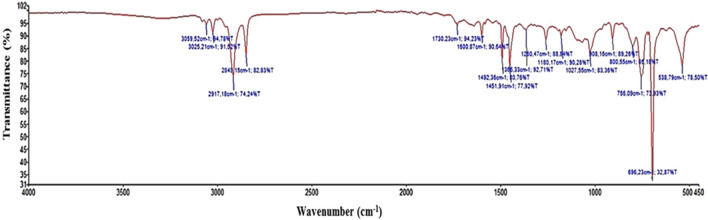
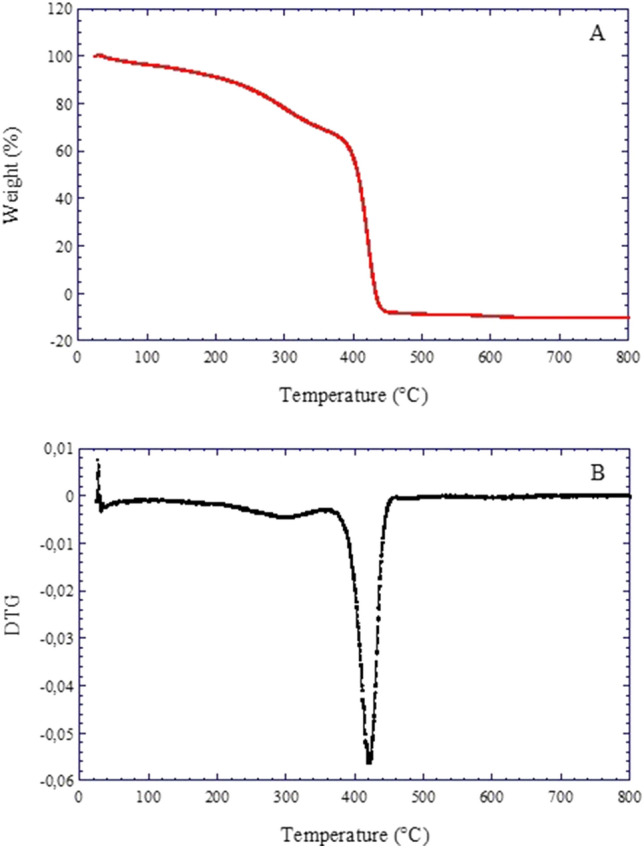
In this study, bacterial strains isolated from olive oil mill wastewater assigned to Bacillus (n = 4) and Klebsiella (n = 1) genera, were evaluated for their ability to accumulate intracellular PHA granules using Sudan Black staining. A maximum PHA production of 0.14 g/L (i.e., 30.2% wt./wt. in dry biomass) was observed in Bacillus amyloliquefaciens strain OM81 after 72 h of incubation in the presence of 2% glucose (synthetic medium). To reduce bioplastic production costs and recover a polluting product, olive mill wastewater was tested as a carbon source. In this context, the maximum growth (1.45 g/L) was observed in the presence of 50% olive mill wastewater. After extracting the biopolymers with chloroform, quantitative and qualitative analyses were conducted using Fourier transform infrared spectroscopy (FTIR), differential scanning calorimetry (DSC), and thermogravimetric analysis (TGA). FTIR showed an absorption band at 1730 cm-1 assigned to the elongation of the PHB carbonyl groups. This approach offers a dual benefit of reducing pollution and bioplastic production costs. The Bacillus amyloliquefaciens strain OM81 showed promising results for PHAs production, making it a potential candidate for further investigation.
Supplementary information: The online version contains supplementary material available at 10.1007/s13205-023-03808-4.
Keywords: Bacillus amyloliquefaciens; Bioplastic; Fermentation; Olive mill wastewater; PHA.
© King Abdulaziz City for Science and Technology 2023. Springer Nature or its licensor (e.g. a society or other partner) holds exclusive rights to this article under a publishing agreement with the author(s) or other rightsholder(s); author self-archiving of the accepted manuscript version of this article is solely governed by the terms of such publishing agreement and applicable law.
Conflict of interest statement
Conflict of interestThe authors declare that they have no known competing financial interests or personal relationships that could have appeared to influence the work reported in this paper. The authors declare that they have no conflict of interest in the publication.
Figures
References
-
- Albalasmeh AA, Mohawesh OE. Effects of olive mill wastewater on soil physical and hydraulic properties: a review. Water Air Soil Pollut. 2023;234(1):42. doi: 10.1007/s11270-022-06055-0. - DOI
LinkOut - more resources
Full Text Sources
