


Temporal Trends in Telehealth Availability in Mental Health Treatment Settings: Differences in Growth by State Rurality, 2015-2020
- PMID: 38012502
- PMCID: PMC10728410
- DOI: 10.1007/s11524-023-00795-y
Temporal Trends in Telehealth Availability in Mental Health Treatment Settings: Differences in Growth by State Rurality, 2015-2020
Abstract
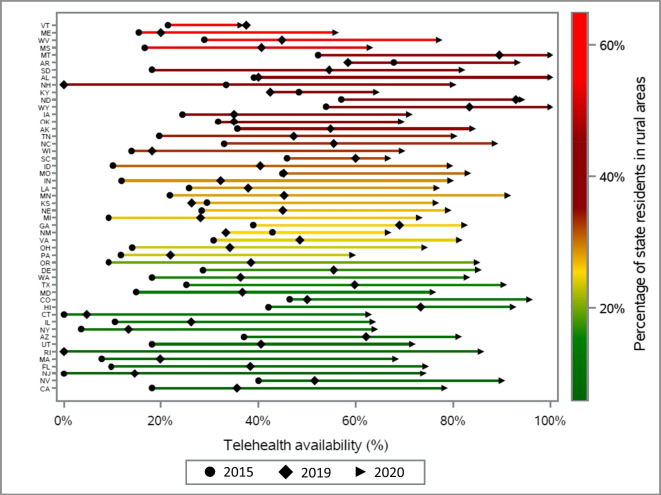
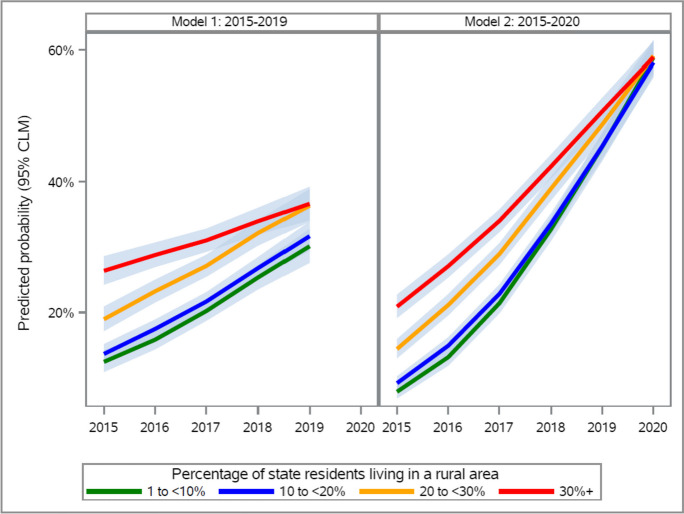
We sought to investigate temporal trends in telehealth availability among outpatient mental health treatment facilities and differences in the pace of telehealth growth by state urbanicity and rurality. We used the National Mental Health Services Survey (2015-2020) to identify outpatient mental health treatment facilities in the US (N = 28,989 facilities; 2015 n = 5,018; 2020 n = 4,889). We used logistic regression to model telehealth, predicted by time, state rurality (1 to 10% rural, 10 to < 20%, 20 to < 30%, or [Formula: see text] 30%), and their interaction, and adjusted for relevant covariates. We estimated the predicted probability of telehealth based on our model. We estimated effects with and without data from 2020 to assess whether the rapid and widespread adoption of telehealth during the COVID-19 pandemic changed the rural/urban trajectories of telehealth availability. We found that telehealth grew fastest in more urban states (year*rurality interaction p < 0.0001). Between 2015 and 2020, the predicted probability of telehealth in more urban states increased by 51 percentage points (from 9 to 61%), whereas telehealth in more rural states increased by 38 percentage points (from 23 to 61%). Predicted telehealth also varied widely by state, ranging from more than 75% of facilities (RI, OR) to below 20% (VT, KY). Health systems and new technological innovations must consider the unique challenges faced by urban populations and how best practices may be adapted to meet the growing urban demand. We framed our findings around the need for policies that minimize barriers to telehealth.
Keywords: Behavioral health services; Epidemiology; Telehealth.
© 2023. The New York Academy of Medicine.
Figures
References
-
- Green J, McLaughlin K, Fillbrunn M, et al. Barriers to mental health service use and predictors of treatment drop out: racial/ethnic variation in a population-based study. Administration and Policy in Mental Health and Mental Health Services Research. 2020;47:606–616. doi: 10.1007/s10488-020-01021-6. - DOI - PMC - PubMed
-
- Health Resources and Services Administration. Designated Health Professional Shortage Areas statistics. First quarter of fiscal year 2023, designated HPSA quarterly summary. Rockville, MD. HRSA, Bureau of Health Workforce. 2023. https://data.hrsa.gov/Default/GenerateHPSAQuarterlyReport. Accessed 30 Aug 2023.
Publication types
MeSH terms
Grants and funding
LinkOut - more resources
Full Text Sources
Medical
