


Nanostructures for site-specific delivery of oxaliplatin cancer therapy: Versatile nanoplatforms in synergistic cancer therapy
- PMID: 38016356
- PMCID: PMC10698329
- DOI: 10.1016/j.tranon.2023.101838
Nanostructures for site-specific delivery of oxaliplatin cancer therapy: Versatile nanoplatforms in synergistic cancer therapy
Abstract
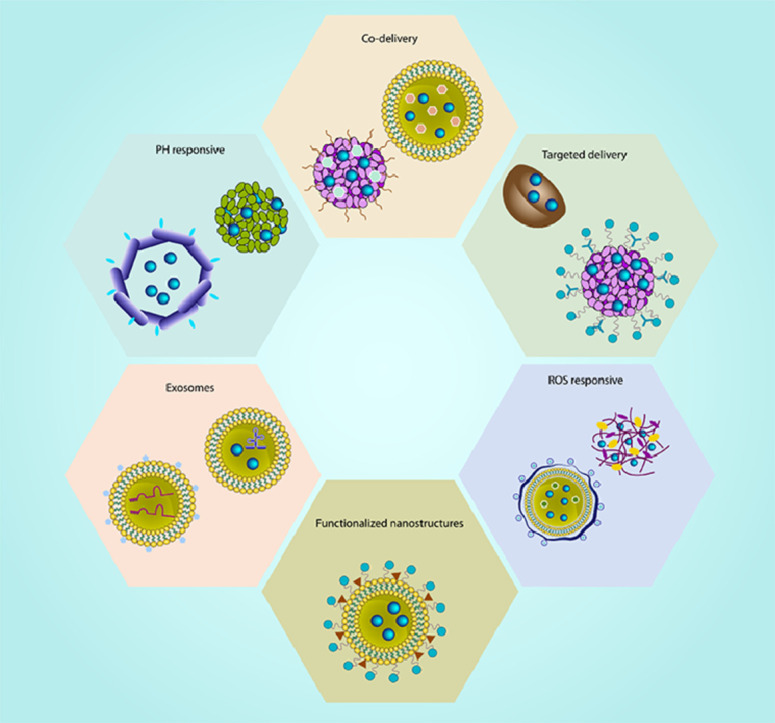
As a clinically approved treatment strategy, chemotherapy-mediated tumor suppression has been compromised, and in spite of introducing various kinds of anticancer drugs, cancer eradication with chemotherapy is still impossible. Chemotherapy drugs have been beneficial in improving the prognosis of cancer patients, but after resistance emerged, their potential disappeared. Oxaliplatin (OXA) efficacy in tumor suppression has been compromised by resistance. Due to the dysregulation of pathways and mechanisms in OXA resistance, it is suggested to develop novel strategies for overcoming drug resistance. The targeted delivery of OXA by nanostructures is described here. The targeted delivery of OXA in cancer can be mediated by polymeric, metal, lipid and carbon nanostructures. The advantageous of these nanocarriers is that they enhance the accumulation of OXA in tumor and promote its cytotoxicity. Moreover, (nano)platforms mediate the co-delivery of OXA with drugs and genes in synergistic cancer therapy, overcoming OXA resistance and improving insights in cancer patient treatment in the future. Moreover, smart nanostructures, including pH-, redox-, light-, and thermo-sensitive nanostructures, have been designed for OXA delivery and cancer therapy. The application of nanoparticle-mediated phototherapy can increase OXA's potential in cancer suppression. All of these subjects and their clinical implications are discussed in the current review.
Keywords: Chemoresistance; Gene and drug delivery; Oxaliplatin; Synergistic cancer therapy; Targeted delivery.
Copyright © 2023. Published by Elsevier Inc.
Conflict of interest statement
Declaration of Competing Interest The authors declare that they have no known competing financial interests or personal relationships that could have appeared to influence the work reported in this paper.
Figures
References
-
- Santoni M., Rizzo A., Kucharz J., Mollica V., Rosellini M., Marchetti A., Tassinari E., Monteiro F.S.M., Soares A., Molina-Cerrillo J., et al. Complete remissions following immunotherapy or immuno-oncology combinations in cancer patients: the MOUSEION-03 meta-analysis. Cancer Immunol. Immunother. 2023;72:1365–1379. doi: 10.1007/s00262-022-03349-4. - DOI - PMC - PubMed
-
- Santoni M., Rizzo A., Mollica V., Matrana M.R., Rosellini M., Faloppi L., Marchetti A., Battelli N., Massari F. The impact of gender on the efficacy of immune checkpoint inhibitors in cancer patients: the MOUSEION-01 study. Crit. Rev. Oncol. Hematol. 2022;170 doi: 10.1016/j.critrevonc.2022.103596. - DOI - PubMed
-
- Ricci, A.D.; Rizzo, A.; Brandi, G. DNA damage response alterations in gastric cancer: knocking down a new wall. 2021, 17, 865–868. - PubMed
Publication types
LinkOut - more resources
Full Text Sources
Research Materials
