


Influence of p16 Protein Immunostaining on Histopathological Features of Pleomorphic Adenoma and Carcinoma ex- Pleomorphic Adenoma
- PMID: 38019239
- PMCID: PMC10772772
- DOI: 10.31557/APJCP.2023.24.11.3815
Influence of p16 Protein Immunostaining on Histopathological Features of Pleomorphic Adenoma and Carcinoma ex- Pleomorphic Adenoma
Abstract
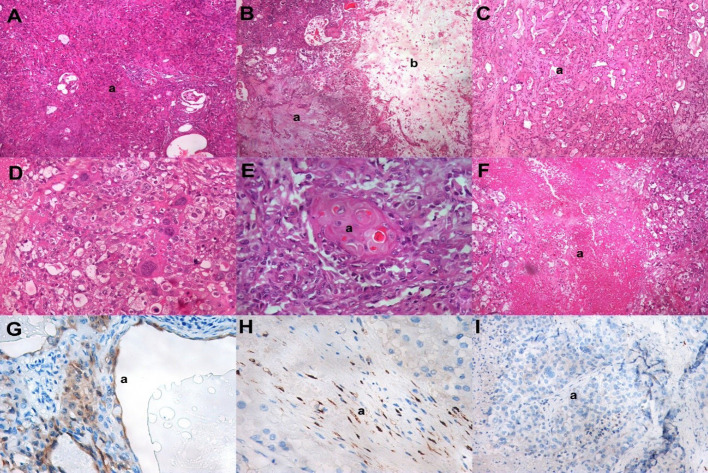
The objective of this study was to evaluate the role of p16 in histologic characteristics and transition of Pleomorphic Adenoma (PA) to Carcinoma ex-PA (CxPA). So, 60 PA and 4 CxPA were histologic reviewed based on microscopic characteristics proposed by Hellquist, Triantafyllou and Dulguerov (PA) and Morais, Antony and Toluie (CxPA). Immunostaining for p16 was associated in different parenchyma and stroma of both tumors and Fisher's/chi-square tests and Mann-Whitney test were performed (SPSS v20.0, p<0.05). In PA the periductal cells were predominantly p16- and that ductal and myoepithelial cells showed a significant increase in p16+ cells (p<0.001). In CxPA, none of the cases showed p16+ in periductal cells, most parotid cases showed p16+ in ductal cells, and one case of parotid and the submandibular case showed mild immunostaining for myoepithelial cells. There was a small reduction in p16+ in CxPA compared to PA (p=0.537), but in both tumors there was less p16+ cells in solid stroma than other (p<0.001). The p16+ cases of PA had a higher capsular thickness (p=0.047). So, the loss of p16 immunostaining does not seem to be associated with the transition from PA to CxPA, but in both tumors the loss of p16+ cells are related to microscopic aggressiveness.
Keywords: Adenoma, Pleomorphic; Genes, p16; Salivary gland neoplasms.
Conflict of interest statement
The authors have no conflicts of interest.
Figures

References
-
- Andreasen S, Therkildsen MH, Bjørndal K, Homøe O. Pleomorphic adenoma of the parotid gland 1985-2010: A Danish nationwide study of incidence, recurrence rate, and malignant transformation. Head Neck. 2016;38:eE1364–9. - PubMed
