


The burden of the coronavirus disease 2019 virus infection in Burkina Faso: Results from a World Health Organization UNITY population-based, age-stratified sero-epidemiological investigation
- PMID: 38019697
- PMCID: PMC10655778
- DOI: 10.1111/irv.13216
The burden of the coronavirus disease 2019 virus infection in Burkina Faso: Results from a World Health Organization UNITY population-based, age-stratified sero-epidemiological investigation
Abstract
Background: This study aimed to estimate the anti-SARS-CoV-2 antibody seroprevalence in the general population of Bobo-Dioulasso and Ouagadougou (Burkina Faso).
Methods: We collected from March to April 2021 blood samples from randomly selected residents in both main cities based on the World Health Organization (WHO) sero-epidemiological investigations protocols and tested them with WANTAI SARS-CoV-2 total antibodies enzyme-linked immunosorbent assay (ELISA) kits intended for qualitative assessment. We also recorded participants' socio-demographic and clinical characteristics and information on exposure to SARS-CoV-2. Data were analysed with descriptive and comparative statistics.
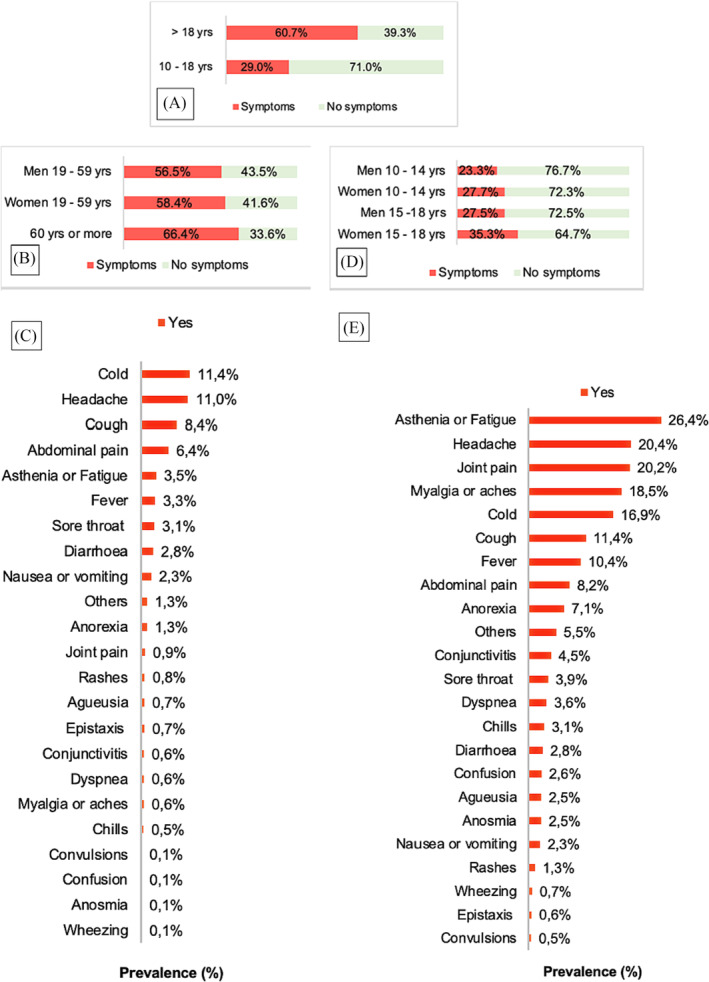
Results: We tested 5240 blood samples collected between 03 March and 16 April 2021. The overall test-adjusted seroprevalence for SARS-CoV-2 antibodies was (67.8% [95% CI 65.9-70.2]) (N = 3553/3982). Seroprevalence was highest among participants aged 15-18 years old (74.2% [95% CI 70.5-77.5]) (N = 465/627), compared with those aged 10-14 years old (62.6% [95% CI 58.7-66.4]) (N = 395/631), or those over 18 (67.6% [95% CI 66.2-69.1]) (N = 2693/3982). Approximately 71.0% (601/860) of participants aged 10-18 years old who tested positive for SARS-CoV-2 antibodies experienced no clinical COVID-19 symptoms in the weeks before the survey, compared with 39.3% (1059/2693) among those aged over 18 years old.
Conclusion: This study reports the results of the first known large serological survey in the general population of Burkina Faso. It shows high circulation of SARS-CoV-2 in the two cities and a high proportion of asymptomatic adolescents. Further studies are needed to identify the SARS-CoV-2 variants and to elucidate the factors protecting some infected individuals from developing clinical COVID-19.
Keywords: Burkina Faso; COVID-19; SARS-CoV-2; WHO UNITY study; infectious disease; population-based seroprevalence.
© 2023 The Authors. Influenza and Other Respiratory Viruses published by John Wiley & Sons Ltd.
Conflict of interest statement
No conflict of interest declared.
Figures
References
-
- World Health Organization . Statement on the fifteenth meeting of the IHR 2005. Emergency Committee on the COVID‐19 pandemic. Accessed July 25, 2023. https://apps.who.int/iris/rest/bitstreams/1500086/retrieve
-
- World Health Organization . Tracking SARS‐CoV‐2 variants. 2022. Accessed September 20, 2022. https://www.who.int/en/activities/tracking-SARS-CoV-2-variants/
-
- World Health Organization . Lessons learned from COVID‐19 pandemic: virtual regional consultation with informal expert group. 2021. Accessed July 25, 2023. https://apps.who.int/iris/rest/bitstreams/1472676/retrieve
-
- Nordling L. ‘A ticking time bomb’: scientists worry about coronavirus spread in Africa|Science|AAAS. 2020. Accessed September 20, 2022. https://www.science.org/news/2020/03/ticking-time-bomb-scientists-worry-...
Publication types
MeSH terms
Substances
Supplementary concepts
Grants and funding
LinkOut - more resources
Full Text Sources
Medical
Miscellaneous
