


Pooled prevalence and its determinants of stunting among children during their critical period in Ethiopia: A systematic review and meta-analysis
- PMID: 38019780
- PMCID: PMC10686443
- DOI: 10.1371/journal.pone.0294689
Pooled prevalence and its determinants of stunting among children during their critical period in Ethiopia: A systematic review and meta-analysis
Abstract
Background: Stunting is a major public health concern, particularly in low and middle-income countries. Globally, nearly 149 million under-five children are suffering from stunting. Despite it can occur in all age groups, the impact is more severe among children age less than 24 months as this period is critical time of very rapid growth and development. Therefore, this review aimed to determine the pooled prevalence and determinants of stunting among children during this critical period in Ethiopia.
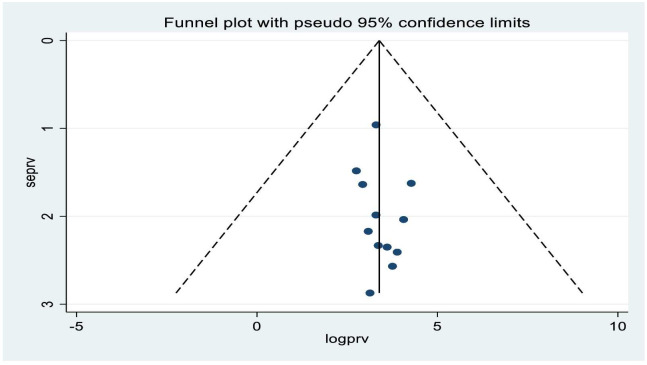
Methods: The literature search was conducted using international electronic data bases (pumed, Google scholar, CINHAL, Hinari, open Google) and the hand search of reference lists of eligible articles. The presence of heterogeneity between studies was evaluated using Cochrane Q-test and I2 test statistics and sensitivity analysis was also checked. Small study effect was checked through graphical and statistical test. Sub-group analysis was performed to handle heterogeneity.
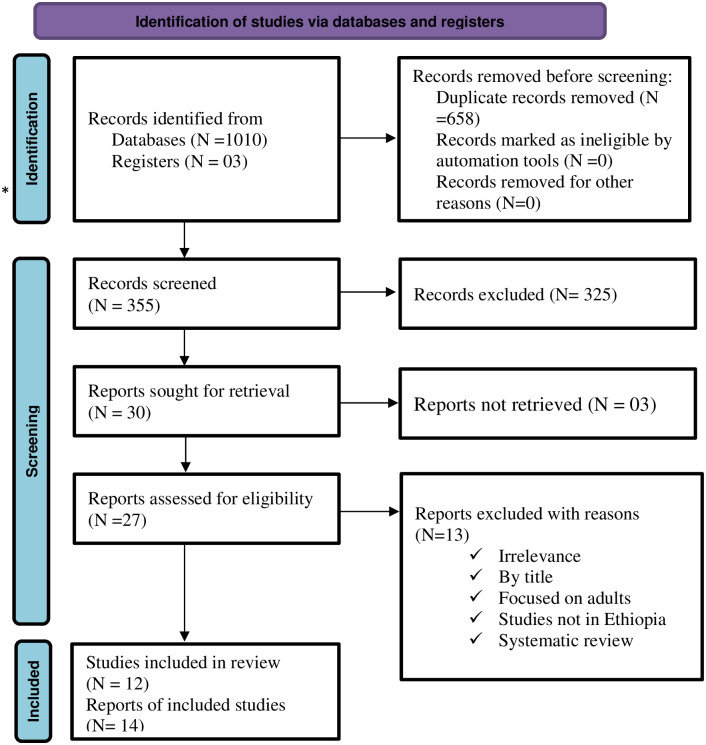
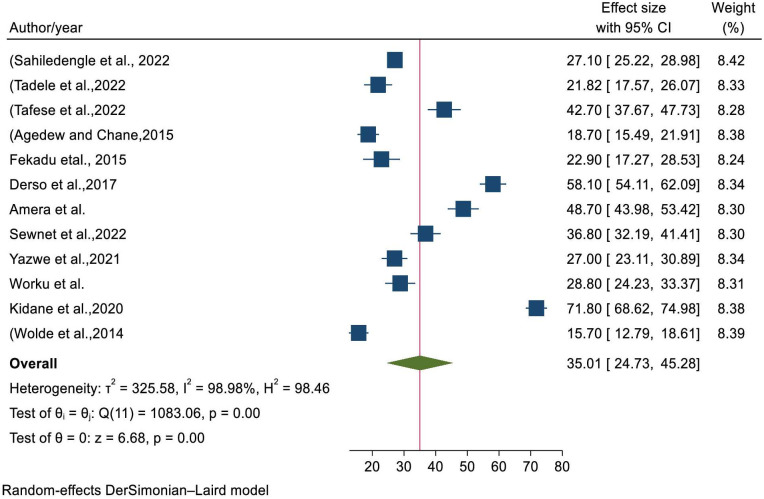
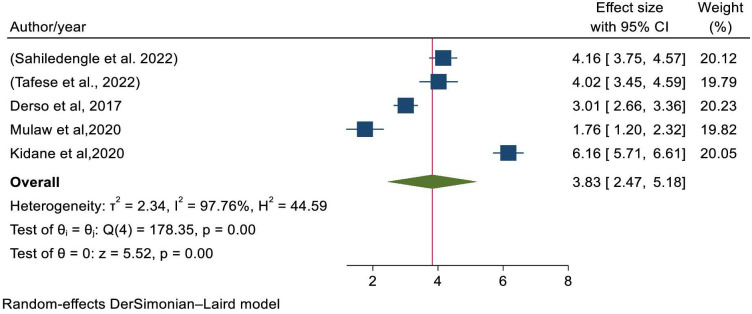
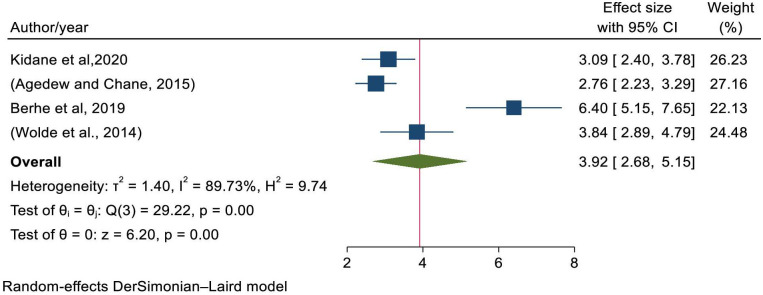
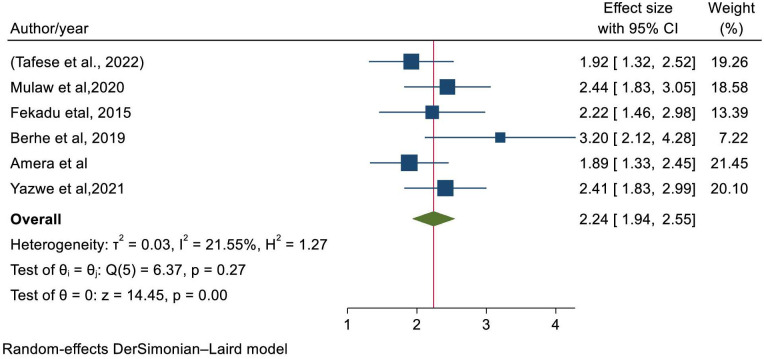
Results: This study included 14 studies with a total sample size of 8,056 children. The overall pooled estimate of stunting was 35.01(95% CI: 24.73-45.28, I2 = 98.98%) in the country with the highest prevalence in Amhara region. Increased Child's age (OR = 3.83; 95% CI: 2.47-5.18, I2 = 97.76%), no maternal education (OR = 2.90; 95%CI: 1.59-4.20, I2 = 89.73%), no maternal postnatal follow up (OR = 1.81; 95% CI:1.51-2.10) less than four food diversity of the child (OR = 2.24;95%CI; 1.94-2.55,I2 = 21.55%), low maternal body mass index, failure to colostrum and exclusive breast feeding, two and more under five children in the household and poor wealth index of the family were significant factors of stunting.
Conclusion and recommendations: The pooled prevalence of stunting among children during their critical time is high. Increased Child's age, no maternal education and no maternal postnatal follow up, less than four food diversity of the child, low maternal body mass index, failure to colostrum and exclusive breast feeding, two and more under five children in the household and poor wealth index of the family were determinants of stunting. Therefore, providing continuous maternal postnatal follow up, increase awareness of mothers on importance of colostrum and exclusive breast feeding, feeding of children the recommended variety of foods and at large to improve the wealth status of the households are crucial interventions to meet national and international targets of zero stunting in children less than 2 years.
Copyright: © 2023 Kassaw et al. This is an open access article distributed under the terms of the Creative Commons Attribution License, which permits unrestricted use, distribution, and reproduction in any medium, provided the original author and source are credited.
Conflict of interest statement
The authors have declared that no competing interests exist.
Figures
References
-
- Vidmar S.I., Cole T.J., and Pan H., Standardizing anthropometric measures in children and adolescents with functions for egen: update. The Stata Journal, 2013. 13(2): p. 366–378.
-
- Health, W.H.O.N.f., WHO child growth standards: growth velocity based on weight, length and head circumference: methods and development. 2009: World Health Organization.
-
- Kidane W., Facha W., and Negash K., Prevalence and predictors of stunting among children of age between 6 to 23 months in four districts of Wolaita Zone, Southern Ethiopia. Health Science Journal, 2020. 14(5): p. 1–7.
-
- Oot L., Sethuraman K., and Sommerfelt A., Estimating the impact of two common risk factors for stunting-inadequate dietary diversity and teenage pregnancy: models in PROFILES for country-level advocacy. FANTA/FHI, 2018. 360.
