


Astrocytes: Role in pathogenesis and effect of commonly misused drugs in the HIV infected brain
- PMID: 38020814
- PMCID: PMC10663134
- DOI: 10.1016/j.crneur.2023.100108
Astrocytes: Role in pathogenesis and effect of commonly misused drugs in the HIV infected brain
Abstract
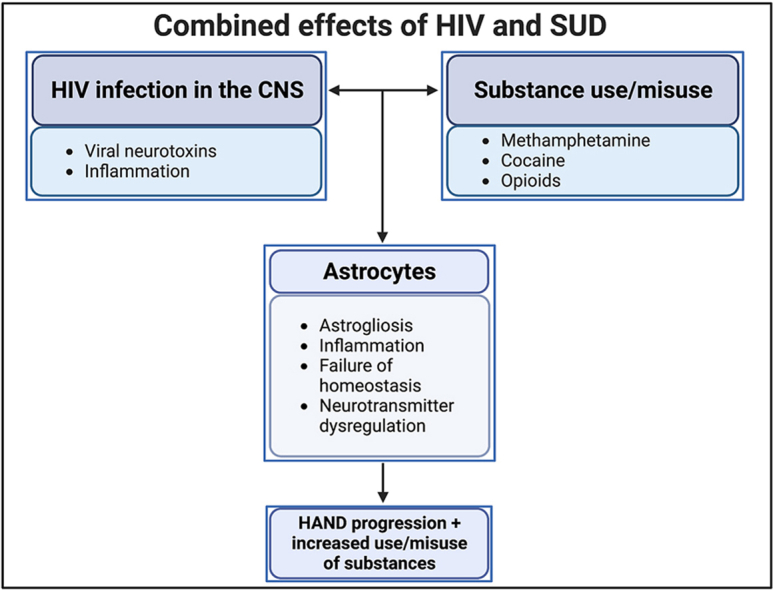
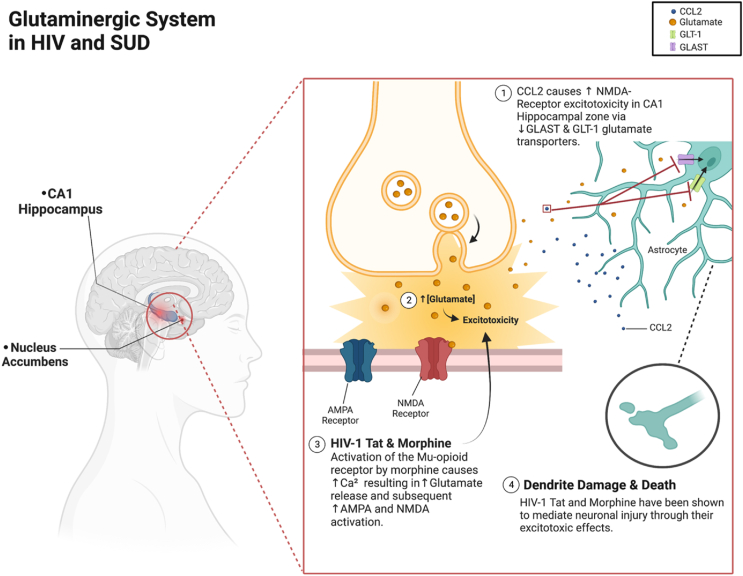
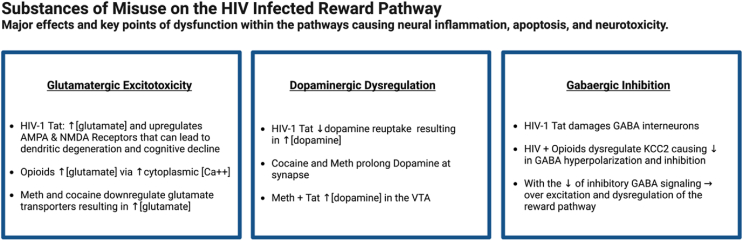
The roles of astrocytes as reservoirs and producers of a subset of viral proteins in the HIV infected brain have been studied extensively as a key to understanding HIV-associated neurocognitive disorders (HAND). However, their comprehensive role in the context of intersecting substance use and neurocircuitry of the reward pathway and HAND has yet to be fully explained. Use of methamphetamines, cocaine, or opioids in the context of HIV infection have been shown to lead to a faster progression of HAND. Glutamatergic, dopaminergic, and GABAergic systems are implicated in the development of HAND-induced cognitive impairments. A thorough review of scientific literature exploring the variety of mechanisms in which these drugs exert their effects on the HIV brain and astrocytes has revealed marked areas of convergence in overexcitation leading to increased drug-seeking behavior, inflammation, apoptosis, and irreversible neurotoxicity. The present review investigates astrocytes, the neural pathways, and mechanisms of drug disruption that ultimately play a larger holistic role in terms of HIV progression and drug use. There are opportunities for future research, therapeutic intervention, and preventive strategies to diminish HAND in the subset population of patients with HIV and substance use disorder.
Keywords: Astrocyte; HIV; Neurotransmitter; Substance use disorder.
© 2023 The Authors.
Conflict of interest statement
The authors declare that they have no known competing financial interests or personal relationships that could have appeared to influence the work reported in this paper.
Figures

References
-
- Abuse N.I.o.D. 2022. What Is the Scope of Cocaine Use in the United States?
-
- Amara S.G., Sonders M.S. Neurotransmitter transporters as molecular targets for addictive drugs. Drug Alcohol Depend. 1998;51(1–2):87–96. - PubMed
Publication types
Grants and funding
LinkOut - more resources
Full Text Sources
