


Bisphenol-A disturbs hormonal levels and testis mitochondrial activity, reducing male fertility
- PMID: 38021376
- PMCID: PMC10681812
- DOI: 10.1093/hropen/hoad044
Bisphenol-A disturbs hormonal levels and testis mitochondrial activity, reducing male fertility
Abstract
Study question: How does bisphenol-A (BPA) influence male fertility, and which mechanisms are activated following BPA exposure?
Summary answer: BPA exposure causes hormonal disruption and alters mitochondrial dynamics and activity, ultimately leading to decreased male fertility.
What is known already: As public health concerns following BPA exposure are rising globally, there is a need to understand the exact mechanisms of BPA on various diseases. BPA exposure causes hormonal imbalances and affects male fertility by binding the estrogen receptors (ERs), but the mechanism of how it mediates the hormonal dysregulation is yet to be studied.
Study design size duration: This study consisted of a comparative study using mice that were separated into a control group and a group exposed to the lowest observed adverse effect level (LOAEL) (n = 20 mice/group) after a week of acclimatization to the environment. For this study, the LOAEL established by the US Environmental Protection Agency of 50 mg/kg body weight (BW)/day of BPA was used. The control mice were given corn oil orally. Based on the daily variations in BW, both groups were gavaged every day from 6 to 11 weeks (6-week exposure). Before sampling, mice were stabilized for a week. Then, the testes and spermatozoa of each mouse were collected to investigate the effects of BPA on male fertility. IVF was carried out using the cumulus-oocyte complexes from female hybrid B6D2F1/CrljOri mice (n = 3) between the ages of eight and twelve weeks.
Participants/materials setting methods: Signaling pathways, apoptosis, and mitochondrial activity/dynamics-related proteins were evaluated by western blotting. ELISA was performed to determine the levels of sex hormones (FSH, LH, and testosterone) in serum. Hematoxylin and eosin staining was used to determine the effects of BPA on histological morphology and stage VII/VIII testicular seminiferous epithelium. Blastocyst formation and cleavage development rate were evaluated using IVF.
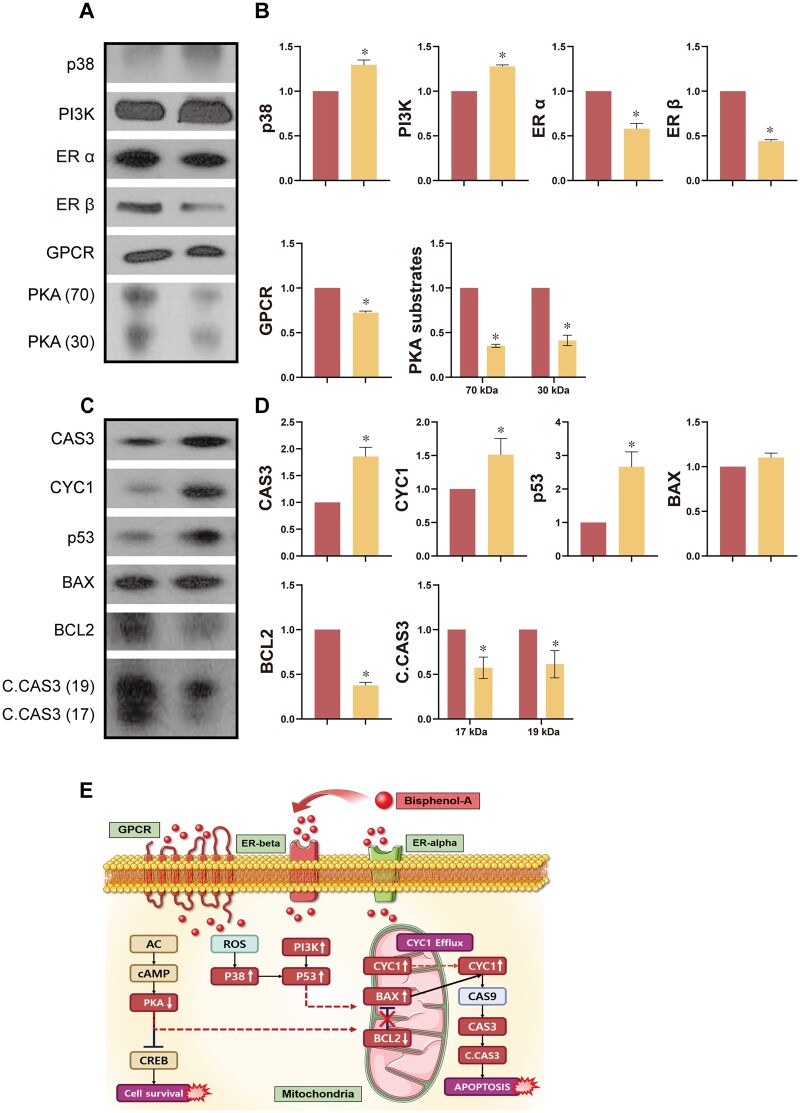
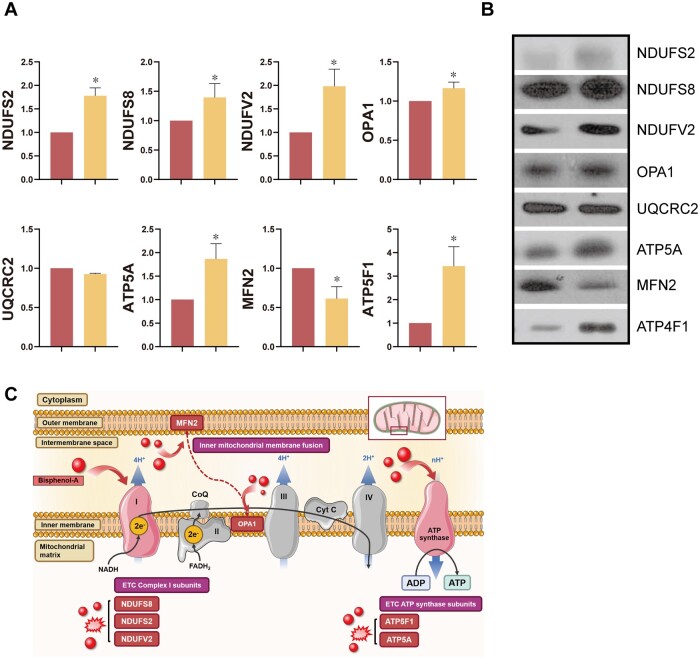
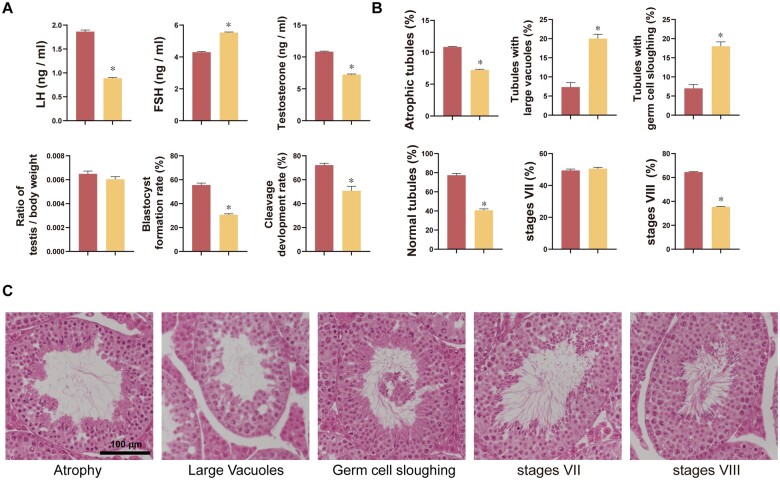
Main results and the role of chance: BPA acted by binding to ERs and G protein-coupled receptors and activating the protein kinase A and mitogen-activated protein kinase signaling pathways, leading to aberrant hormone levels and effects on the respiratory chain complex, ATP synthase and protein-related apoptotic pathways in testis mitochondria (P < 0.05). Subsequently, embryo cleavage and blastocyst formation were reduced after the use of affected sperm, and abnormal morphology of seminiferous tubules and stage VII and VIII seminiferous epithelial cells (P < 0.05) was observed. It is noteworthy that histopathological lesions were detected in the testes at the LOAEL dose, even though the mice remained generally healthy and did not exhibit significant changes in BW following BPA exposure. These observations suggest that testicular toxicity is more than a secondary outcome of compromised overall health in the mice due to systemic effects.
Large scale data: Not applicable.
Limitations reasons for caution: Since the protein expression levels in the testes were validated, in vitro studies in each testicular cell type (Leydig cells, Sertoli cells, and spermatogonial stem cells) would be required to shed further light on the exact mechanism resulting from BPA exposure. Furthermore, the BPA doses employed in this study significantly exceed the typical human exposure levels in real-life scenarios. Consequently, it is imperative to conduct experiments focusing on the effects of BPA concentrations more in line with daily human exposures to comprehensively assess their impact on testicular toxicity and mitochondrial activity.
Wider implications of the findings: These findings demonstrate that BPA exposure impacts male fertility by disrupting mitochondrial dynamics and activities in the testes and provides a solid foundation for subsequent investigations into the effects on male reproductive function and fertility following BPA exposure, and the underlying mechanisms responsible for these effects. In addition, these findings suggest that the LOAEL concentration of BPA demonstrates exceptional toxicity, especially when considering its specific impact on the testes and its adverse consequences for male fertility by impairing mitochondrial activity. Therefore, it is plausible to suggest that BPA elicits distinct toxicological responses and mechanistic endpoints based on the particular concentration levels for each target organ.
Study funding/competing interests: This work was supported by the Basic Science Research Program through the National Research Foundation of Korea (NRF) funded by the Ministry of Education (NRF-2018R1A6A1A03025159). No competing interests are declared.
Keywords: Bisphenol-A; endocrine-disrupting chemicals; hormonal imbalance; male fertility; mitochondrial dynamics; testis.
© The Author(s) 2023. Published by Oxford University Press on behalf of European Society of Human Reproduction and Embryology.
Conflict of interest statement
The authors declare that they have no known competing financial interests or personal relationships that could have appeared to influence the work reported in this paper.
Figures
References
-
- Akingbemi BT, Sottas CM, Koulova AI, Klinefelter GR, Hardy MP.. Inhibition of testicular steroidogenesis by the xenoestrogen bisphenol A is associated with reduced pituitary luteinizing hormone secretion and decreased steroidogenic enzyme gene expression in rat Leydig cells. Endocrinology 2004;145:592–603. - PubMed
-
- Al-Hiyasat AS, Darmani H, Elbetieha AM.. Effects of bisphenol A on adult male mouse fertility. Eur J Oral Sci 2002;110:163–167. - PubMed
-
- Beausoleil C, Emond C, Cravedi JP, Antignac JP, Applanat M, Appenzeller BR, Beaudouin R, Belzunces LP, Canivenc-Lavier MC, Chevalier N. et al. Regulatory identification of BPA as an endocrine disruptor: context and methodology. Mol Cell Endocrinol 2018;475:4–9. - PubMed
LinkOut - more resources
Full Text Sources
Research Materials