. 2023 Dec;8(12):2290-2303.
doi: 10.1038/s41564-023-01517-5. Epub 2023 Nov 29.

Beet red food colourant can be produced more sustainably with engineered Yarrowia lipolytica

Affiliations

Beet red food colourant can be produced more sustainably with engineered Yarrowia lipolytica

Philip Tinggaard Thomsen et al. Nat Microbiol. 2023 Dec.

Abstract

Synthetic food colourants are widely used in the food industry, but consumer concerns about safety and sustainability are driving a need for natural food-colour alternatives. Betanin, which is extracted from red beetroots, is a commonly used natural red food colour. However, the betanin content of beetroot is very low (~0.2% wet weight), which means that the extraction of betanin is incredibly wasteful in terms of land use, processing costs and vegetable waste. Here we developed a sustainability-driven biotechnological process for producing red beet betalains, namely, betanin and its isomer isobetanin, by engineering the oleaginous yeast Yarrowia lipolytica. Metabolic engineering and fermentation optimization enabled production of 1,271 ± 141 mg l-1 betanin and 55 ± 7 mg l-1 isobetanin in 51 h using glucose as carbon source in controlled fed-batch fermentations. According to a life cycle assessment, at industrial scale (550 t yr-1), our fermentation process would require significantly less land, energy and resources compared with the traditional extraction of betanin from beetroot crops. Finally, we apply techno-economic assessment to show that betanin production by fermentation could be economically feasible in the existing market conditions.


Conflict of interest statement

I.B., M.B., P.T.T. and M.C.P. are co-inventors on a patent application related to this study. The other authors declare no competing interests.

Figures
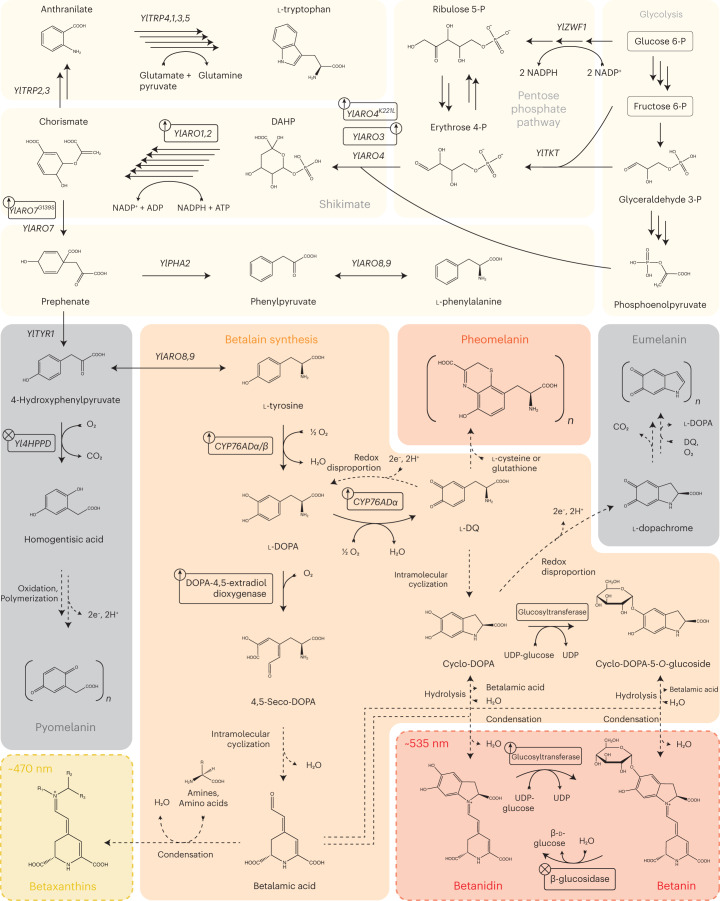
Fig. 1
Fig. 1. The heterologous betalain biosynthesis pathway in connection with native Y. lipolytica metabolism.
The primary betalains are depicted in dashed boxes. Multiple arrows represent enzymatic reactions grouped for simplicity. Dashed arrows represent spontaneous reactions. Boxes with ‘up arrows’ indicate gene overexpressions, and boxes with ‘crosses’ indicate gene disruptions.
Fig. 2
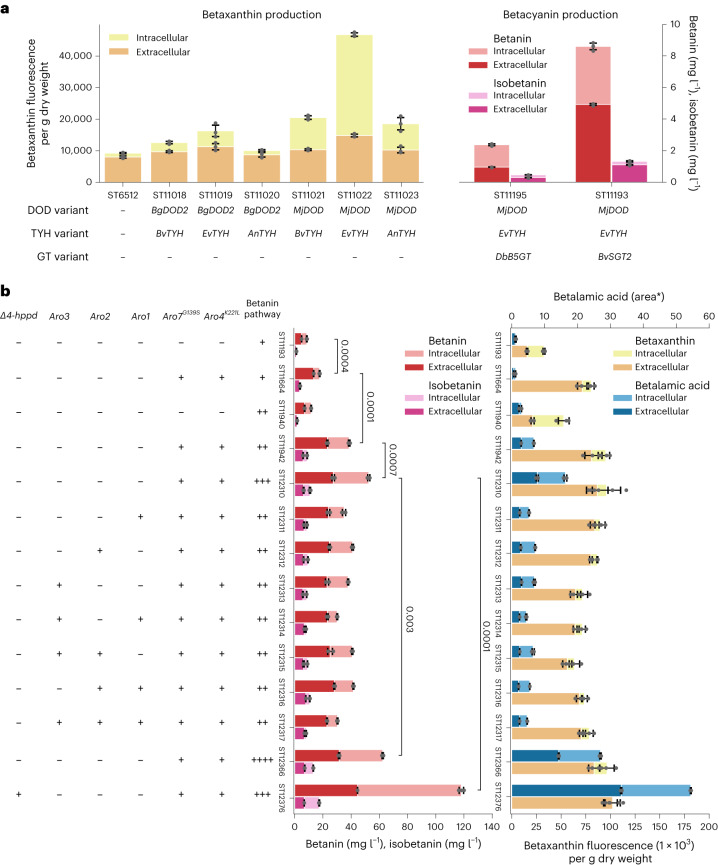
Fig. 2. Metabolic engineering of Y. lipolytica for betanin production.
a, Variant testing of betalain biosynthesis enzymes in Y. lipolytica. b, Metabolic engineering of Y. lipolytica for improved betanin production. Betaxanthin production was compared between strains by assessing the fluorescence of the supernatant and cell lysate at the betaxanthin-typical fluorescence profile (excitation, 463 nm; emission, 512 nm) and adjusted for cell dry weight. Betanin and isobetanin production was quantified via HPLC analysis. ‘−’ and ‘+’ symbols indicate the absence and presence, respectively, of the corresponding genetic modification or enzyme class. ‘area*’ indicates HPLC quantification by UV-vis spectra, without internal standards. Strains were inoculated from precultures into mineral media to approximately an OD660 of 0.1. Cultivations were carried out in biological triplicate (n = 3). Statistical analysis was performed on the total betanin production via Student’s t-test (one tailed; paired). The bars indicate mean production titre/fluorescence, and the error bars depict the corresponding standard deviations. Source data
Fig. 3
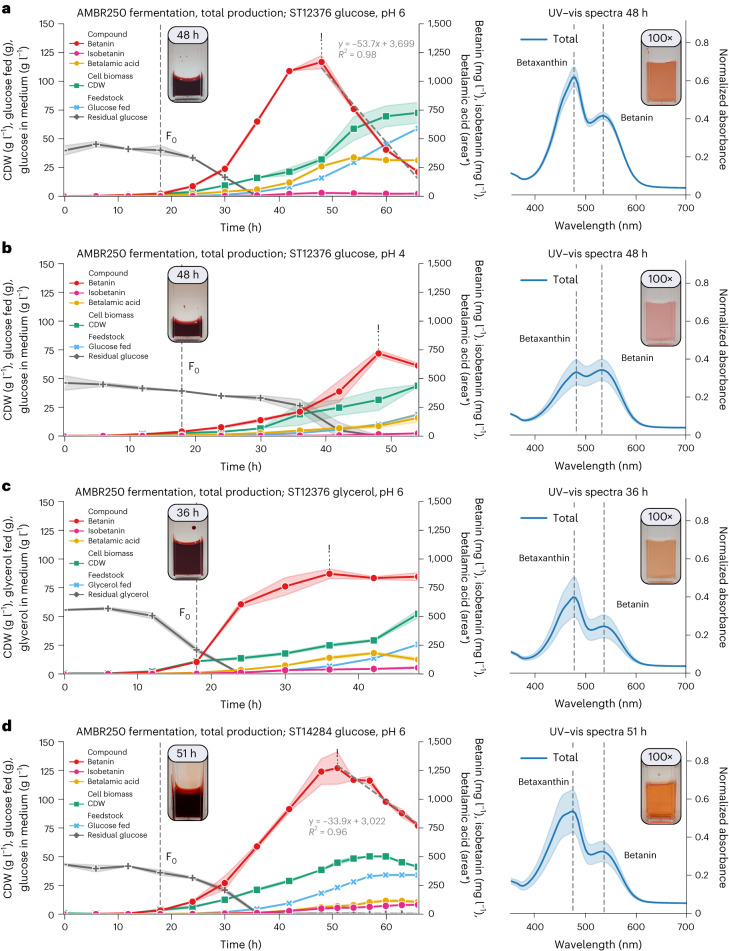
Fig. 3. Fed-batch fermentations in bioreactor.
ac, Bioreactor cultivations with ST12376 performed in duplicate with either d-glucose as feedstock (pH 6; a), d-glucose as feedstock (pH 4; b) or glycerol as feedstock (pH 6; c). d, ST14284 was fermented with d-glucose as feedstock (pH 6). Solid lines indicate the average from both bioreactors, and shaded areas represent the corresponding standard deviations. Dashed grey lines in the fermentation graphs of a and d represent betanin degradation kinetics. ‘area*’ indicates HPLC quantification by UV-vis spectra, without internal standards. Illustrations of physiologically relevant parameters from the fermentations can be found in Extended Data Fig. 9. As whole-cell samples were frozen directly after sampling, only the total betacyanin production could be accurately determined. A picture of undiluted sample at peak (‘!’) betanin production is shown in the fermentation graph. The corresponding diluted sample (100×) and UV–vis spectra (400×) can be found to the right of the fermentation graphs. F0, feed initiation. Source data
Fig. 4
Fig. 4. Overview of the betanin supply chain and assessed system boundary (cradle to gate) for LCA and TEA.
Comparison of the supply chain of extraction-based betanin production (top) with that of the proposed fermentation-based process (bottom). Credit: icons, Flaticon.com.
Fig. 5
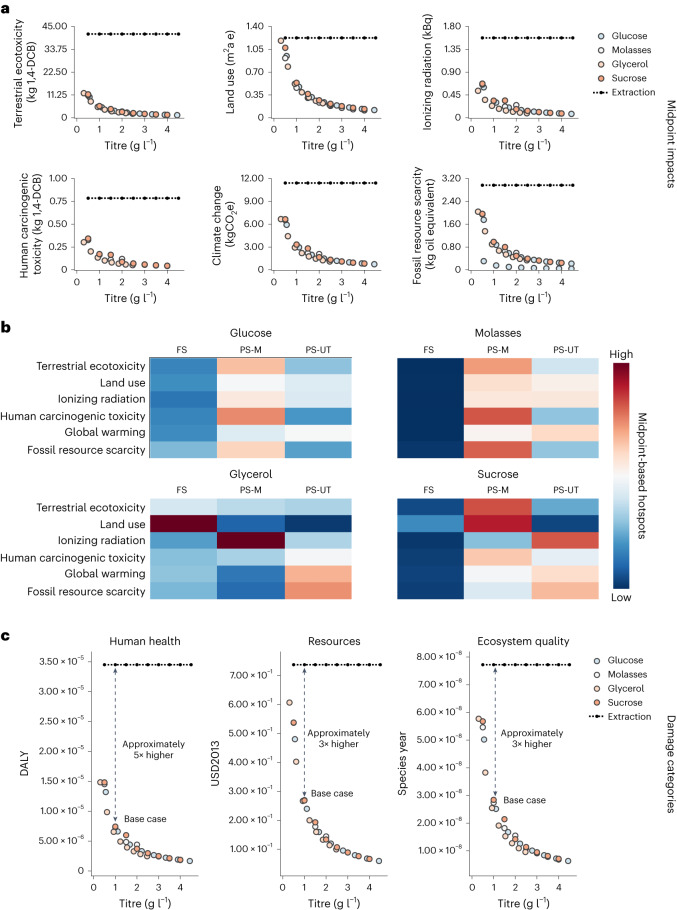
Fig. 5. LCA results for fermentation-based betanin production.
a, Midpoint results of relevant impact categories following the ReCiPe 2016 (H) methodology, comparing the fermentation-based process with the extraction-based process. Dicholorobenzene (kg 1,4-DCB) is used as a reference unit for toxicity, area in square metres multiplied by years occupied equivalent (m2a e) is a reference unit for land use and ionizing radiation is measured in kilobequerel of 60Co equivalent (kBq). Climate change measured in kgCO2-equivalent (kgCO2e). b, Hotspot analysis for each feedstock, where ‘red’ indicates higher impact and ‘blue’, lower impact. c, Sensitivity analysis for varying titre with each feedstock given in end-points, where ‘DALY’ refers to disability-adjusted life years as a reference unit for human toxicity, ‘USD2013’ is the reference unit for resource scarcity and ‘Species year’ refers to local species loss integrated over time as a reference unit for ecosystem quality. Base-case titre is indicated with feedstock names. Source data
Fig. 6
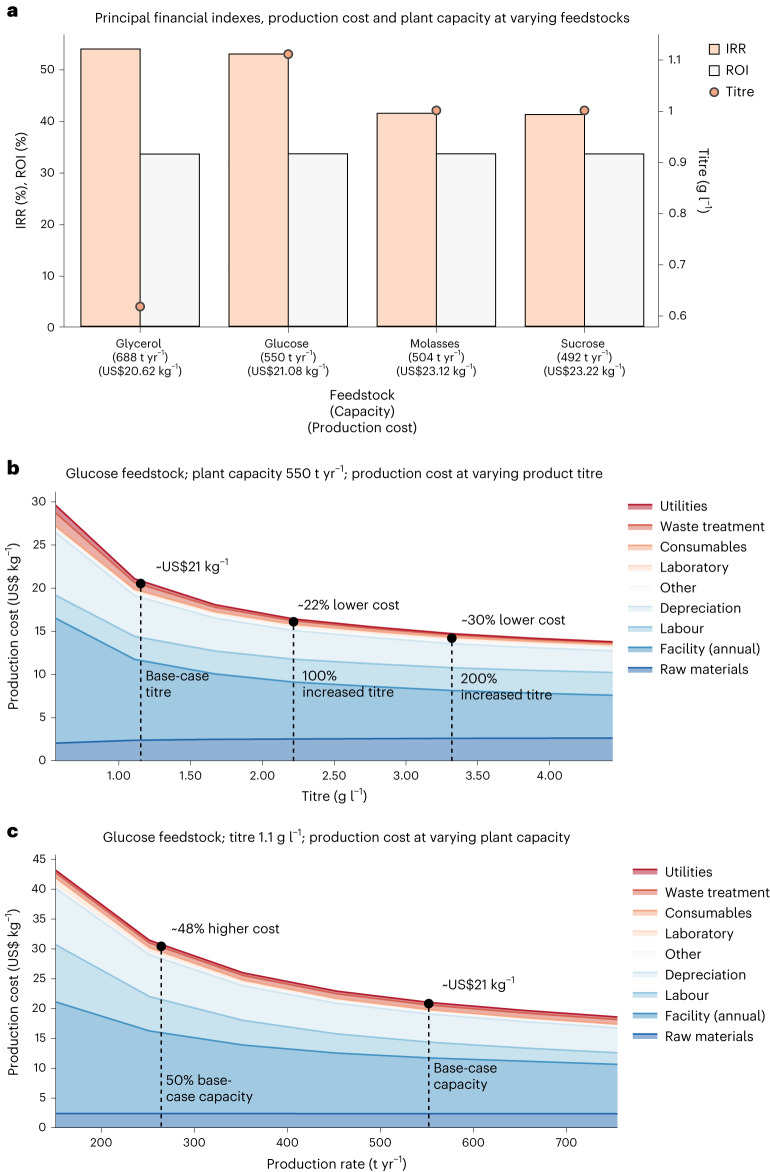
Fig. 6. TEA of fermentation-based betanin production using Y. lipolytica.
a, Principal financial indexes and base-case titre for the four feedstock scenarios in the fermentative betanin-colourant production. A payback period of 3 years, selling price of US$34.75 kg−1 E162 and production capacity of less than 755 t yr−1 were the three major constraints applied. The base-case production cost and calculated capacity are indicated on the x-axis. b, Sensitivity and breakdown of the production cost as a function of fermentation titre for the scenario using glucose as the feedstock. The titre was varied from 0.56 g l−1 to 4.44 g l−1. c, The cost of betanin production is illustrated as a function of the production capacity with glucose as the feedstock. Source data
Extended Data Fig. 1
Extended Data Fig. 1. Effect of YlARO4K221L & YlARO7G139S overexpression on anthranilic acid-betaxanthin formation.
a) UvVis spectra of extracellular and total cell fractions from ST11022 (without YlARO4K221L & YlARO7G139S) and ST11663 (with YlARO4K221L & YlARO7G139S). The solid lines represent mean absorbance and the shaded areas represent the standard deviations. b) MS2 mass spectra of anthranilate-betaxanthin (primarily detected in ST11022) and betanidin. c) Comparison of the peak areas of anthranilate-betaxanthin and betanidin in ST11022 and ST11663. Overexpression of YlARO4K221L & YlARO7G139S mostly eliminates anthranilate-betaxanthin and greatly boosts betanidin production. Cultivations were carried out in biological triplicate (n = 3), but only a single replicate was chosen for LC-MS analysis as exact quantification was not the goal, since an authentic analytical standard is not available for betanidin. Source data
Extended Data Fig. 2
Extended Data Fig. 2. L-tyrosine supplementation improves betanin production.
L-tyrosine supplemented at various degrees to mineral media via a highly concentrated (50 g/L) L-tyrosine stock, to prevent media dilution. The pH was back-adjusted to its original value by adding equimolar 1M NaOH. Cultivations were carried out in biological duplicate (n = 2). The bars indicate mean production titres. Source data
Extended Data Fig. 3
Extended Data Fig. 3. UV-vis spectra of the extracellular and total fractions from the betalain-producing Y. lipolytica strains.
UV-vis spectra of 20X-diluted extracellular and total samples displayed on the left, with the corresponding non-diluted fractions displayed on the right. The pellet was derived from the 0.5 mL cell culture spun down to acquire the extracellular sample (non-disrupted). Cultivations were carried out in biological triplicate (n = 3), with the solid lines representing averages and shaded areas representing the standard deviations. Source data
Extended Data Fig. 4
Extended Data Fig. 4. UV-vis spectra of the extracellular and total fractions from the betalain-producing Y. lipolytica strains (continued).
UvVis spectra of 20X-diluted extracellular and total samples displayed on the left, with the corresponding non-diluted fractions displayed on the right. The pellet was derived from the 0.5 mL cell culture spun down to acquire the extracellular sample (non-disrupted). For comparison, the UV-vis spectra of 20X diluted betanin extract and a cuvette with non-diluted extract is displayed as the last figure. Cultivations were carried out in biological triplicate (n = 3), with the solid lines representing averages and shaded areas representing the standard deviations. Source data
Extended Data Fig. 5
Extended Data Fig. 5. Effect of cultivation media pH on browning/eumelanin formation in non-producing Y. lipolytica.
a) Proposed pathway for spontaneous eumelanin formation in connection to the heterologous betanin pathway. The betalain biosynthesis pathway shares many similarities to the well-described Raper-Mason-Prota pathway for melanogenesis. In the absence of thiol-containing compounds, L-dopaquinone undergoes intramolecular cyclization to form cyclo-DOPA. Cyclo-DOPA is a pivotal intermediate in betanin biosynthesis – containing the hydroxyl group that upon glycosylation stabilizes the pigment molecule – but rapidly decomposes into the eumelanin precursors 5,6-dihydroxyindole (DHI, R = H) and 5,6-dihydroxyindole-2-carboxylic acid (DHICA, R=COOH) at pH values above 4. The oxidative polymerization of DHI into eumelanin can effectively be mediated by L-dopaquinone. b) Non-producing Y. lipolytica cultivated for 48 h in three different mineral medias with varying buffering capacity (pH 6) containing 20 g/L D-glucose. Notably, mineral media buffered with potassium phosphate buffer (PPB) is unable to retain the target pH 6. Regardless of media pH, browning is not observed in non-producing Y. lipolytica. Cultivations were carried out in biological duplicate (n = 2). PPB: potassium phosphate buffer. CPB: citrate phosphate buffer. Source data
Extended Data Fig. 6
Extended Data Fig. 6. Effect of cultivation media pH on browning/eumelanin formation in ST12310 (with 4-HPPD).
ST12310 cultivated for 48 h in three different mineral medias with varying buffering capacity (pH 6) containing 20 g/L D-glucose. The browning effect appears to be correlated with the buffering capacity of the media – and by extension media pH. Consistent with cyclo-DOPA decomposition at pH above 4, browning was not observed in media buffered with potassium phosphate as the pH here quickly fell to ~2.5-3.0. In media buffered with calcium carbonate or citrate phosphate a large amount of betalamic acid / betaxanthin is produced, likely due to the unavailability of cyclo-DOPA at this pH. Cultivations were carried out in biological duplicate (n = 2). PPB: potassium phosphate buffer. CPB: citrate phosphate buffer. Source data
Extended Data Fig. 7
Extended Data Fig. 7. Effect of cultivation media pH on browning/eumelanin formation in ST12376 (Δ4-hppd).
ST12376 cultivated for 48 h in three different mineral medias with varying buffering capacity (pH 6) containing 20 g/L D-glucose. The browning effect appears to be correlated with the buffering capacity of the media – and by extension media pH. Notably, the browning of the media occurs regardless of the presence or absence of 4-HPPD – indicating that it is likely not due to pyomelanin formation. Additionally, even in Y. lipolytica strains engineered specifically for pyomelanin production (4-HPPD overexpressed), browning does not occur before 96 h. Cultivations were carried out in biological duplicate (n = 2). PPB: potassium phosphate buffer. CPB: citrate phosphate buffer. Source data
Extended Data Fig. 8
Extended Data Fig. 8. Cell dry weights and total specific betanin production.
Cell dry weights and the specific betanin/isobetanin production in the lysed samples corresponding to the strains generated in Fig. 2. The best-performing strain (ST12376) has a ~30% reduction in growth compared to the non-producing parental strain (ST6512), but it grows similarly to the strain containing only one pathway copy (ST11193). Cultivations were carried out in biological triplicate (n = 3), with bars indicating averages and the error bars the corresponding standard deviations. Source data
Extended Data Fig. 9
Extended Data Fig. 9. Relevant parameters from fed-batch fermentations.
Carbon Evolution Rate – CER (mmol/L/h), Feed volume (mL), reactor total volume (mL) and Dissolved Oxygen – DO (%) from a) ST12376 fermentation with glucose at pH 6, b) ST12376 fermentation with glucose at pH 4, c) ST12376 fermentation with glycerol at pH 6, and d) ST14284 fermentation with glucose at pH 6. CER and D.O. from 2 independent biological replicates show that replicates were not physiologically different from each other. CER drop at a, 36 h b, 42 h c, 24 h and d, 36 h coincide with glucose limitation, when all residual glucose was consumed. Exponential fed-batch at 0.1 h−1 rapidly lead to carbon and oxygen limitations after 48 h, for glucose fed-batch, and after 40 h, for glycerol fed-batch, which may have negatively impacted the production of betanin. Source data
Extended Data Fig. 10
Extended Data Fig. 10. Betanin deglycosylation assay.
The effect of beta-glucosidase disruption on betanidin formation was assessed by cultivating non-producing Y. lipolytica strains containing the individual beta-glucosidase disruptions in mineral media containing 100 mg/L betanin. Samples were collected after 24 h, and the betanidin formation assessed via HPLC. The control contained no inoculum, representing the spontaneous betanidin formation from betanin. The disruption of YALI1_B18845g and YALI1_B18887g greatly reduced betanidin formation, and thereby likely contribute to Y. lipolytica’s ability to degrade betanin by deglycosylation. Cultivations were carried out in biological duplicate (n = 2), with bars indicating averages. ‘area*’ indicates HPLC quantification by UV-vis spectra, without internal standards. Source data

References

    1. Natural Food Colors Market Size Global Report, 2022–2030 (Polaris Market Research, 2022); https://www.polarismarketresearch.com/industry-analysis/natural-food-col...
    1. Sigurdson GT, Tang P, Giusti MM. Natural colorants: food colorants from natural sources. Annu. Rev. Food Sci. Technol. 2017;8:261–280. doi: 10.1146/annurev-food-030216-025923. - DOI - PubMed
    1. European Food Safety Authority (EFSA) Scientific opinion on the re-evaluation of beetroot red (E 162) as a food additive. EFSA Journal13, 4318 (2015).
    1. Kwon YH, et al. Chronic exposure to synthetic food colorant Allura Red AC promotes susceptibility to experimental colitis via intestinal serotonin in mice. Nat. Commun. 2022;13:7617. doi: 10.1038/s41467-022-35309-y. - DOI - PMC - PubMed
    1. Gebhardt B, Sperl R, Carle R, Müller-Maatsch J. Assessing the sustainability of natural and artificial food colorants. J. Clean. Prod. 2020;260:120884. doi: 10.1016/j.jclepro.2020.120884. - DOI

Publication types

Grants and funding