


Predictive factors of ergonomic behaviors based on social cognitive theory among women workers on assembly lines: application of Bayesian networks
- PMID: 38037001
- PMCID: PMC10687989
- DOI: 10.1186/s12891-023-07021-5
Predictive factors of ergonomic behaviors based on social cognitive theory among women workers on assembly lines: application of Bayesian networks
Abstract
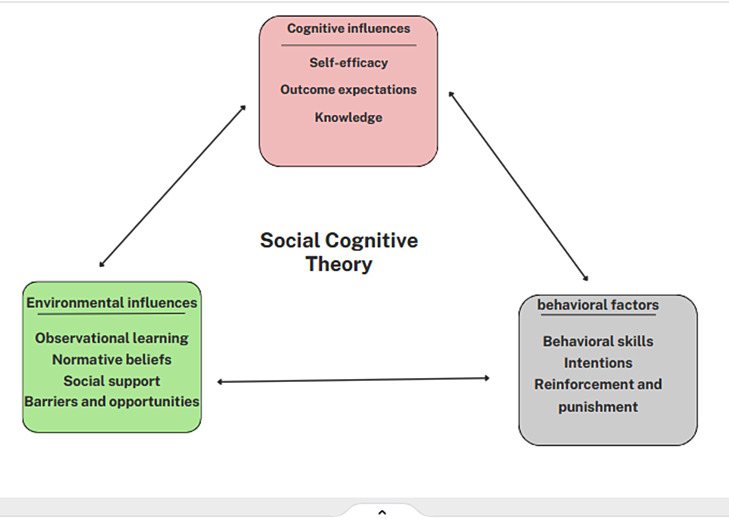
Background: This study focuses on identifying the key factors associated with ergonomic behaviors (ERBE) among women workers on assembly lines (WwAL) to prevent musculoskeletal disorders (MSDs) caused by repetitive motions and unfavorable body postures. To achieve this objective, this study employed Bayesian networks (BN) analysis based on social cognitive theory (SCT).
Methods: A cross-sectional study was conducted to examine the predictive factors of ERBE among 250 WwAL from six different industries located in Neyshabur, a city in northeastern Iran. The study used a two-stage cluster sampling method for participant selection and self-report questionnaires to collect data on demographic characteristics, variables associated with SCT, ERBE, and the standard Nordic questionnaire. The collected data were analyzed using Netica and SPSS version 21, which involved statistical analyses such as independent t-tests, Pearson correlation, and ANOVA tests at a significance level of p < 0.05. BN analysis was conducted to identify the important factors that impact ERBE.
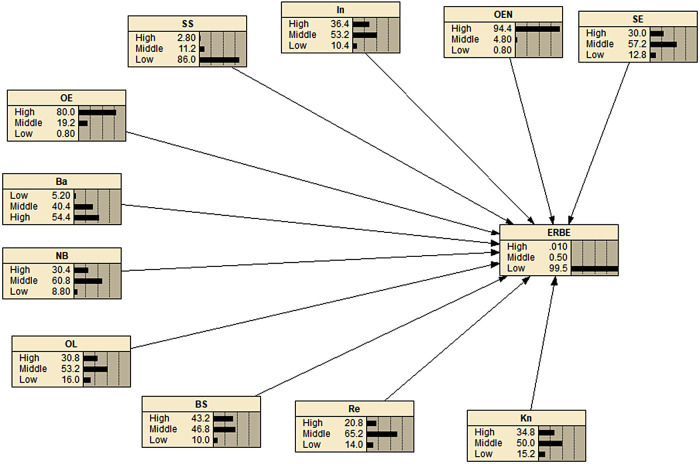
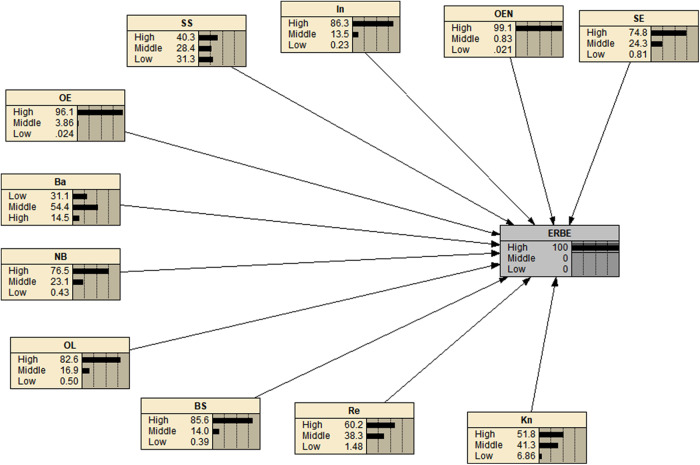
Results: The majority of individuals reported experiencing chronic pain in their back, neck, and shoulder areas. Engaging in physical activity, consuming dairy products, and attaining a higher level of education were found to be significantly associated with the adoption of ERBE p < 0.05. Among the various SCT constructs, observational learning, intention, and social support demonstrated the highest levels of sensitivity towards ERBE, with scores of 4.08, 3.82, and 3.57, respectively. However, it is worth noting that all SCT constructs exhibited a certain degree of sensitivity towards ERBE.
Conclusions: The research findings demonstrate that all constructs within SCT are effective in identifying factors associated with ERBE among WwAL. The study also highlights the importance of considering education levels and variables related to healthy lifestyles when promoting ERBE in this specific population.
Keywords: Assembly line workers; Bayesian networks; Ergonomic behaviors; Social cognitive theory.
© 2023. The Author(s).
Conflict of interest statement
The authors declare no competing interests.
Figures
References
-
- Sani NT, Widajati N. Factors affecting risk of Musculoskeletal disorders (MSDs) complaints in Spring Production workers. Indian J Forensic Med Toxicol. 2021;15:3152–61.
-
- Russo F, Di Tecco C, Fontana L, Adamo G, Papale A, Denaro V, et al. Prevalence of work related musculoskeletal disorders in Italian workers: is there an underestimation of the related occupational risk factors? BMC Musculoskelet Disord. 2020;21:1–16. doi: 10.1186/s12891-020-03742-z. - DOI - PMC - PubMed
MeSH terms
LinkOut - more resources
Full Text Sources
Medical
