


Structural and functional insights into GSDMB isoforms complex roles in pathogenesis
- PMID: 38037340
- PMCID: PMC10730220
- DOI: 10.1080/15384101.2023.2287933
Structural and functional insights into GSDMB isoforms complex roles in pathogenesis
Abstract
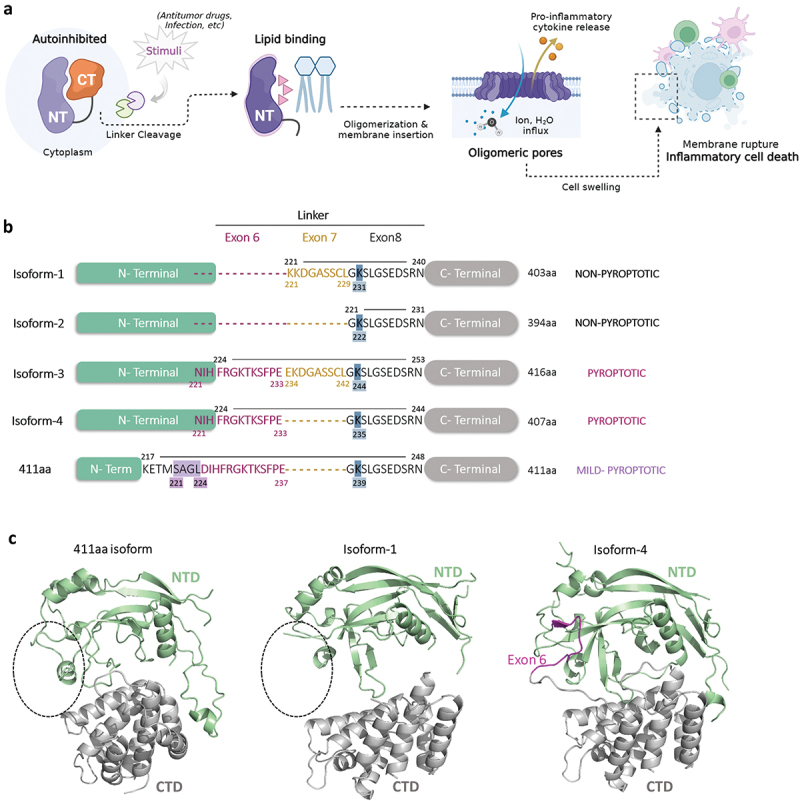
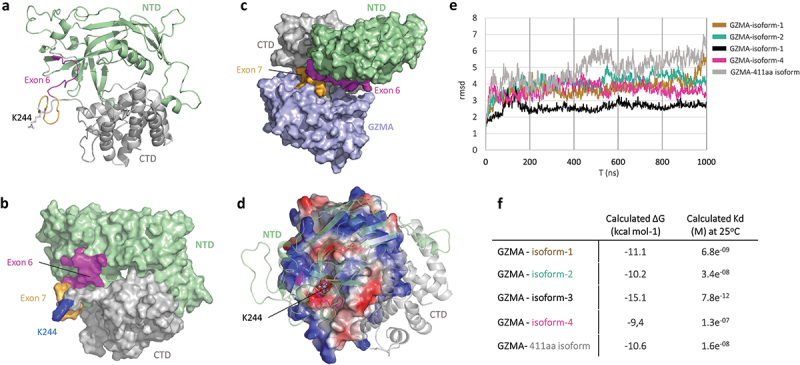
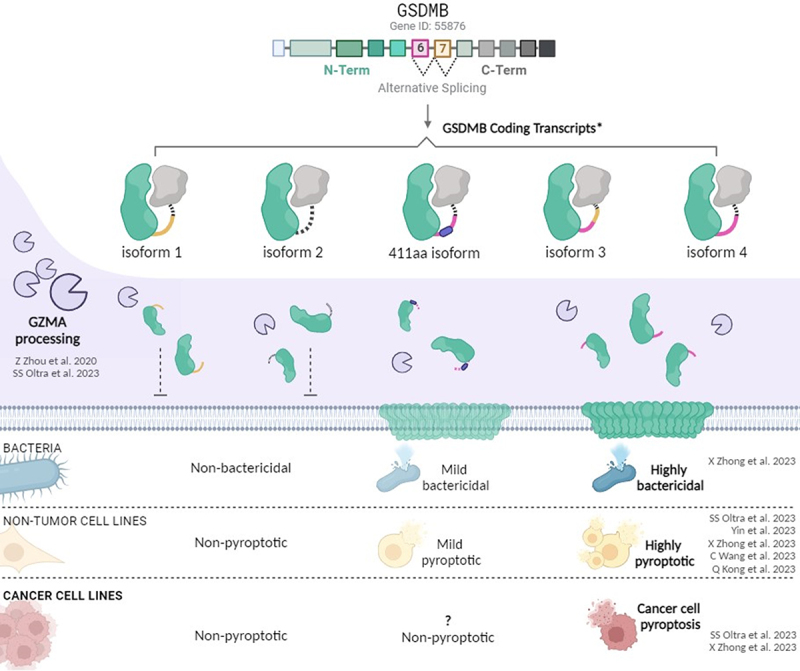
SHADSGasdermins (GSDMs) have garnered significant scientific interest due to their protective and detrimental roles in innate immunity, host defense, inflammation, and cancer alongside with other pathologies. While GSDMs are mostly recognized as key effectors of a lytic type of pro-inflammatory cell death known as pyroptosis, they do also take part in other cell death processes (NETosis, secondary necrosis, or apoptosis) and exhibit cell-death independent functions depending on the cellular context. Among GSDMs, Gasdermin B (GSDMB) pyroptotic capacity has been a subject of conflicting findings in scientific literature even when its processing, and subsequent activation, by Granzyme A (GZMA) was decoded. Nevertheless, recent groundbreaking publications have shed light on the crucial role of alternative splicing in determining the pyroptotic capacity of GSDMB isoforms, which depends on the presence of exon 6-derived elements. This comprehensive review pays attention to the relevant structural differences among recently crystalized GSDMB isoforms. As a novelty, the structural aspects governing GSDMB isoform susceptibility to GZMA-mediated activation have been investigated. By elucidating the complex roles of GSDMB isoforms, this review aims to deepen the understanding of this multifunctional player and its potential implications in disease pathogenesis and therapeutic interventions. [Figure: see text].
Keywords: Gasdermin; alternative splicing; cancer; cell death; inflammatory diseases; pyroptosis.
Conflict of interest statement
No potential conflict of interest was reported by the author(s).
Figures
References
Publication types
MeSH terms
Substances
LinkOut - more resources
Full Text Sources
Molecular Biology Databases
Research Materials
