


Cognitive, Functional, and Quality of Life Outcomes 6 Months After Mechanical Ventilation for Bronchiolitis: A Secondary Analysis of Data From the Randomized Evaluation of Sedation Titration for Respiratory Failure Trial ( RESTORE )
- PMID: 38038620
- PMCID: PMC10932893
- DOI: 10.1097/PCC.0000000000003405
Cognitive, Functional, and Quality of Life Outcomes 6 Months After Mechanical Ventilation for Bronchiolitis: A Secondary Analysis of Data From the Randomized Evaluation of Sedation Titration for Respiratory Failure Trial ( RESTORE )
Abstract
Objectives: To describe rates and associated risk factors for functional decline 6 months after critical bronchiolitis in a large, multicenter dataset.
Design: Nonprespecified secondary analysis of existing 6-month follow-up data of patients in the Randomized Evaluation of Sedation Titration for Respiratory Failure trial ( RESTORE , NCT00814099).
Setting: Patients recruited to RESTORE in any of 31 PICUs in the United States, 2009-2013.
Patients: Mechanically ventilated PICU patients under 2 years at admission with a primary diagnosis of bronchiolitis.
Interventions: There were no interventions in this secondary analysis; in the RESTORE trial, PICUs were randomized to protocolized sedation versus usual care.
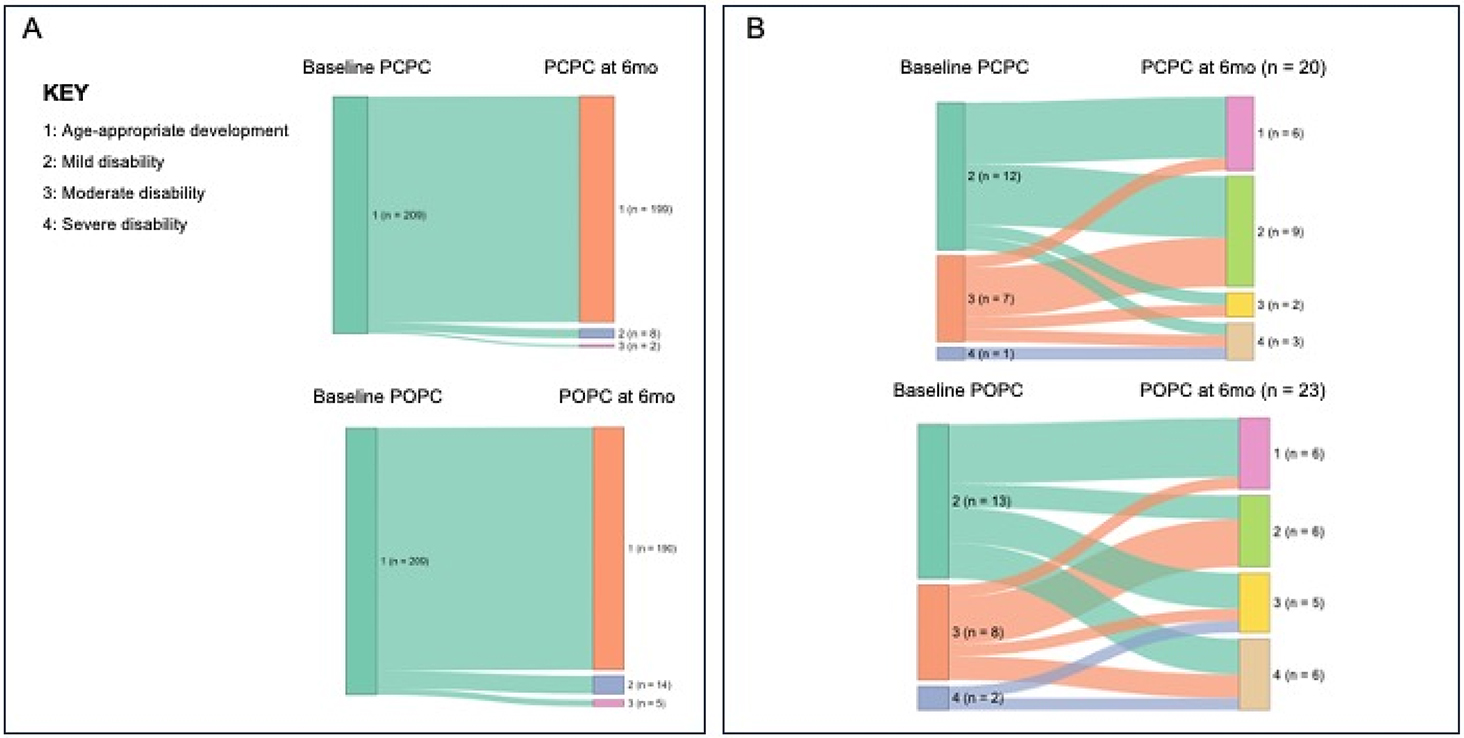
Measurements and main results: "Functional decline," defined as worsened Pediatric Overall Performance Category and/or Pediatric Cerebral Performance Category (PCPC) scores at 6 months post-PICU discharge as compared with preillness baseline. Quality of life was assessed using Infant Toddler Quality of Life Questionnaire (ITQOL; children < 2 yr old at follow-up) or Pediatric Quality of Life Inventory (PedsQL) at 6 months post-PICU discharge. In a cohort of 232 bronchiolitis patients, 28 (12%) had functional decline 6 months postdischarge, which was associated with unfavorable quality of life in several ITQOL and PedsQL domains. Among 209 patients with normal baseline functional status, 19 (9%) had functional decline. In a multivariable model including all subjects, decline was associated with greater odds of worse baseline PCPC score and longer PICU length of stay (LOS). In patients with normal baseline status, decline was also associated with greater odds of longer PICU LOS.
Conclusions: In a random sampling of RESTORE subjects, 12% of bronchiolitis patients had functional decline at 6 months. Given the high volume of mechanically ventilated patients with bronchiolitis, this observation suggests many young children may be at risk of new morbidities after PICU admission, including functional and/or cognitive morbidity and reduced quality of life.
Copyright © 2023 by the Society of Critical Care Medicine and the World Federation of Pediatric Intensive and Critical Care Societies.
Conflict of interest statement
Dr. Watson’s institution received funding from the National Institutes of Health (NIH); he received support for article research from the NIH. Dr. Shein received funding from Ceribell and Hill Ward Henderson. The remaining authors have disclosed that they do not have any potential conflicts of interest.
Figures

References
-
- Shein SL, Slain KN, Clayton JA, McKee B, Rotta AT, Wilson-Costello D. Neurologic and Functional Morbidity in Critically Ill Children With Bronchiolitis*. Pediatric Critical Care Medicine. 2017;18(12). https://journals.lww.com/pccmjournal/Fulltext/2017/12000/Neurologic_and_... - PubMed
-
- van Dijk T, van Benthum M V., Maas-van Schaaijk NM, van Zwol A. Health-related quality of life 6 months after pediatric intensive care unit admission for bronchiolitis: a prospective single-center cohort study. Eur J Pediatr. Published online November 14, 2022. doi:10.1007/s00431-022-04700-8 - DOI - PMC - PubMed
Publication types
MeSH terms
Associated data
Grants and funding
LinkOut - more resources
Full Text Sources
Medical
