Review
. 2023 Dec 1;15(1):52.
doi: 10.1038/s41368-023-00262-z.

Molecular mechanisms of cellular metabolic homeostasis in stem cells

Affiliations
Review

Molecular mechanisms of cellular metabolic homeostasis in stem cells

Xiaoyu Li et al. Int J Oral Sci. .

Abstract

Many tissues and organ systems have intrinsic regeneration capabilities that are largely driven and maintained by tissue-resident stem cell populations. In recent years, growing evidence has demonstrated that cellular metabolic homeostasis plays a central role in mediating stem cell fate, tissue regeneration, and homeostasis. Thus, a thorough understanding of the mechanisms that regulate metabolic homeostasis in stem cells may contribute to our knowledge on how tissue homeostasis is maintained and provide novel insights for disease management. In this review, we summarize the known relationship between the regulation of metabolic homeostasis and molecular pathways in stem cells. We also discuss potential targets of metabolic homeostasis in disease therapy and describe the current limitations and future directions in the development of these novel therapeutic targets.


Conflict of interest statement

The authors declare no competing interests.

Figures
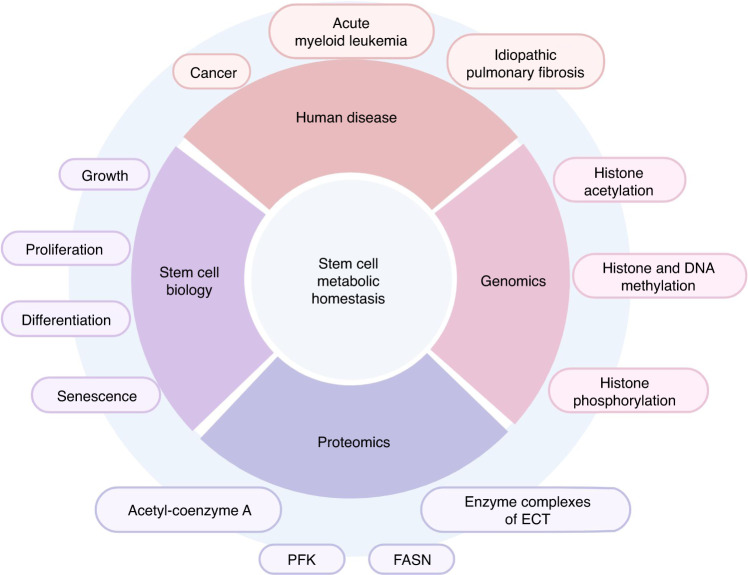
Fig. 1
Fig. 1
The significance of stem cell metabolic homeostasis. The metabolic homeostasis of stem cells plays an essential role in genomics, proteomics, cell biology, and the overall functioning of the organism. Dysregulation of the metabolic balance of stem cells will lead to serious adverse consequences. Created with BioRender. PFK phosphofructokinase, FASN fatty acid synthase
Fig. 2
Fig. 2
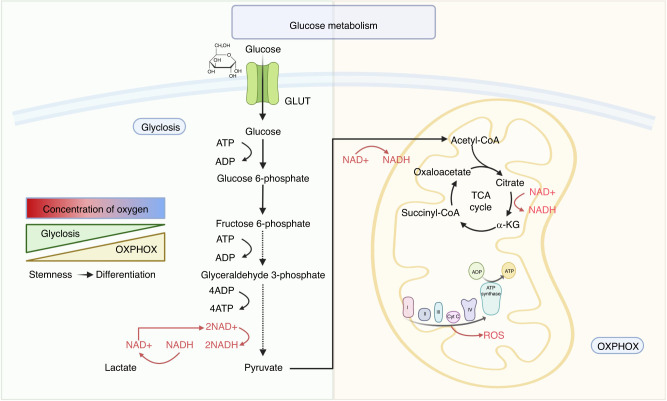
Glucose metabolism in the metabolic homeostasis of stem cells. Glycolysis and oxidative phosphorylation are the main sources of ATP in stem cells. Stem cells usually exist in anaerobic or hypoxic environments and therefore rely primarily on glycolysis for glucose metabolism. However, differentiated cells are often located in places where oxygen is more abundant, and the main mode of glucose metabolism shifts to oxidative phosphorylation. Created with BioRender. GLUT glucose transporter, ADP adenosine diphosphate, ATP adenosine triphosphate, NAD + nicotinamide adenine dinucleotide, NADH reduced nicotinamide adenine dinucleotide, ROS reactive oxygen species, α-KG α-ketoglutarate, OXPHOS oxidative phosphorylation
Fig. 3
Fig. 3
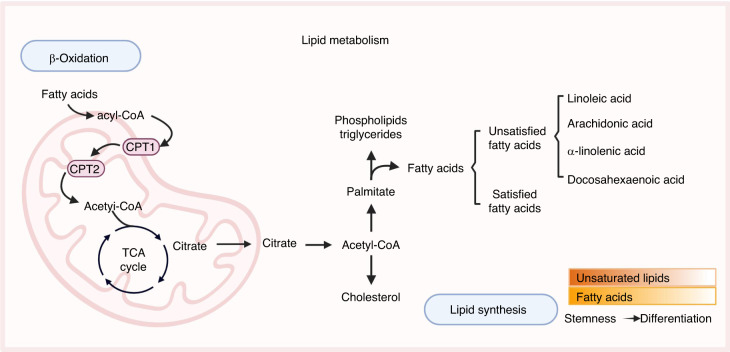
Lipid metabolism in the metabolic homeostasis of stem cells. Lipids play crucial roles in stem cell biology, including structural support, energy storage, and signaling. FAO occurs mainly in mitochondria and is an important source of energy. During FAO, fatty acids are converted to acetyl-CoA, which enters the TCA cycle to produce ATP. Lipid synthesis process primarily occurs in the endoplasmic reticulum and the cytoplasm, and involves the condensation of acetyl-CoA and malonyl-CoA monomers to form fatty acids, which are then incorporated into a variety of lipid molecules. Stem cells exhibit elevated levels of unsaturated lipids and fatty acids in their lipid metabolism, and these levels decline upon differentiation. Created with BioRender. CPT carnitine palmitoyltransferase, TCA tricarboxylic acid cycle
Fig. 4
Fig. 4
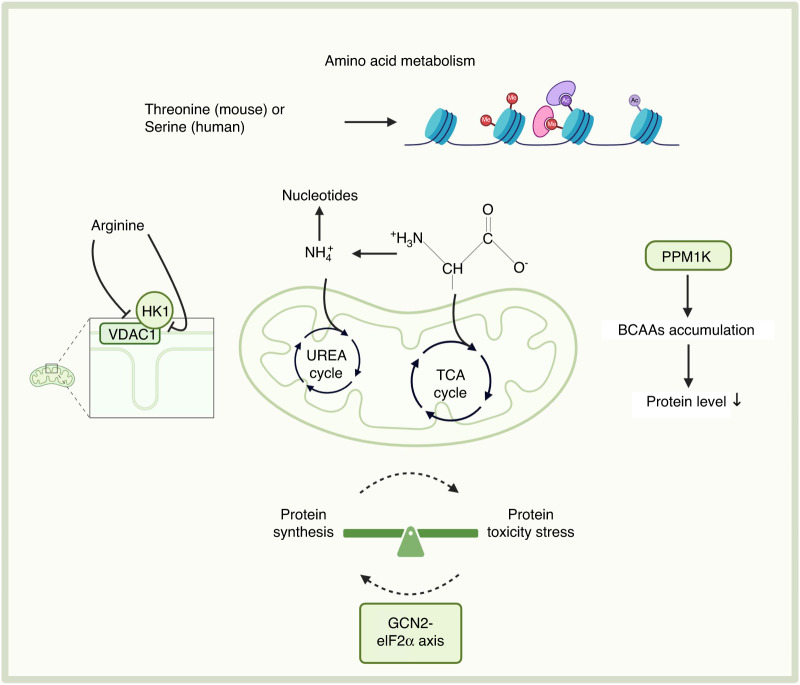
Amino acid metabolism in the metabolic homeostasis of stem cells. Amino acid metabolism involves the synthesis and degradation of amino acids and plays a crucial role in various processes in stem cells. The GCN2-eIF2α axis, PPM1K, arginine, and serine play important roles in stem cell homeostasis through amino acid metabolism. Created with BioRender. PPM1K protein phosphatase Mg2 + /Mn2+-dependent 1K, GCN2-eIF2α axis general control nonderepressible 2-eukaryotic initiation factor 2α axis, HK1 hexokinase 1, VDAC1 voltage-dependent anion channel 1
Fig. 5
Fig. 5
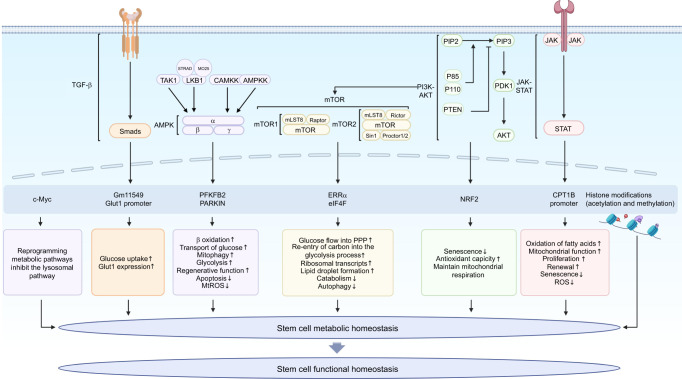
Molecular mechanisms of metabolic homeostatic regulation in stem cells. Stem cells regulate metabolic levels through a three-dimensional cellular metabolic-regulatory network that regulates downstream target genes and transcription factors to carry out a variety of metabolic processes, including glucose uptake, β-oxidation, autophagy, and so on, so as to maintain a dynamic balance under normal physiological conditions. Created with BioRender. TGF-β transforming growth factor-β, AMPK adenosine monophosphate-activated protein kinase, LKB1 liver kinase B1, STRAD sterile 20 related adaptor protein, MO25 mouse protein 25, CAMKK2 calcium-sensitive kinase 2, TAK1 transforming growth factor β-activated kinase-1, AMPKK AMP-activated protein kinase kinase, mTOR mammalian target of rapamycin, mTORC1 mTOR complex 1, mTORC2 mTOR complex 2, mLST8 mTOR-associated protein LST8 Homolog, Sin1 stress-activated protein kinase-interacting protein, PI3K-AKT phosphoinositide-3-kinase AKT, PIP2 phosphatidylinositol-4,5-bisphosphate, PIP3 phosphatidylinositol-3,4,5-trisphosphate, PTEN phosphatase and tensin homolog deleted on chromosome ten, PDK1 phosphoinositide-dependent kinase-1, STAT signal transducer and activator of transcription, PFKFB2 6-phosphofructo-2-kinase/fructose-2,6-biphosphatase 2, ERRα estrogen-related receptor α, eIF4F eukaryotic initiation factor 4F, NRF2 nuclear factor erythroid 2-related factor 2, PPP pentose phosphate pathway, mtROS mitochondrial ROS

References

    1. Folmes CD, Dzeja PP, Nelson TJ, Terzic A. Metabolic plasticity in stem cell homeostasis and differentiation. Cell Stem Cell. 2012;11:596–606. doi: 10.1016/j.stem.2012.10.002. - DOI - PMC - PubMed
    1. Liu K, et al. Cellular metabolism and homeostasis in pluripotency regulation. Protein Cell. 2020;11:630–640. doi: 10.1007/s13238-020-00755-1. - DOI - PMC - PubMed
    1. Meacham CE, DeVilbiss AW, Morrison SJ. Metabolic regulation of somatic stem cells in vivo. Nat. Rev. Mol. Cell Biol. 2022;23:428–443. doi: 10.1038/s41580-022-00462-1. - DOI - PubMed
    1. Jin Y, et al. Application of stem cells in regeneration medicine. MedComm. 2023;4:e291. doi: 10.1002/mco2.291. - DOI - PMC - PubMed
    1. Seydel C. Single-cell metabolomics hits its stride. Nat. Methods. 2021;18:1452–1456. doi: 10.1038/s41592-021-01333-x. - DOI - PubMed

Publication types

MeSH terms