


The association of exhaled nitric oxide with air pollutants in young infants of asthmatic mothers
- PMID: 38049853
- PMCID: PMC10696885
- DOI: 10.1186/s12940-023-01030-6
The association of exhaled nitric oxide with air pollutants in young infants of asthmatic mothers
Abstract
Background: Exhaled nitric oxide is a marker of airway inflammation. Air pollution induces airway inflammation and oxidative stress. Little is known about the impact of air pollution on exhaled nitric oxide in young infants.
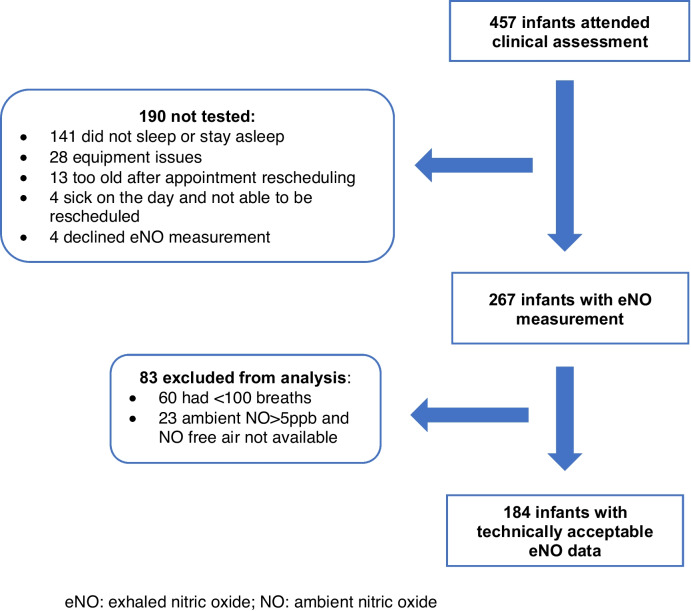
Methods: The Breathing for Life Trial recruited pregnant women with asthma into a randomised controlled trial comparing usual clinical care versus inflammometry-guided asthma management in pregnancy. Four hundred fifty-seven infants from the Breathing for Life Trial birth cohort were assessed at six weeks of age. Exhaled nitric oxide was measured in unsedated, sleeping infants. Its association with local mean 24-h and mean seven-day concentrations of ozone, nitric oxide, nitrogen dioxide, carbon monoxide, sulfur dioxide, ammonia, particulate matter less than 10 μm (PM10) and less than 2.5 μm (PM2.5) in diameter was investigated. The air pollutant data were sourced from local monitoring sites of the New South Wales Air Quality Monitoring Network. The association was assessed using a 'least absolute shrinkage and selection operator' (LASSO) approach, multivariable regression and Spearman's rank correlation.
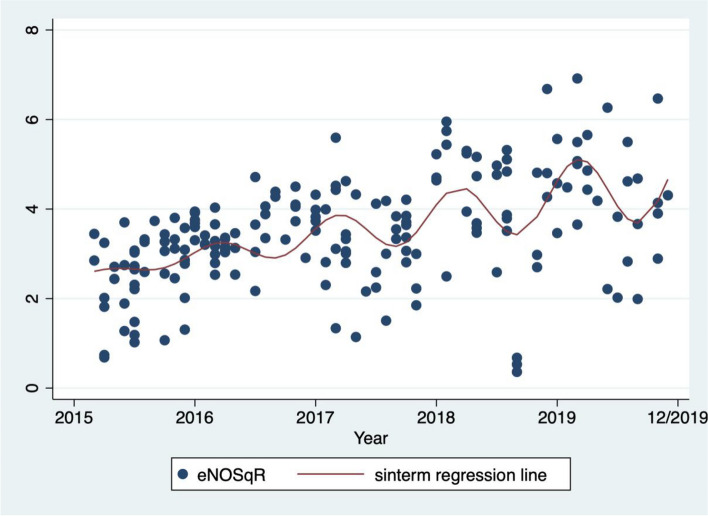
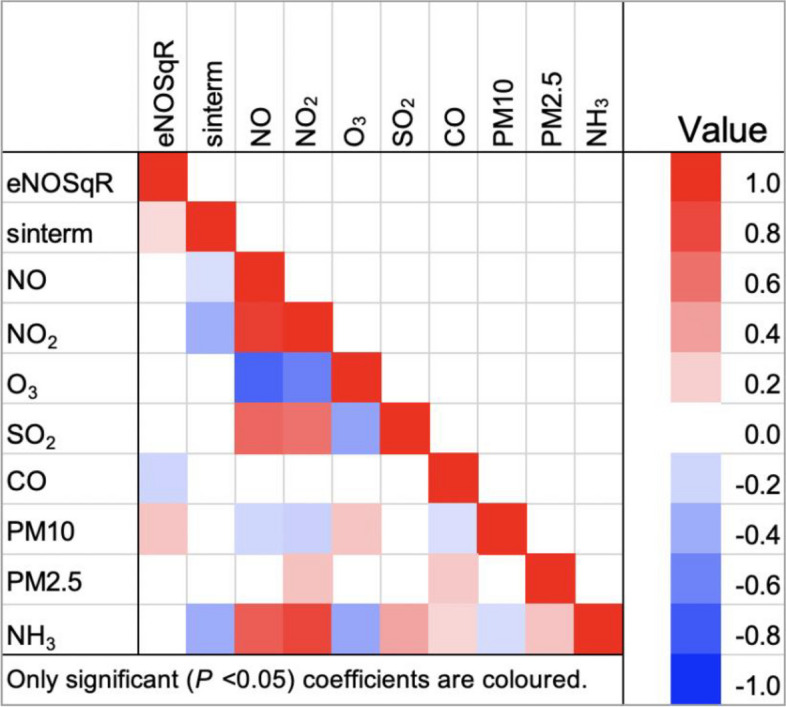
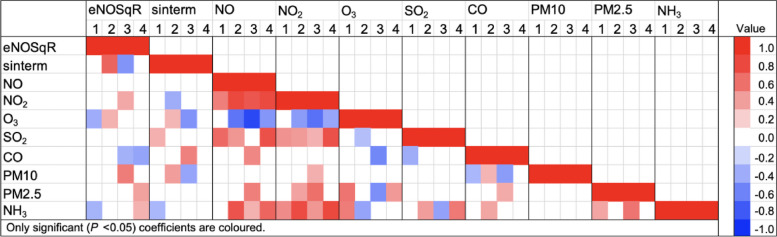
Results: A seasonal variation was evident with higher median exhaled nitric oxide levels (13.6 ppb) in warmer months and lower median exhaled nitric oxide levels (11.0 ppb) in cooler months, P = 0.008. LASSO identified positive associations for exhaled nitric oxide with 24-h mean ammonia, seven-day mean ammonia, seven-day mean PM10, seven-day mean PM2.5, and seven-day mean ozone; and negative associations for eNO with seven-day mean carbon monoxide, 24-h mean nitric oxide and 24-h mean sulfur dioxide, with an R-square of 0.25 for the penalized coefficients. These coefficients selected by LASSO (and confounders) were entered in multivariable regression. The achieved R-square was 0.27.
Conclusion: In this cohort of young infants of asthmatic mothers, exhaled nitric oxide showed seasonal variation and an association with local air pollution concentrations.
Keywords: Air pollution; Breathing for Life Trial; Exhaled nitric oxide (eNO); Infant; Season.
© 2023. The Author(s).
Conflict of interest statement
The authors declare no competing interests.
Figures


References
-
- Mattes J, Storm van's Gravesande K, Reining U, Alving K, Ihorst G, Henschen M, et al. NO in exhaled air is correlated with markers of eosinophilic airway inflammation in corticosteroid-dependent childhood asthma. Eur Respir J. 1999;13(6):1391–5. - PubMed
-
- Ricciardolo FL. cNOS-iNOS paradigm and arginase in asthma. Trends Pharmacol Sci. 2003;24(11):560–1; author reply 2–3. - PubMed
Publication types
MeSH terms
Substances
Grants and funding
LinkOut - more resources
Full Text Sources
Medical
