Review
. 2023 Dec 5;28(1):566.
doi: 10.1186/s40001-023-01539-z.

Nanotechnology in leukemia: diagnosis, efficient-targeted drug delivery, and clinical trials

Affiliations
Review

Nanotechnology in leukemia: diagnosis, efficient-targeted drug delivery, and clinical trials

Maha M Salama et al. Eur J Med Res. .

Abstract

Leukemia is a group of malignant disorders which affect the blood and blood-forming tissues in the bone marrow, lymphatic system, and spleen. Many types of leukemia exist; thus, their diagnosis and treatment are somewhat complicated. The use of conventional strategies for treatment such as chemotherapy and radiotherapy may develop many side effects and toxicity. Hence, modern research is concerned with the development of specific nano-formulations for targeted delivery of anti-leukemic drugs avoiding toxic effects on normal cells. Nanostructures can be applied not only in treatment but also in diagnosis. In this article, types of leukemia, its causes, diagnosis as well as conventional treatment of leukemia shall be reviewed. Then, the use of nanoparticles in diagnosis of leukemia and synthesis of nanocarriers for efficient delivery of anti-leukemia drugs being investigated in in vivo and clinical studies. Therefore, it may contribute to the discovery of novel and emerging nanoparticles for targeted treatment of leukemia with less side effects and toxicities.

Keywords: Drug delivery; Leukemia; Nanocarriers; Targeted nanoparticles.


Conflict of interest statement

The authors declare no competing interests.

Figures
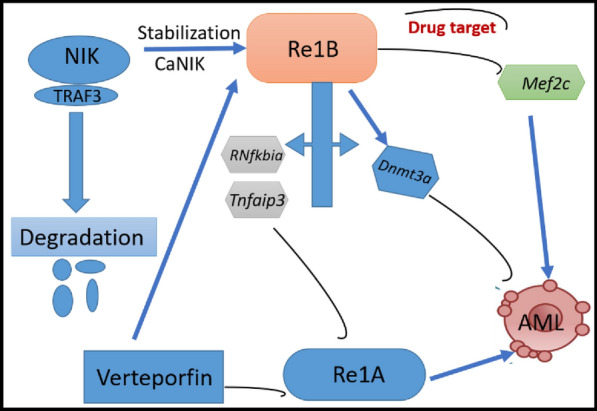
Fig. 1
Fig. 1
Stabilization of Canonical NF-κB-inducing kinase. AML: acute myeloid leukemia, caNIK: canonical nuclear factor κB inducing kinase; Mef2c: myocyte-specific enhancer factor; Dnmt3a: DNA (cytosine-5)-methyltransferase 3A, RNfkbia: nuclear factor that binds to the enhancer element of the Ig kappa light-chain of activated B cells;Tnfaip3: protein induced by TNF-mediated NF-κB activation and has a dual function in regulating NF-κB associated with inflammatory carcinogenesis in many cancer types; TRAF3: TNF receptor-associated factor
Fig. 2
Fig. 2
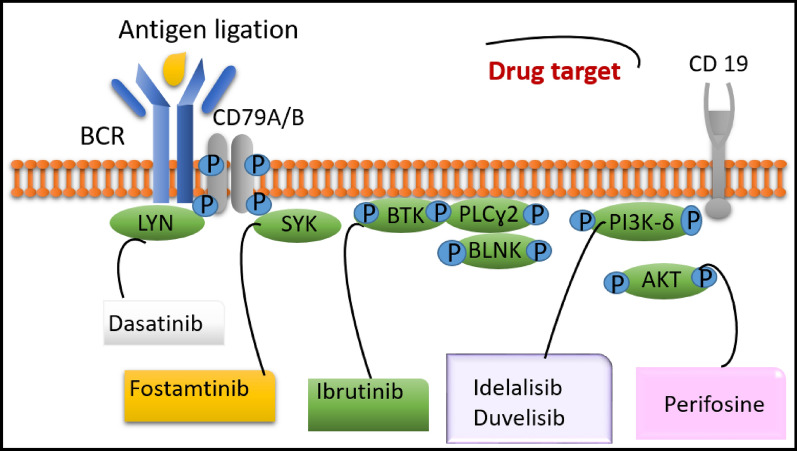
B-cell receptor signaling inhibitors. BCR: B cell receptor; BTK: Bruton’s tyrosine kinase; SYK: spleen tyrosine kinase; BLNK: B-cell linker; PLCγ2: phospholipase Cγ2; PI3K: phosphoinositide 3-kinase, the “P” in blue circle indicates phosphorylation, LYN: a gene on chromosome 8q13 that encodes a non-receptor tyrosine protein kinase, AKT: serine/threonine kinase
Fig. 3
Fig. 3
Biological pathways for chronic lymphocytic leukemia pathogenesis and the suggested therapeutic targets. BCL2: B-cell lymphoma 2; BTK: Bruton’s tyrosine kinase; NF-κB: nuclear factor kappa-light-chain-enhancer of activated B cells; (NOTCH1): notch homolog 1 PEST: a peptide sequence that is rich in proline (P), glutamic acid (E), serine (S), and threonine (T) of the NICD: NOTCH intracellular domain; TP53: tumor protein 53; ATM: ataxia telangiectasia mutated proteins
Fig. 4
Fig. 4
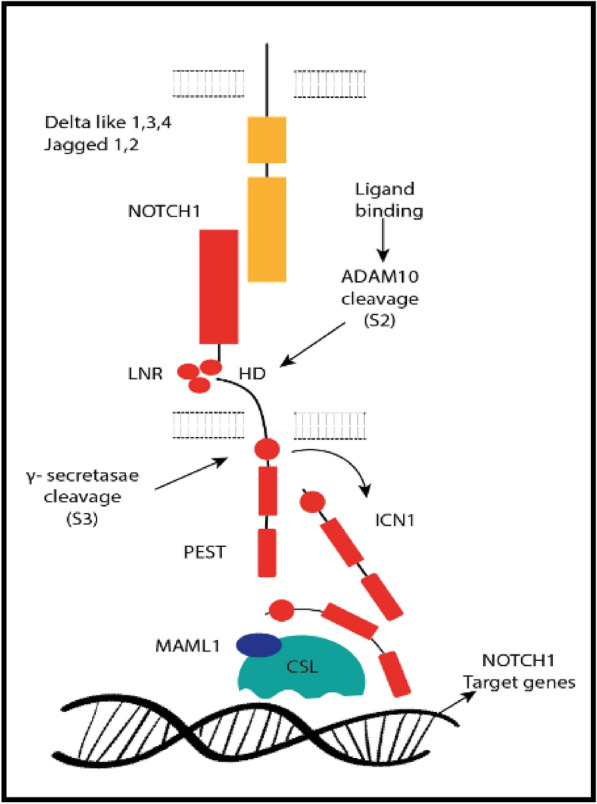
NOTCH signaling pathway. ADAM: metalloprotease (metalloproteinase/disintegrin/cysteine-rich); ICN1: intracellular domains of NOTCH1; MAML1 co-activator (Mastermind-like 1); PEST: peptide sequence that is rich in proline (P), glutamic acid (E), serine (S), and threonine (T); HD: heterodimerization domain; LNR: lymph node ratio NOTCH1 activation shows: the interaction between the NOTCH1 receptor, Delta-like and Jagged ligands which are expressed on the surface of a near cells activating the proteolytic cleavage of the receptor; by an ADAM metalloprotease (metalloproteinase/disintegrin/cysteine-rich) (S2 cleavage) followed by the γ-secretase complex (S3 cleavage), which releases the intracellular domains of NOTCH1 (ICN1) from the membrane. ICN1 is transferred to the nucleus and interacts with DNA-binding protein and induces the MAML1 co-activator (Mastermind-like 1) to activate the expression of NOTCH1 target genes
Fig. 5
Fig. 5
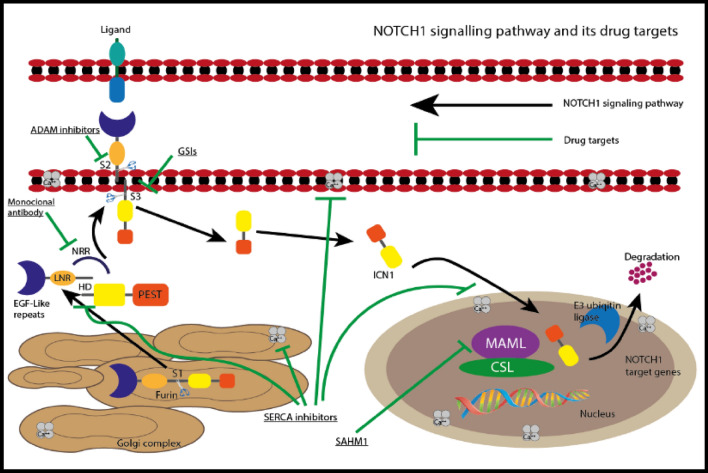
NOTCH1 signaling pathway and drug targets. ADAM: metalloproteinase/disintegrin/cysteine-rich; NRR: negative regulatory region; SERCA: Sarco/Endoplasmic Reticulum Calcium-ATPase; LNR: lymph node ratio; HD: heterodimerization domain; SAHM1: hydrocarbon-stapled synthetic peptide stapled α-helical peptide derived from mastermind-like 1 prevent the formation of MAML: co-activator (Mastermind-like-1); ICN1: intracellular domains of NOTCH1;PEST: peptide sequence is rich in proline (P), glutamic acid (E), serine (S), and threonine (T), CSL: transcription factor. ADAM inhibitors inhibit ADAM protease S2 site uptake; γ-secretase inhibitors (GSIs) prevent the cleavage of S3 site of γ-secretase; Monoclonal antibody prevent the change the spatial arrangement of the negative regulatory region (NRR) from exposing the S2 and S3 cleavage sites; SERCA inhibitors include Ca2+ ATPase inhibitors prevent transportation of NOTCH1 and the formation of heterodimerization domain (HD); SAHM1 hinder the binding complex of ICN1–CSL–MAML
Fig. 6
Fig. 6
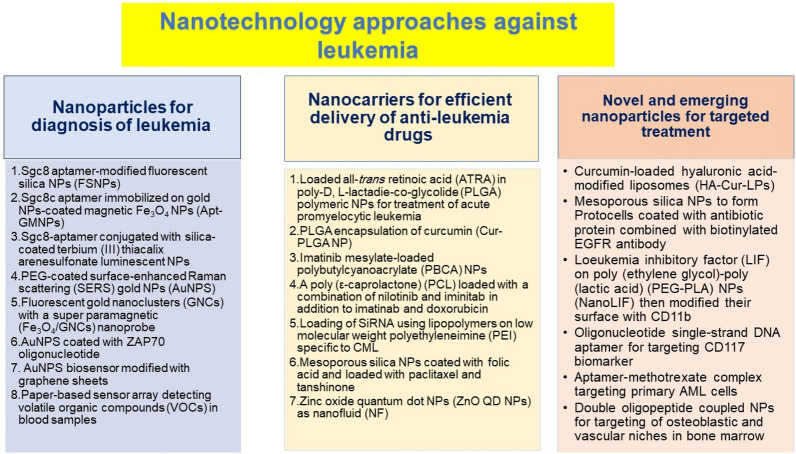
Summary of nanotechnology and nanomedicine approaches applied against leukemia

References

    1. Shroff GS, et al. Leukemic involvement in the thorax. Radiographics. 2019;39(1):44–61. doi: 10.1148/rg.2019180069. - DOI - PubMed
    1. Lockwood W. Leukemia: AML, CML, ALL and CLL. 2019.
    1. Sajana T, et al. Classification of leukemia patients with different clinical presentation of blood cells. Mater Today Proc. 2020 doi: 10.1016/j.matpr.2020.10.619. - DOI
    1. Rosenzweig SA. Acquired resistance to drugs targeting receptor tyrosine kinases. Biochem Pharmacol. 2012;83(8):1041–1048. doi: 10.1016/j.bcp.2011.12.025. - DOI - PMC - PubMed
    1. Gultekin M, et al. Gynecologic oncology training systems in Europe: a report from the European network of young gynaecological oncologists. Int J Gynecol Cancer. 2011 doi: 10.1097/IGC.0b013e3182202d17. - DOI - PubMed