


Prevalence and factors associated with smartphone addiction among nursing postgraduates during the COVID-19 pandemic: a multilevel study from China's mainland
- PMID: 38057732
- PMCID: PMC10699056
- DOI: 10.1186/s12888-023-05369-5
Prevalence and factors associated with smartphone addiction among nursing postgraduates during the COVID-19 pandemic: a multilevel study from China's mainland
Abstract
Background: Smartphone addiction is prevalent among college students, and there is a concern that the COVID-19 pandemic may bring an increased prevalence of smartphone addiction due to constant online classes and repeat quarantine policies. This study aims to assess the prevalence and influencing factors of smartphone addiction among Chinese nursing postgraduates during the pandemic by examining variables, including loneliness, perceived stress, resilience, and sense of security.
Methods: This online cross-sectional survey recruited 224 nursing postgraduates in four cities in 2022, using Smartphone Addiction Scale for College Students, the Chinese version of Perceived Stress Scale, UCLA Loneliness Scale Version 3, Chinese version of the 10-item Connor-Davidson Resilience Scale, and the Security Questionnaire. Hierarchical regression analysis and logistic regression analysis were performed to explore the associated factors and predictors of smartphone addiction.
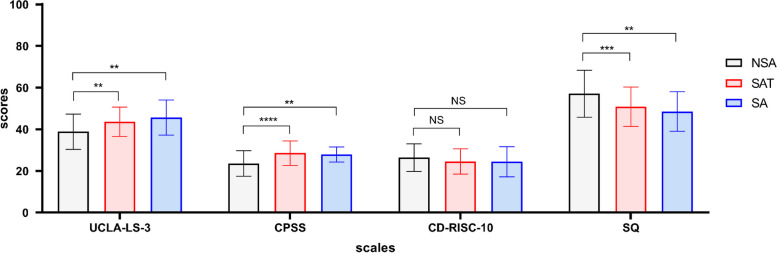
Results: During the COVID-19 pandemic, the prevalence of smartphone addiction was 10.41%. There was a positive correlation between smartphone addiction and loneliness, perceived stress (P < 0.001), and a negative relationship with resilience and sense of security (P < 0.001). The logistic regression analysis identified five risk factors that contribute to smartphone addiction, including daily duration of using a smartphone (3-5 h) (OR = 11.085, 95%CI = 1.21-101.79), numbers of smartphone (OR = 3.704, 95%CI = 1.33-10.30), perceived stress (OR = 1.163, 95%CI = 1.06-1.28), loneliness (OR = 1.071, 95%CI = 1.01-1.13), age of using a smartphone first time (OR = 0.754, 95%CI = 0.60-0.95). Two protective factors, resilience (OR = 1.098, 95%CI = 1.01-1.20) and sense of security (OR = 0.950, 95%CI = 0.90-1.00), were identified.
Conclusions: Collectively, our study found that during the COVID-19 pandemic, smartphone addiction was prevalent among nursing postgraduates, and loneliness and perceived stress are important risk factors for smartphone addiction. Therefore, administrators should adopt targeted interventions to reduce smartphone addiction and the negative impacts on the psychological well-being of nursing postgraduates during a sudden outbreak of a national epidemic crisis.
Keywords: Addiction; Cross-sectional study; Nursing students; Postgraduate; Smartphone.
© 2023. The Author(s).
Conflict of interest statement
The authors declare no competing interests.
Figures
References
-
- Olson JA, Sandra DA, Colucci ÉS, Al Bikaii A, Chmoulevitch D, Nahas J, et al. Smartphone addiction is increasing across the world: A meta-analysis of 24 countries. Comput Hum Behav. 2022;129:107138.
-
- Wang XJ, Xv Y, Xv BL. Meta analysis of mobile phone addiction rate of nursing students in China. Psychologies Magazine. 2020;21(15):38–39.
-
- Osorio-Molina C, Martos-Cabrera MB, Membrive-Jimenez MJ, Vargas-Roman K, Suleiman-Martos N, Ortega-Campos E, Gomez-Urquiza JL. Smartphone addiction, risk factors and its adverse effects in nursing students: a systematic review and meta-analysis. Nurse Educ Today. 2021;98:104741. doi: 10.1016/j.nedt.2020.104741. - DOI - PubMed
Publication types
MeSH terms
Grants and funding
LinkOut - more resources
Full Text Sources
Medical
