


Transcriptomics reveals a core transcriptional network of K-type cytoplasmic male sterility microspore abortion in wheat (Triticum aestivum L.)
- PMID: 38057735
- PMCID: PMC10698923
- DOI: 10.1186/s12870-023-04611-2
Transcriptomics reveals a core transcriptional network of K-type cytoplasmic male sterility microspore abortion in wheat (Triticum aestivum L.)
Abstract
Background: Cytoplasmic male sterility (CMS) plays a crucial role in hybrid production. K-type CMS, a cytoplasmic male sterile line of wheat with the cytoplasms of Aegilops kotschyi, is widely used due to its excellent characteristics of agronomic performance, easy maintenance and easy restoration. However, the mechanism of its pollen abortion is not yet clear.
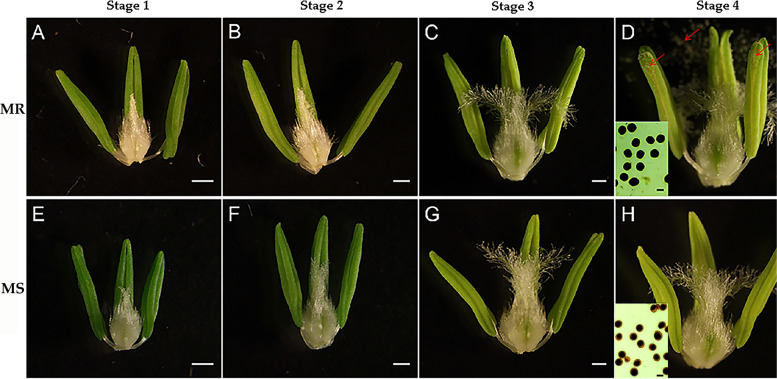
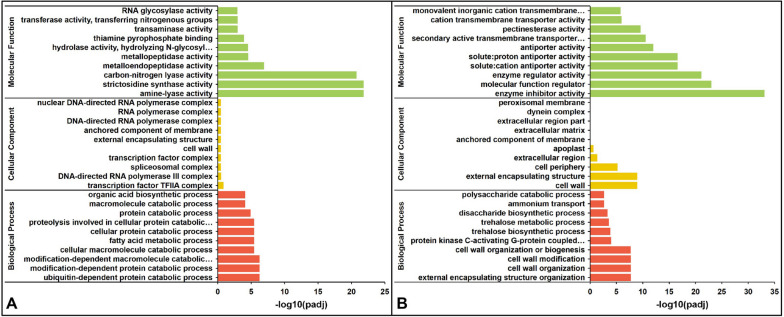
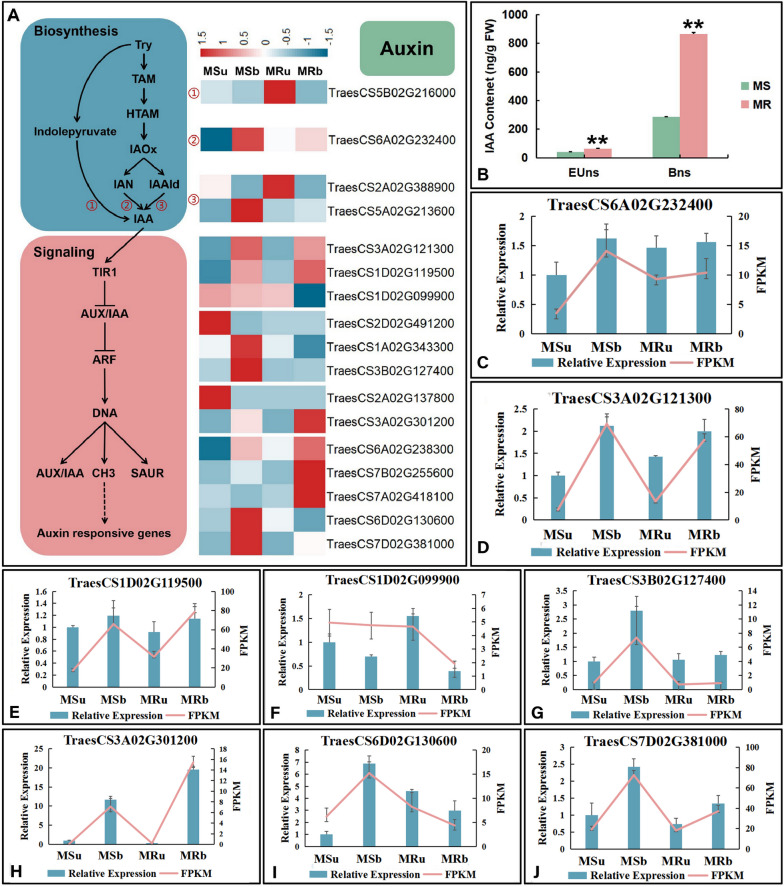
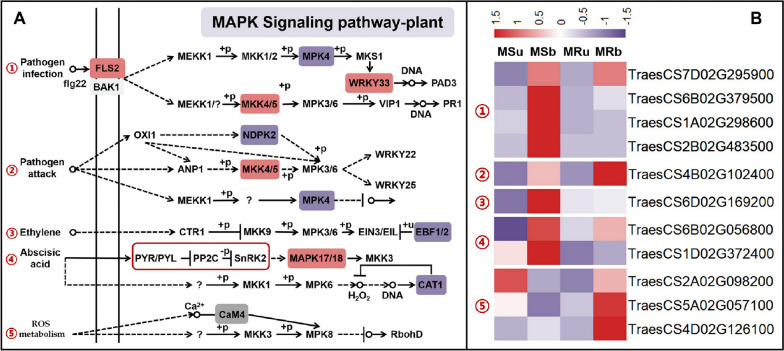
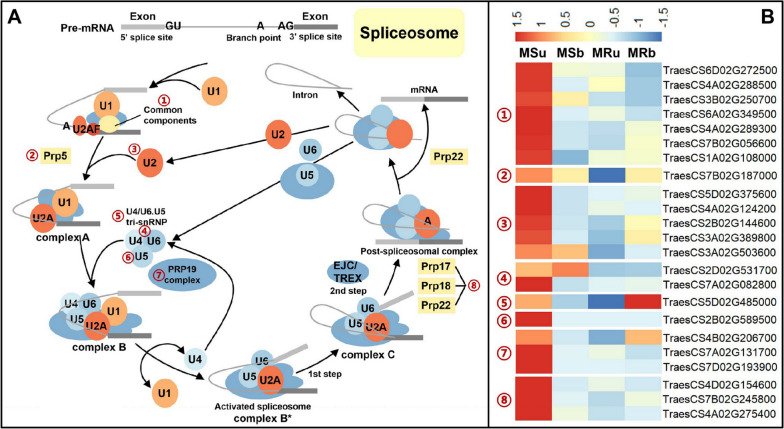
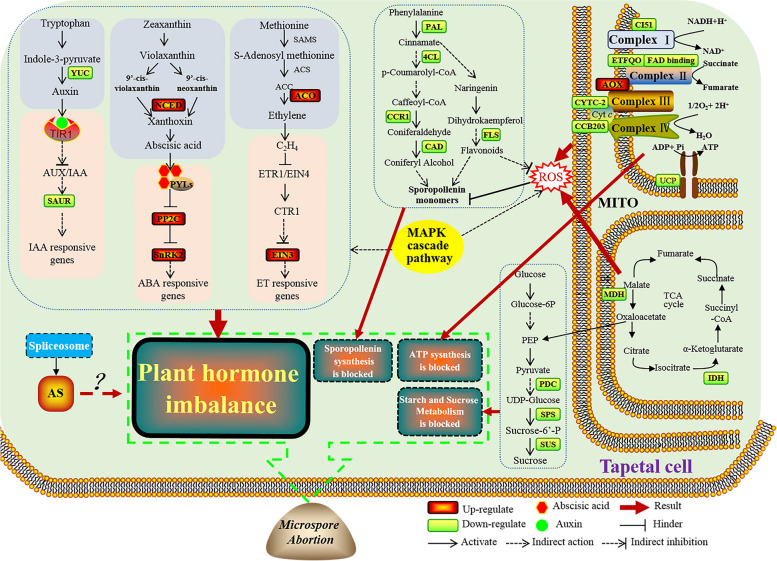
Results: In this study, wheat K-type CMS MS(KOTS)-90-110 (MS line) and it's fertile near-isogenic line MR (KOTS)-90-110 (MR line) were investigated. Cytological analysis indicated that the anthers of MS line microspore nucleus failed to divide normally into two sperm nucleus and lacked starch in mature pollen grains, and the key abortive period was the uninucleate stage to dinuclear stage. Then, we compared the transcriptome of MS line and MR line anthers at these two stages. 11,360 and 5182 differentially expressed genes (DEGs) were identified between the MS and MR lines in the early uninucleate and binucleate stages, respectively. Based on GO enrichment and KEGG pathways analysis, it was evident that significant transcriptomic differences were "plant hormone signal transduction", "MAPK signaling pathway" and "spliceosome". We identified 17 and 10 DEGs associated with the IAA and ABA signal transduction pathways, respectively. DEGs related to IAA signal transduction pathway were downregulated in the early uninucleate stage of MS line. The expression level of DEGs related to ABA pathway was significantly upregulated in MS line at the binucleate stage compared to MR line. The determination of plant hormone content and qRT-PCR further confirmed that hormone imbalance in MS lines. Meanwhile, 1 and 2 DEGs involved in ABA and Ethylene metabolism were also identified in the MAPK cascade pathway, respectively; the significant up regulation of spliceosome related genes in MS line may be another important factor leading to pollen abortion.
Conclusions: We proposed a transcriptome-mediated pollen abortion network for K-type CMS in wheat. The main idea is hormone imbalance may be the primary factor, MAPK cascade pathway and alternative splicing (AS) may also play important regulatory roles in this process. These findings provided intriguing insights for the molecular mechanism of microspore abortion in K-type CMS, and also give useful clues to identify the crucial genes of CMS in wheat.
Keywords: Cytoplasmic male sterility; MAPK pathway; Plant hormone; Spliceosome; Transcriptome sequencing; Wheat.
© 2023. The Author(s).
Conflict of interest statement
The authors declare no competing interests.
Figures





References
-
- Simmonds J, Scott P, Brinton J, Mestre TC, Bush M, Del Blanco A, et al. A splice acceptor site mutation in TaGW2-A1 increases thousand grain weight in tetraploid and hexaploid wheat through wider and longer grains. TAG Theor Appl Genet. 2016;129:1099–1112. doi: 10.1007/s00122-016-2686-2. - DOI - PMC - PubMed
-
- Wu B, Xia Y, Zhang G, Wang J, Ma S, Song Y, et al. The transcription factors TaTDRL and TaMYB103 synergistically activate the expression of TAA1a in wheat, which positively regulates the development of microspore in arabidopsis. Int J Mol Sci. 2022;23:7996. doi: 10.3390/ijms23147996. - DOI - PMC - PubMed
MeSH terms
Substances
Grants and funding
LinkOut - more resources
Full Text Sources
Research Materials
